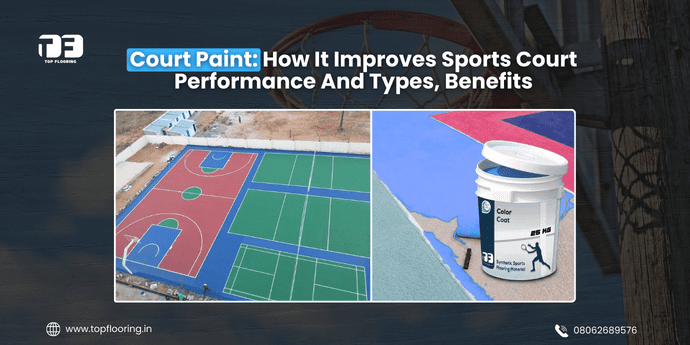
Court paint is a specialized coating system used on sports courts to create accurate game markings, improve surface grip, enhance ball bounce consistency, and protect the underlying flooring system. Modern sports courts typically use acrylic-based court paint systems applied in multiple layers over concrete or asphalt surfaces. Standard line markings are usually 50 mm (2 inches) wide, depending on the sport, and are designed according to official regulations such as FIBA (basketball), ITF (tennis), and BWF (badminton). High-quality court paint also provides UV resistance, slip resistance, weather durability, and long-term color stability, making it essential for professional and recreational sports facilities.
Properly selected and installed court paint can significantly improve player safety, game accuracy, and the lifespan of sports surfaces.
Understanding Court Paint in Sports Infrastructure
Court paint is not ordinary paint. It is a technical sports surface coating system designed to perform under continuous physical stress, environmental exposure, and sports activity.
Sports court paint typically performs three important roles:
- Defines court boundaries and markings according to sport regulations
- Enhances traction and surface friction for athlete safety
- Protects the base surface from weather, UV exposure, and wear
Modern sports facilities use multi-layer acrylic coating systems that combine pigments, resins, silica sand, and bonding agents to create a durable playing surface.
These coatings are commonly applied on:
- Tennis courts
- Basketball courts
- Pickleball courts
- Volleyball courts
- Badminton courts
- Multi-purpose sports courts
- Skating rinks
- Walking tracks
Types of Court Paint Used in Sports Flooring
Different sports require different surface properties such as traction, bounce response, and durability. Because of this, several types of court paint systems are used in sports infrastructure.
1. Acrylic Court Paint
Acrylic paint is the most widely used sports court coating worldwide.
It is a water-based synthetic coating system designed specifically for outdoor sports surfaces.
Key Characteristics
- UV resistant
- Slip resistant
- Weatherproof
- Flexible and crack resistant
- Compatible with asphalt and concrete bases
Common Applications
- Tennis courts
- Basketball courts
- Pickleball courts
- Multi-sport courts
2. Polyurethane (PU) Court Coatings
Polyurethane coatings are mostly used for indoor sports courts and high-performance surfaces.
Key Characteristics
- Extremely durable
- Smooth professional finish
- High abrasion resistance
- Suitable for indoor environments
Common Applications
- Indoor basketball courts
- Indoor badminton courts
- Indoor volleyball courts
3. Epoxy Sports Floor Paint
Epoxy coatings are strong and durable but less flexible than acrylic systems.
Key Characteristics
- High chemical resistance
- Very strong surface hardness
- Suitable for indoor courts
However, epoxy is less common for outdoor sports courts because it can crack under temperature fluctuations.
Comparison of Major Court Paint Types
| Feature | Acrylic Court Paint | Polyurethane (PU) | Epoxy Paint |
| Best for | Outdoor courts | Indoor courts | Indoor courts |
| UV Resistance | Excellent | Moderate | Low |
| Flexibility | High | Medium | Low |
| Slip Resistance | Excellent | Good | Moderate |
| Weather Resistance | Excellent | Moderate | Poor |
| Maintenance | Low | Medium | Medium |
Acrylic coatings remain the industry standard for outdoor sports courts because they balance performance, durability, and cost efficiency.
Official Court Markings and Line Paint Standards
Court paint is essential for creating accurate sports markings according to international regulations.
Standard Line Widths
| Sport | Standard Line Width |
| Tennis | 50 mm |
| Basketball | 50 mm |
| Badminton | 40 mm |
| Volleyball | 50 mm |
| Pickleball | 50 mm |
Precise line markings ensure fair gameplay, referee accuracy, and tournament compliance.
Example: Basketball Court Paint Marking Layout
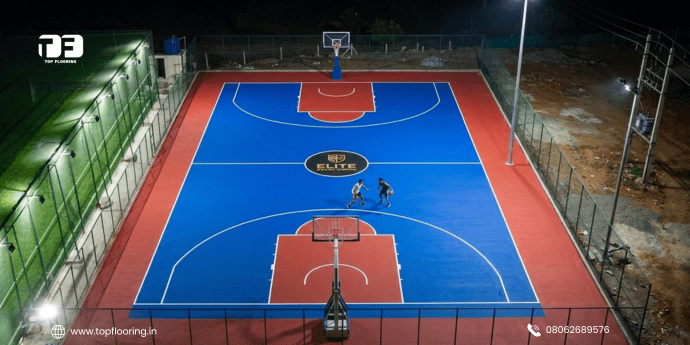
Basketball courts include several painted zones such as the key, three-point arc, free-throw line, and center circle. These markings are defined according to FIBA basketball regulations.
| Court Element | Measurement |
|---|---|
| Court Length | 28 m |
| Court Width | 15 m |
| Free Throw Line Distance | 4.6 m from backboard |
| Three Point Line Radius | 6.75 m |
| Center Circle Radius | 1.8 m |
Basketball court paint must provide excellent slip resistance and high durability, as the sport involves rapid movement and sudden stops.
Indoor vs Outdoor Court Paint Systems
Sports courts vary significantly depending on whether they are indoor or outdoor.
Outdoor Court Paint
Outdoor sports courts must withstand:
- Sunlight and UV radiation
- Rain and moisture
- Temperature changes
- Heavy usage
For these conditions, acrylic sports coatings are preferred.
Outdoor Surface Features
- UV-resistant pigments
- Anti-slip texture
- Water permeability options
- Crack bridging properties
Indoor Court Paint
Indoor’s courts focus more on performance and aesthetics.
Indoor paint systems emphasize:
- Smooth surface finish
- High durability
- Controlled friction levels
Common materials include PU and epoxy coatings.
Materials Used in Modern Court Paint Systems
Professional sports courts use multi-layer coating systems, not just a single paint layer.
Typical acrylic sports court system components include:
| Layer | Material | Purpose |
| Base Layer | Concrete / Asphalt | Structural support |
| Primer | Acrylic binder | Surface bonding |
| Cushion Layer | Rubber + acrylic | Shock absorption |
| Color Coat | Acrylic paint | Surface appearance |
| Line Paint | Textured acrylic | Court markings |
Each layer plays a crucial role in performance, safety, and durability.
How Court Paint Improves Sports Court Performance
High-quality court paint directly influences how the game is played.
1. Improved Player Traction
Court paint contains silica sand additives that create controlled friction.
This improves:
- Running grip
- Sudden stopping ability
- Injury prevention
2. Consistent Ball Bounce
Acrylic sports coatings provide uniform ball rebound.
This is particularly important in:
- Tennis
- Basketball
- Pickleball
Uneven surfaces or poor paint quality can cause irregular bounce, affecting gameplay.
3. Clear Visual Boundaries
Bright, high-contrast court lines help players and referees easily identify:
- Boundary lines
- Service areas
- Key zones
This improves match accuracy and fairness.
4. Surface Protection
Court paint protects the base surface from:
- Water penetration
- UV damage
- Surface wear
This significantly increases court lifespan.
Construction Process: How Court Paint Is Applied
Applying sports court paint requires technical precision and proper layering.
Step 1: Surface Preparation
- Clean the concrete or asphalt base
- Repair cracks or surface damage
- Ensure proper slope for drainage
Step 2: Primer Application
A bonding primer is applied to improve adhesion.
Step 3: Acrylic Resurfacer Layer
This layer smooths the surface and prepares it for color coatings.
Step 4: Cushion Coating (Optional)
Rubberized cushion layers reduce joint impact and improve comfort.
Step 5: Color Coating
Two to three coats of acrylic color paint are applied.
Step 6: Line Marking Paint
Finally, court markings are painted according to official sport regulations.
Advantages of Synthetic Acrylic Sports Flooring
Synthetic acrylic flooring has become the global standard for sports court construction.
Key Benefits
Durability
Acrylic coatings last 5–8 years with proper maintenance.
Weather Resistance
They perform well in extreme climates, including high heat and rain.
Low Maintenance
Minimal upkeep compared to traditional surfaces.
Customizable Surface Speed
Surface speed can be adjusted by modifying the sand texture.
Cost Efficiency
Lower installation cost compared to PU and hardwood systems.
Cost Considerations for Court Paint and Coating Systems
The cost of sports court paint depends on several factors.
| Factor | Impact on Cost |
| Court size | Larger courts require more material |
| Surface condition | Repairs increase cost |
| Cushion system | Adds additional layers |
| Paint quality | Professional coatings cost more |
| Labor expertise | Skilled installers ensure durability |
On average, acrylic sports court coatings are among the most economical options for outdoor courts.
Maintenance Tips for Court Paint Longevity
Maintaining sports court paint ensures consistent performance.
Regular Cleaning
Remove dust, debris, and leaves regularly.
Pressure Washing
Periodic washing removes dirt and algae buildup.
Crack Repairs
Repair cracks early to prevent water damage.
Repainting Schedule
Courts typically require recoating every 4–6 years, depending on usage.
Common Mistakes in Court Paint Application
Poor installation can reduce court performance and durability.
Incorrect Surface Preparation
Dust or moisture can cause paint peeling.
Using Low-Quality Paint
Cheap paints fade quickly and lose traction.
Improper Line Markings
Inaccurate measurements can make the court non-compliant with official standards.
Insufficient Coating Layers
Thin coatings reduce durability.
Professional sports contractors follow strict installation protocols to avoid these issues.
Safety Considerations in Sports Court Paint
Safety is a critical factor in sports flooring design.
Important safety features include:
- Slip-resistant textures
- Shock absorption layers
- UV-stable pigments
- Non-toxic water-based coatings
These elements help reduce:
- Player injuries
- Surface overheating
- Environmental impact
Future Trends in Sports Court Paint Technology
Sports flooring technology continues to evolve.
Smart Sports Surfaces
New courts may integrate sensor technology for performance tracking.
Eco-Friendly Coatings
Manufacturers are developing low-VOC, environmentally sustainable coatings.
Advanced Cushion Systems
Improved shock absorption layers enhance athlete safety.
Heat-Reflective Surfaces
Modern coatings reduce surface temperature in hot climates.
These innovations are shaping the next generation of sports infrastructure.
Conclusion
Court paint plays a critical role in sports court functionality, safety, and durability. Beyond simple markings, modern court paint systems improve traction, regulate ball bounce, protect surfaces from environmental damage, and ensure compliance with official sports standards.
Among the various options available, synthetic acrylic court coatings remain the most popular solution for outdoor sports facilities due to their durability, weather resistance, and cost efficiency. When installed correctly with proper surface preparation, multiple coating layers, and accurate line markings, court paint can significantly enhance the performance and lifespan of sports infrastructure.
For schools, stadium developers, architects, and sports facility planners, investing in high-quality sports court paint and professional installation is essential to ensure long-term performance, player safety, and compliance with international sports regulations.
A well-designed sports court is not only about construction—it is about creating a reliable, high-performance playing surface that supports athletes and elevates the quality of the game.
Frequently Asked Questions (FAQs)
Court paint is used to create sports markings, improve traction, and protect sports court surfaces. It enhances gameplay accuracy and surface durability.
Acrylic court paint is the most widely used coating for outdoor sports courts due to its UV resistance, durability, and slip-resistant properties.
High-quality acrylic court paint typically lasts 4 to 8 years, depending on climate conditions, usage, and maintenance.
No. Regular paint lacks the traction, flexibility, and durability required for sports surfaces. Specialized sports coatings must be used.
Most sports courts require recoating every 4–6 years to maintain surface performance and visual clarity.
Yes. Proper sports court paint ensures consistent ball rebound, which is essential for sports like tennis, basketball, and pickleball.