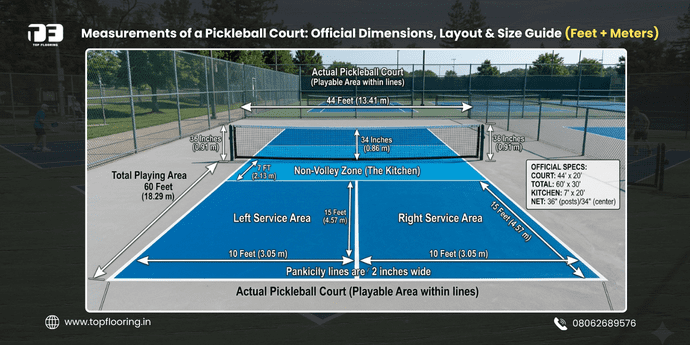
A standard pickleball court measures 20 feet wide and 44 feet long (6.10 m × 13.41 m) for both singles and doubles. The non-volley zone (kitchen) extends 7 feet (2.13 m) from the net on each side. The net height is 36 inches (0.91 m) at the sidelines and 34 inches (0.86 m) at the center. For safe gameplay, the recommended total area including run-offs is 30 × 60 feet (9.14 m × 18.29 m).
What is a Pickleball Court?
Pickleball is a fast-growing paddle sport played on a compact court designed for accessibility, strategy, and fast-paced rallies. Due to its smaller footprint compared to tennis, it is widely used in:
- Schools and universities
- Residential societies
- Clubs and academies
- Multi-sport facilities
From a construction perspective, precision in measurements directly affects gameplay quality, safety, and surface performance.
Official Pickleball Court Dimensions (Feet + Meters)
The official dimensions are governed by international standards followed globally.
Standard Court Dimensions
| Component | Measurement (Feet) | Measurement (Meters) |
| Court Length | 44 ft | 13.41 m |
| Court Width | 20 ft | 6.10 m |
| Total Playing Area | 880 sq ft | 81.7 sq m |
| Non-Volley Zone (Kitchen) | 7 ft | 2.13 m |
| Service Area Length | 15 ft | 4.57 m |
| Net Height (Sidelines) | 36 inches | 0.91 m |
| Net Height (Center) | 34 inches | 0.86 m |
Recommended Total Space for Construction
For professional and safe gameplay, additional space around the court is essential.
Total Area Guidelines
| Level of Play | Area (Feet) | Area (Meters) |
| Minimum | 30 × 60 ft | 9.14 × 18.29 m |
| Club Level | 34 × 64 ft | 10.36 × 19.50 m |
| Tournament Level | 36 × 66 ft | 10.97 × 20.12 m |
Expert Insight
With 20+ years of experience in sports court construction, one of the most common issues observed is insufficient run-off space, which compromises both safety and professional play standards.
Pickleball Court Layout Explained
Key Sections of the Court
- Baseline – Back boundary
- Sidelines – Width boundaries
- Centerline – Divides service boxes
- Non-Volley Zone (Kitchen) – 7 ft from net
- Service Courts – Left and right sections
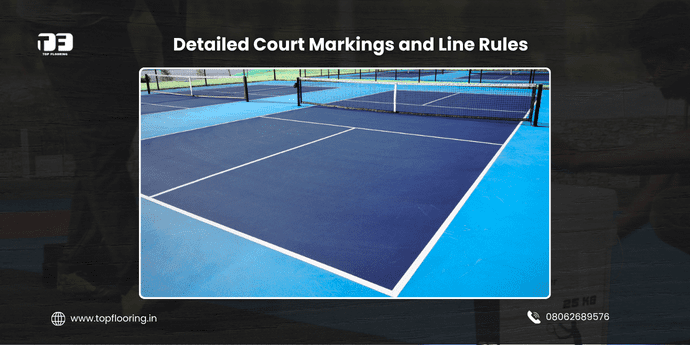
Detailed Court Markings and Line Rules
Line Specifications
| Marking Type | Width | Description |
| Boundary Lines | 2 inches | Defines outer limits |
| Non-Volley Line | 2 inches | Marks kitchen area |
| Centerline | 2 inches | Divides service areas |
Important Rule:
All lines are considered part of the court — any ball touching the line is valid (in play).
How Many Pickleball Courts Fit in a Tennis Court?
This is a high-search and practical planning query.
| Court Type | Size (Feet) | Pickleball Courts Fit |
| Tennis Court | 78 × 36 | Up to 4 courts |
This makes pickleball one of the most space-efficient sports infrastructure investments.
Backyard Pickleball Court Measurements
For residential or compact spaces:
Recommended Backyard Sizes
| Type | Size (Feet) |
| Compact Court | 20 × 44 |
| Ideal Backyard | 30 × 60 |
Expert Tip
In smaller areas, reducing run-off space is possible, but surface quality and safety must not be compromised.
Indoor vs Outdoor Pickleball Court Differences
| Feature | Indoor Court | Outdoor Court |
| Surface | Acrylic / Wood | Acrylic (UV resistant) |
| Weather Impact | None | High |
| Drainage | Not required | Essential |
| Lighting | Controlled | Natural + artificial |
Step-by-Step Pickleball Court Construction Process
1. Site Preparation
- Soil leveling and compaction
- Sub-base (WMM layer)
2. Base Construction
- Concrete or asphalt base
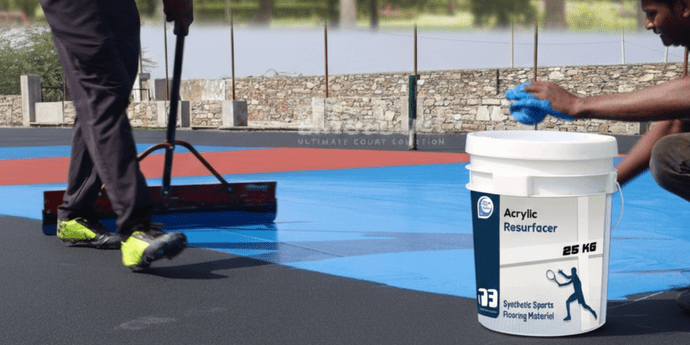
3. Acrylic Flooring Application
- Primer coat
- Cushion layers
- Color coatings
- Line marking
4. Net Installation & Final Inspection
Materials Used in Modern Pickleball Courts
- Concrete / Asphalt base
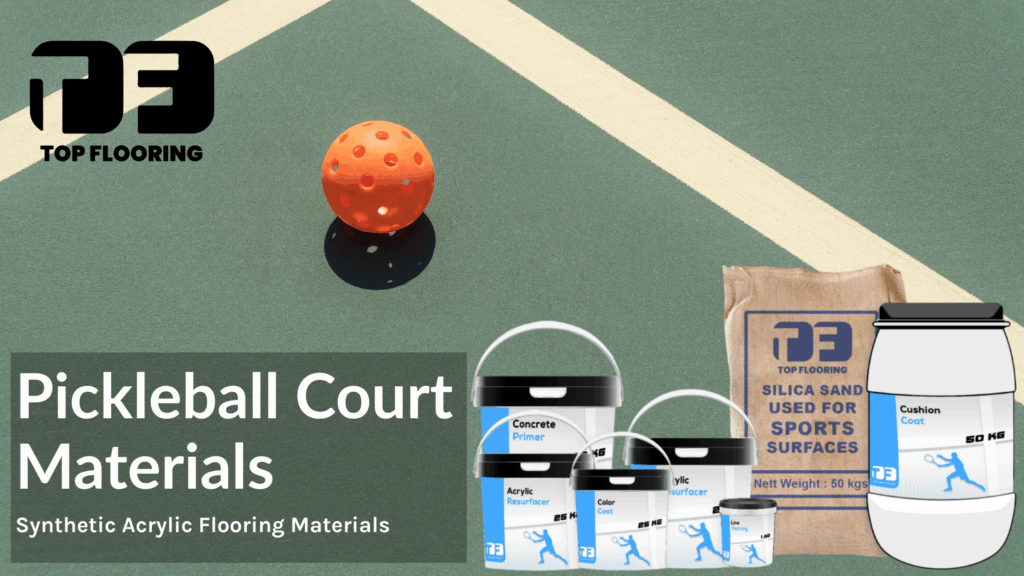
- Synthetic acrylic flooring
- PU coatings
- Modular tiles
Why Synthetic Acrylic Flooring is the Best Choice
From extensive industry experience, synthetic acrylic flooring dominates modern sports infrastructure.
Key Benefits
- Consistent ball bounce
- Anti-slip and player safety
- UV and weather resistance
- Long lifespan (8–10 years)
- Low maintenance
Industry Insight
In Indian climate conditions, acrylic surfaces outperform alternatives due to heat resistance and durability under heavy usage.
Cost of Pickleball Court Construction in India
Cost Breakdown
| Component | Cost (₹/sq ft) |
| Base Construction | ₹80 – ₹150 |
| Acrylic Coating | ₹70 – ₹120 |
| Line Marking | ₹10 – ₹20 |
| Total Cost | ₹160 – ₹300 |
Common Mistakes in Pickleball Court Construction
Based on real-world projects:
- Incorrect slope (no drainage planning)
- Poor base compaction
- Cheap or low-quality coatings
- Wrong line measurements
- Inadequate lighting
Safety Considerations in Court Design
- Anti-skid surface
- Proper lighting lux levels
- Adequate buffer zones
- Optional cushioning layers
Future Trends in Pickleball Court Design
- Smart courts with analytics
- Eco-friendly acrylic coatings
- Multi-purpose court conversions
- Shock-absorbing systems
Why Accurate Measurements Matter
Accurate dimensions ensure:
- Fair gameplay
- Professional standards
- Player safety
- Long-term durability
Even minor deviations can lead to performance issues and rule violations.
Conclusion
The measurements of a pickleball court are simple yet critically important for ensuring professional gameplay, safety, and long-term performance. From the standard 20 × 44 ft dimensions to precise markings and buffer zones, every detail plays a role in delivering a high-quality sports experience.
For architects, developers, and facility planners, success lies not just in building a court—but in building it correctly with the right materials and expertise. Modern solutions like synthetic acrylic sports flooring offer durability, performance, and cost-efficiency, making them the ideal choice for both indoor and outdoor pickleball courts.
A well-designed pickleball court is not just a playing surface—it is a long-term investment in sports infrastructure, user experience, and facility value.
FAQs (Frequently Asked Questions)
20 ft × 44 ft (6.10 m × 13.41 m).
7 ft (2.13 m) from the net.
Yes, up to 4 pickleball courts can fit on one tennis court.
Synthetic acrylic flooring is the most preferred.
Minimum 30 × 60 ft.