Introduction
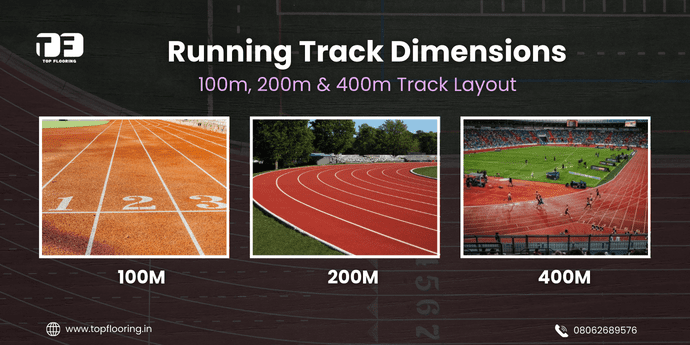
The standard running track dimensions used worldwide are based on regulations established by World Athletics (formerly IAAF). A 400-meter running track is the official size used in international competitions and typically consists of 8 lanes, each 1.22 meters wide, with two straight sections and two semicircular curves. The radius of the curves is usually 36.5 meters, while the length of each straight section is about 84.39 meters.
Smaller facilities often include 100-meter straight sprint tracks and 200-meter oval tracks, which are commonly used in schools, training centers, and indoor stadiums. While the 100m track is usually a straight sprint lane, the 200m track is typically a smaller oval layout with tighter curves.
Understanding running track dimensions, layout, lane markings, and construction standards is essential for architects, sports planners, schools, and stadium developers planning professional athletics infrastructure. This guide provides a complete breakdown of 100m, 200m, and 400m running track measurements, along with construction insights, materials, safety considerations, and modern sports surface technologies.
Understanding Running Track Dimensions
A running track is an oval-shaped sports surface designed for athletics events such as sprinting, middle-distance running, and relay races. The layout is carefully engineered to ensure consistent race distances across all lanes, proper athlete safety, and standardized competition conditions.
Running tracks typically consist of the following components:
- Straight sprint sections
- Curved sections (semicircles)
- Multiple lanes with equal width
- Markings for starting positions and relay zones
- Surrounding safety areas
The dimensions of a running track vary depending on the facility type, such as school training tracks, indoor tracks, or Olympic-standard stadium tracks.
Standard Running Track Dimensions Overview
The following table summarizes the typical dimensions of the most common running track types.
| Track Type | Shape | Typical Length | Lane Width | Common Use |
| 100m Track | Straight | 100 meters | 1.22 m | Sprint training |
| 200m Track | Oval | 200 meters | 1.22 m | Indoor or compact tracks |
| 400m Track | Oval | 400 meters | 1.22 m | Olympic and stadium tracks |
These tracks are usually measured 30 cm from the inner lane boundary, which ensures accurate race distances regardless of lane position.
100 Meter Running Track Dimensions
Overview of the 100m Track
The 100-meter track is the simplest running track design and is used primarily for sprint events such as the 100m dash and training drills.
Unlike oval tracks, the 100m track consists of a straight sprint lane with parallel lanes running side by side.
Standard 100m Track Measurements
| Element | Measurement |
| Track Length | 100 meters |
| Number of Lanes | 6–10 |
| Lane Width | 1.22 meters |
| Total Track Width (8 lanes) | ~9.76 meters |
| Run-off Area | 10–15 meters beyond finish |
Key Features
- Straight sprint lanes
- Start and finish lines clearly marked
- Optional acceleration zone
- Safety run-off area after finish
This type of track is commonly installed in schools, training academies, and sports complexes where space is limited.
200 Meter Running Track Dimensions
Overview of the 200m Track
The 200-meter track is a smaller oval track commonly used in indoor stadiums or compact outdoor facilities. It features two straights and two curves but has a much smaller radius than the 400m track.
Indoor athletics competitions often use this track layout.
Standard 200m Track Measurements
| Element | Measurement |
| Total Lap Distance | 200 meters |
| Lane Width | 1.0–1.22 meters |
| Number of Lanes | 4–6 |
| Curve Radius | 17–20 meters |
| Straight Length | 40–50 meters |
Design Characteristics
- Banked curves in indoor tracks
- Shorter straight sections
- Compact oval layout
- Fewer lanes than standard outdoor tracks
Indoor tracks often include banked turns to help athletes maintain speed during tight curves.
400 Meter Running Track Dimensions (Olympic Standard)
Overview of the 400m Track
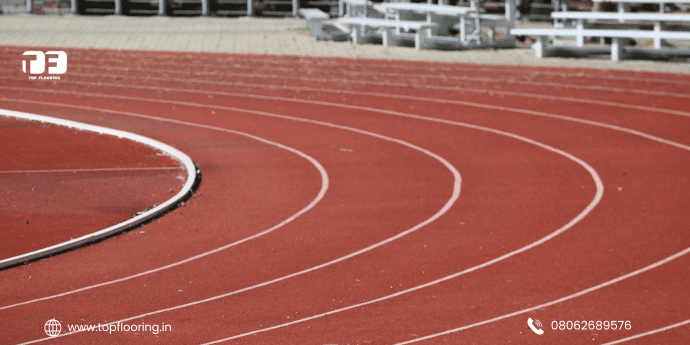
The 400-meter track is the standard athletics track used in international competitions, Olympic stadiums, and professional sports complexes.
The layout consists of:
- Two straight sections
- Two semicircular curves
- Eight lanes
The track distance is measured along lane 1 at a point 30 cm from the inside curb.
Official 400m Track Measurements
| Element | Measurement |
| Total Lap Distance | 400 meters |
| Lane Width | 1.22 meters |
| Number of Lanes | 8 (sometimes 9) |
| Curve Radius | 36.5 meters |
| Straight Length | 84.39 meters |
| Inner Field Length | ~90 meters |
| Inner Field Width | ~70 meters |
Track Layout Breakdown
| Section | Length |
| First Straight | 84.39 m |
| First Curve | 115.61 m |
| Second Straight | 84.39 m |
| Second Curve | 115.61 m |
The curved sections are staggered across lanes, which ensures each lane covers exactly 400 meters.
Running Track Lane Markings and Measurement Rules
Track markings are carefully designed to ensure fair competition. The placement of start lines, finish lines, and relay zones follows strict guidelines.
Key Markings on Athletics Tracks
| Marking | Purpose |
| Start Line | Beginning of race |
| Finish Line | End of race |
| Staggered Start | Used in curved races |
| Relay Exchange Zone | Baton passing area |
| Lane Numbers | Identify lanes |
Lane Width Standards
| Standard | Lane Width |
| World Athletics | 1.22 meters |
| Indoor tracks | 1.0–1.22 meters |
| School tracks | 1.0–1.22 meters |
Proper lane markings ensure that athletes running in outer lanes cover equal distances to those in inner lanes.
Indoor vs Outdoor Running Track Dimensions
While the basic layout remains similar, indoor and outdoor tracks differ significantly in size and design.
| Feature | Outdoor Track | Indoor Track |
| Standard Length | 400 meters | 200 meters |
| Number of Lanes | 8–9 | 4–6 |
| Curve Radius | Large | Smaller |
| Banking | Rare | Common |
| Surface | Synthetic rubber | Synthetic or polyurethane |
Indoor tracks are designed to fit within limited stadium spaces, which is why they have tighter curves.
Running Track Construction Process
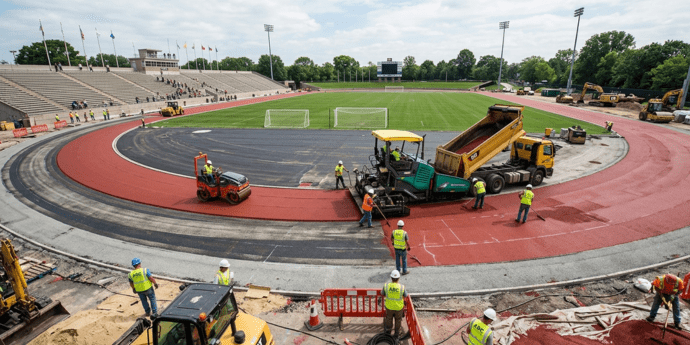
Constructing a professional athletics track requires precise engineering and surface preparation.
Step-by-Step Construction Process
1. Site Preparation
The ground must be cleared, leveled, and compacted to create a stable base.
2. Base Layer Installation
Typically consists of:
- Crushed stone
- Asphalt base
- Concrete foundation
3. Drainage System
Proper drainage prevents water accumulation and surface damage.
4. Surface Layer Installation
The top surface is usually made from:
- Synthetic rubber
- Polyurethane
- Acrylic sports coatings
5. Track Marking
Precision line markings are applied using specialized sports paint.
Materials Used in Modern Running Tracks
Modern athletics tracks use advanced sports flooring systems designed for durability, safety, and performance.
Common Track Surface Materials
| Material | Features |
| Polyurethane | Professional competition tracks |
| Rubber granules | Shock absorption |
| Synthetic acrylic | Multi-sport surfaces |
| Latex coatings | Budget-friendly surfaces |
Each material offers different performance characteristics depending on usage level and climate conditions.
Advantages of Synthetic Acrylic Sports Flooring
Synthetic acrylic surfaces are widely used in training tracks and multi-sport courts due to their durability and cost-effectiveness.
Key Benefits
1. Excellent Durability
Acrylic sports surfaces can withstand heavy usage and harsh weather conditions.
2. Slip Resistance
Textured coatings provide strong grip, reducing athlete injury risks.
3. UV Resistance
These surfaces maintain color and performance under strong sunlight.
4. Low Maintenance
Synthetic acrylic tracks require minimal upkeep compared to natural surfaces.
5. Multi-Sport Compatibility
Acrylic systems are commonly used for basketball courts, tennis courts, and running tracks.
Cost Considerations for Running Track Construction
The total cost of constructing a running track depends on several factors.
Major Cost Factors
| Factor | Impact on Cost |
| Track Size | Larger tracks cost more |
| Surface Material | Polyurethane is more expensive |
| Drainage System | Essential for durability |
| Sub-base preparation | Major construction expense |
| Number of lanes | Additional lanes increase cost |
Typical track construction projects involve significant investment in ground preparation and surface materials.
Maintenance Tips for Running Tracks
Proper maintenance ensures the longevity and safety of athletics tracks.
Recommended Maintenance Practices
- Regular surface cleaning
- Inspection for cracks
- Repainting track lines
- Removing debris and dirt
- Periodic resurfacing
High-quality synthetic tracks can last 10–15 years with proper maintenance.
Common Mistakes During Running Track Construction
Many running tracks fail prematurely due to design or installation mistakes.
Common Errors
Incorrect dimensions
Improper measurements can make the track unusable for official competitions.
Poor drainage design
Water accumulation damages the surface layers.
Low-quality materials
Inferior coatings reduce durability and safety.
Improper surface leveling
Uneven surfaces increase athlete injury risks.
Working with experienced sports infrastructure professionals helps avoid these issues.
Safety Considerations for Athletics Tracks
Athlete safety is a major priority during track design and construction.
Important Safety Factors
- Shock-absorbing surfaces
- Non-slip coatings
- Adequate run-off zones
- Proper lighting for night use
- Safe fencing and spectator areas
These factors ensure safe and comfortable athletic performance.
Future Trends in Running Track and Sports Flooring Design
Sports infrastructure continues to evolve with new materials and technology.
Emerging Trends
Eco-friendly track materials
Recycled rubber and sustainable coatings are becoming popular.
Smart athletics tracks
Embedded sensors can measure speed and performance.
Hybrid sports surfaces
Combination surfaces support multiple sports activities.
Advanced shock absorption systems
Improved injury prevention for athletes.
Modern sports infrastructure focuses on performance, sustainability, and long-term durability.
Conclusion
Understanding running track dimensions, layout design, and construction standards is essential for building safe and high-performance athletics facilities. The 100m, 200m, and 400m tracks each serve different purposes, ranging from sprint training to international competitions.
A standard 400-meter athletics track with 1.22-meter lanes and carefully designed curves remains the global benchmark for professional stadiums. Meanwhile, 100m straight tracks and 200m oval tracks are ideal solutions for schools, training academies, and compact sports complexes.
Modern sports infrastructure increasingly relies on advanced synthetic surfaces such as polyurethane and acrylic coatings, which improve durability, athlete comfort, and long-term performance.
For schools, architects, and sports developers planning new facilities, working with experienced sports flooring specialists and using high-quality sports surface materials ensures that running tracks meet international standards while delivering safe and reliable performance for athletes.
Frequently Asked Questions (FAQs)
A standard athletics track measures 400 meters in lane 1, with two straights of 84.39 meters and two curves of 36.5-meter radius.
The standard lane width for athletics tracks is 1.22 meters according to international sports regulations.
Most professional tracks have 8 lanes, though some stadiums include 9 lanes.
Indoor tracks typically measure 200 meters per lap, with 4–6 lanes and tighter curves compared to outdoor tracks.
Synthetic acrylic surfaces are commonly used for training tracks and multi-sport courts because they are durable, weather-resistant, and cost-effective.
With proper maintenance, modern synthetic tracks can last 10–15 years or longer.