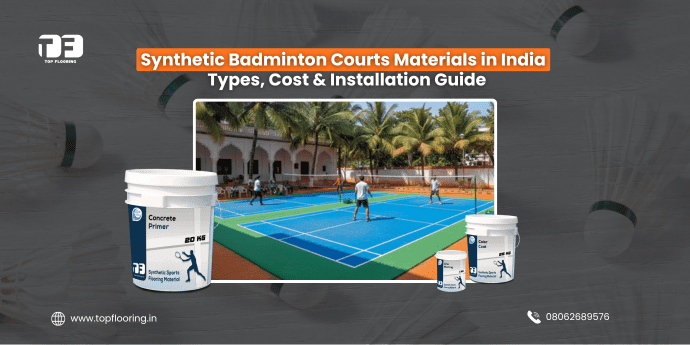
Synthetic badminton courts materials have become the foundation of modern sports infrastructure in India. From schools and universities to professional academies and indoor stadiums, synthetic surfaces are now preferred over traditional cement or wooden courts. The reason is simple — better performance, enhanced player safety, and long-term durability.
This comprehensive guide explains everything about Synthetic Badminton Courts Materials, including types, construction process, cost factors, performance advantages, and maintenance insights. The structure is designed for clarity, user engagement, and Google AI overview/snippet ranking.
What Are Synthetic Badminton Courts Materials?
Synthetic badminton courts materials refer to advanced surface systems made using acrylic, polyurethane (PU), or PVC-based layers installed over a properly prepared base. These materials are engineered to provide consistent shuttle bounce, anti-skid grip, cushioning support, and weather resistance. Unlike traditional concrete floors that may cause joint stress and inconsistent play, synthetic badminton flooring systems are designed to enhance both performance and comfort.
They are commonly installed on:
- Indoor sports halls
- Outdoor school campuses
- Sports academies
- Residential clubhouses
- Multipurpose court facilities
The choice of material depends on location, budget, and playing level.
Types of Synthetic Badminton Courts Materials
Understanding the available materials helps in selecting the right surface for specific requirements.
Acrylic Synthetic Flooring
Acrylic is one of the most widely used synthetic badminton courts materials in India, especially for outdoor installations. It is applied in multiple coating layers over a concrete or asphalt base. This system offers excellent grip, UV resistance, and durability. Acrylic surfaces are also cost-effective and suitable for multipurpose courts. Because of their weather-resistant properties, they are ideal for open environments exposed to sunlight and rain.
Polyurethane (PU) Flooring
PU flooring is generally used for indoor badminton courts where cushioning and shock absorption are critical. This surface provides superior elasticity and reduces strain on players’ knees and ankles. PU systems are slightly more expensive than acrylic but offer enhanced comfort and professional-grade performance. They are commonly seen in indoor stadiums and competitive training centers.
PVC Vinyl Flooring (Badminton Mats)
PVC badminton mats are roll-based systems installed over wooden or concrete bases. These materials are popular in professional indoor tournaments. They provide excellent traction, smooth shuttle movement, and consistent performance. However, PVC flooring is strictly recommended for indoor use due to environmental sensitivity.
Comparison of Synthetic Badminton Courts Materials
The following table provides a quick comparison of commonly used materials:
| Material Type | Best For | Cushioning | Weather Resistance | Cost Level |
| Acrylic | Outdoor & Multipurpose | Moderate | High | Economical |
| PU Flooring | Indoor Professional Courts | High | Moderate | Medium to High |
| PVC Vinyl | Indoor Tournament Courts | High | Low (Indoor Only) | High |
This comparison helps facility planners choose the most suitable synthetic badminton courts materials based on performance expectations and budget.
Benefits of Synthetic Badminton Courts Materials
Synthetic surfaces are preferred for several practical and performance reasons.
- First, they improve player safety. The cushioning effect reduces impact stress and lowers the risk of injuries.
- Second, they provide consistent shuttle bounce and reliable grip. This enhances game quality and competitive standards.
- Third, synthetic badminton courts materials are durable. When installed correctly, they resist cracking, fading, and surface damage.
- Fourth, maintenance is minimal compared to wooden courts. Regular cleaning and occasional recoating keep the surface in excellent condition.
Finally, they offer professional aesthetics. Bright color finishes with precise line markings improve the overall appearance of the sports facility.
Construction Process of Synthetic Badminton Courts
The quality of synthetic badminton courts materials depends not only on the product but also on proper installation.
- The process begins with base preparation. A strong concrete or asphalt base is constructed with proper slope and leveling to avoid water accumulation.
- Next, surface grinding and crack repairs are carried out to eliminate imperfections.
- A primer layer is applied to ensure strong bonding between the base and synthetic layers.
- Depending on the system, cushion coats are added for elasticity and shock absorption.
- After this, color coatings are applied in multiple layers to provide durability and texture.
- Finally, professional line marking paint is used to mark standard badminton court dimensions accurately.
Proper curing time is essential before the court becomes ready for play.
Standard Badminton Court Dimensions
Accurate line marking is critical in court construction. Below are official badminton court measurements:
| Court Type | Length | Width |
| Singles | 13.4 meters | 5.18 meters |
| Doubles | 13.4 meters | 6.1 meters |
Maintaining precise dimensions ensures compliance with professional standards.
Cost Factors for Synthetic Badminton Courts Materials in India
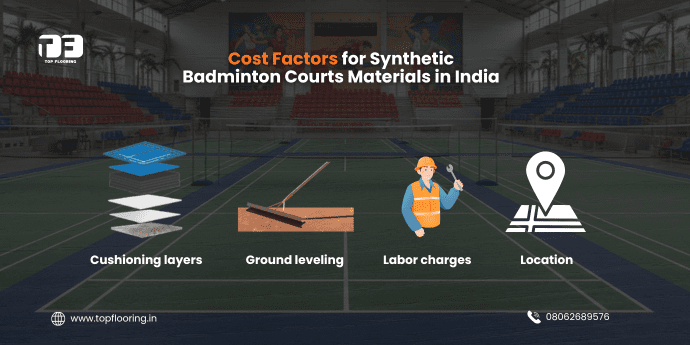
The cost of synthetic badminton courts materials varies depending on several factors. Material selection plays a major role. Acrylic systems are generally more affordable, while PU and PVC indoor systems are premium options.
- The thickness of cushioning layers also affects pricing.
- Higher cushioning increases both comfort and cost.
- Site preparation requirements, including ground leveling and crack repairs, influence the total project budget.
- Location and labor charges differ across regions in India.
Although initial investment may seem higher than traditional surfaces, synthetic badminton courts materials offer better long-term value due to durability and reduced maintenance costs.
Maintenance Requirements
One of the biggest advantages of synthetic badminton flooring is easy maintenance.
- Routine sweeping removes dust and debris.
- Periodic cleaning prevents dirt buildup and surface discoloration.
- Water accumulation should be avoided, especially for outdoor courts.
- Recoating may be required after several years depending on usage intensity.
With proper care, synthetic badminton courts materials can last 5 to 8 years or more.
Indoor vs Outdoor Material Selection
Choosing the right synthetic badminton courts materials depends largely on the playing environment.
- Outdoor courts benefit most from acrylic systems because of their UV resistance and weather durability.
- Indoor courts generally perform better with PU or PVC flooring due to cushioning and professional standards.
A proper assessment of climate conditions, budget, and usage level ensures the right decision.
Growing Demand for Synthetic Badminton Courts Materials in India
India’s sports infrastructure sector is expanding rapidly. Increasing participation in badminton at school and academy levels has fueled demand for high-quality court surfaces. Government initiatives promoting sports facilities, along with rising private sports investments, are further accelerating the growth of synthetic badminton courts materials across urban and semi-urban regions. Modern innovations now focus on eco-friendly coatings, improved elasticity, and enhanced color durability. As performance expectations rise, synthetic badminton courts materials are becoming the standard choice for new court construction projects.
Conclusion
Synthetic Badminton Courts Materials have redefined modern badminton infrastructure by delivering durability, performance, and safety. Whether for outdoor school grounds or professional indoor stadiums, selecting the right synthetic surface ensures long-term value and superior playing experience.
Acrylic systems dominate outdoor installations, while PU and PVC solutions serve indoor professional environments. With growing sports awareness and infrastructure investment in India, synthetic badminton courts materials continue to lead the transformation of sports facilities nationwide.
Frequently Asked Question
Manufacturers make them of acrylic, polyurethane, or PVC-based layered surface systems.
Acrylic synthetic flooring is ideal for outdoor courts due to its UV resistance.
With proper maintenance, they can last between 5 to 8 years or more.
Yes, they offer anti-skid grip and cushioning to reduce injury risks.
Costs vary based on material type, thickness, and site preparation requirements.