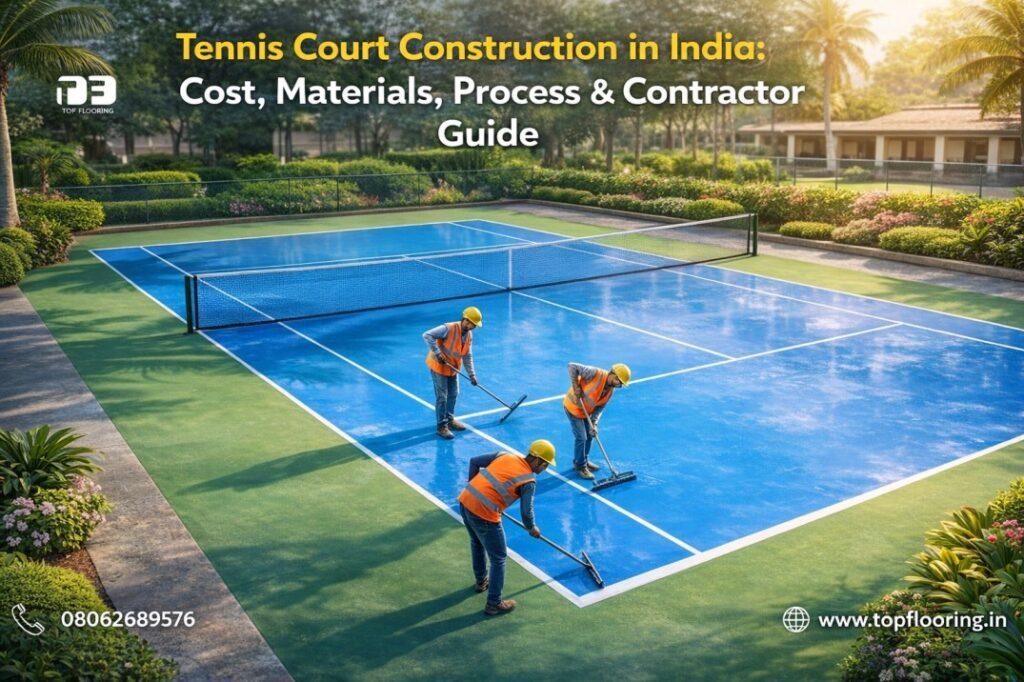
Tennis is rapidly growing across India — from private academies and schools to residential townships and government sports complexes. With increasing awareness about professional infrastructure, Tennis Court Construction has become a serious investment decision rather than just a civil project.
Whether planning a school court, club facility, academy setup, or residential sports zone, understanding cost, materials, process, and contractor selection is critical. This comprehensive guide explains everything about Tennis Court Construction in India, including the most preferred solution today — synthetic acrylic tennis court flooring.
Why Tennis Court Construction Is Growing in India
India’s sports infrastructure ecosystem has seen strong development under initiatives such as:
- Khelo India
- Sports Authority of India
- All India Tennis Association
These programs have increased demand for quality tennis infrastructure in:
- Government schools & colleges
- Private academies
- Residential societies
- Municipal sports complexes
- Luxury villas & farmhouses
As a result, professional Tennis Court Construction with ITF-compliant dimensions and durable tennis court flooring systems is now a priority.
Standard Tennis Court Dimensions in India
Before starting construction, understanding court size is essential.
| Type | Length | Width |
| Singles Court | 78 ft | 27 ft |
| Doubles Court | 78 ft | 36 ft |
| Recommended Playing Area | 120 ft | 60 ft |
For international standards, guidelines are provided by the International Tennis Federation (ITF).
Additional space is required for fencing, drainage, lighting poles, and spectator zones.
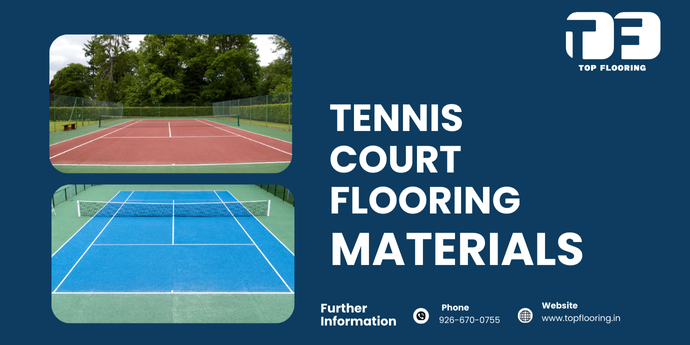
Types of Tennis Court Flooring in India
The choice of tennis court flooring determines performance, maintenance, durability, and overall cost.
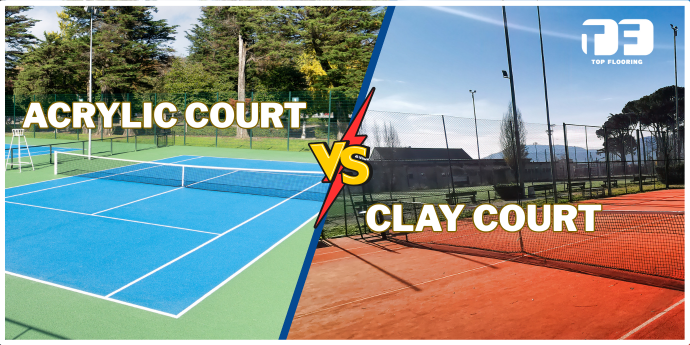
Synthetic Acrylic Tennis Court Flooring (Most Popular)
This is the most preferred surface for Tennis Court Construction in India.
Why Acrylic Flooring?
- Excellent ball bounce consistency
- UV resistant (ideal for Indian climate)
- Anti-skid surface
- Low maintenance
- Cost-effective
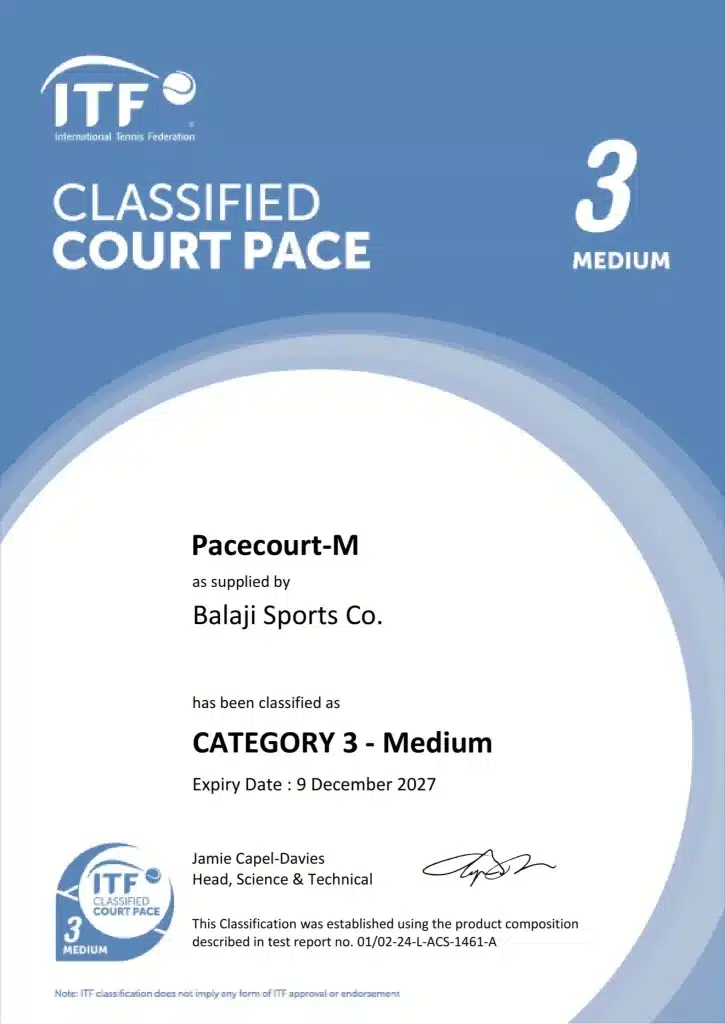
- ITF-compliant options available
Most government tenders and private academies now prefer acrylic tennis court flooring due to its durability and predictable play performance.
Clay Tennis Courts
- Slower gameplay
- High maintenance
- Regular watering required
- Not suitable for all Indian regions
Common in Europe but less practical in most Indian climates.
Synthetic Turf Courts
- Softer impact
- Lower bounce compared to hard courts
- Used mostly for recreational play
However, professional training academies usually choose acrylic systems.
Complete Tennis Court Construction Process (Step-by-Step)
Professional Tennis Court Construction involves multiple technical stages.
Step 1: Site Selection & Soil Testing
- Land leveling
- Soil bearing capacity test
- Water drainage assessment
- Orientation planning (North-South preferred)
Poor soil preparation is the biggest reason for cracks in tennis court flooring.
Step 2: Sub-Base Preparation
- Excavation
- Compaction
- Installation of granular sub-base (GSB)
- Proper slope creation (1% recommended)
Drainage is extremely important in India due to monsoon conditions.
Step 3: Concrete or Asphalt Base
Two main base options:
Concrete Base
- More durable
- Long lifespan
- Slightly higher initial cost
Asphalt Base
- Faster installation
- Slightly lower cost
- Needs quality workmanship
For long-term durability, concrete base is generally preferred for Tennis Court Construction.
Step 4: Acrylic Layer Application (Tennis Court Flooring)
This includes multiple coating layers:
- Primer coat
- Resurfacer layer
- Cushion layers (optional)
- Color coats
- Line marking
Professional-grade tennis court flooring ensures:
- Even surface texture
- Proper ball rebound
- Slip resistance
- UV stability
Step 5: Fencing & Lighting Installation
- 10–12 ft chain-link fencing
- LED sports lighting
- Proper electrical earthing
- Wind screens (optional)
Step 6: Final Inspection & Testing
- Surface flatness check
- Ball bounce test
- Line measurement verification
- Drainage inspection
Only after these checks is the court ready for play.
Tennis Court Construction Cost in India
Cost depends on:
- Location
- Soil condition
- Base type
- Flooring system
- Lighting & fencing requirements
Estimated Cost Range:
| Component | Approx Cost (INR) |
| Base Construction | ₹400 – ₹700 per sq ft |
| Acrylic Tennis Court Flooring | ₹120 – ₹250 per sq ft |
| Fencing | ₹150 – ₹250 per sq ft |
| Lighting | ₹3 – ₹6 lakhs |
| Total Estimated Project Cost | ₹25 – ₹45 lakhs |
Note: Prices vary by city and project size.
Factors Affecting Tennis Court Construction Cost
1. Land Condition
Poor soil increases base cost.
2. Cushion System
Cushioned acrylic flooring increases cost but improves player comfort.
3. Location
Transport and labor rates differ across India.
4. Government vs Private Standards
Tender-based projects often require compliance documentation.
Why Synthetic Acrylic Tennis Court Flooring Is Best for India
India experiences:
- Extreme heat
- Heavy monsoons
- Dust conditions
Acrylic systems are:
- UV resistant
- Weather durable
- Crack resistant
- Easy to maintain
This makes them ideal for long-term Tennis Court Construction projects.
How to Choose the Right Tennis Court Contractor in India
Choosing the right contractor determines project success.
Experience in Sports Infrastructure
Look for companies specializing in sports flooring — not just civil contractors.
ITF Standard Knowledge
Understanding slope, rebound, and surface thickness is critical.
Material Quality
High-quality acrylic coatings improve lifespan.
Past Projects
Ask for:
- Government projects
- School projects
- Academy installations
Turnkey Capability
From base work to fencing & lighting — single-point responsibility reduces risk.
Common Mistakes in Tennis Court Construction
Avoid these costly errors:
- Poor drainage planning
- Low-quality acrylic coating
- Improper slope design
- Incorrect line marking
- Hiring general contractors instead of sports specialists
Maintenance Tips for Tennis Court Flooring
Proper maintenance extends surface life to 6–8 years.
- Weekly cleaning
- Drainage inspection
- Crack repair immediately
- Recoating every 4–5 years
Low maintenance is one major reason acrylic tennis court flooring dominates the Indian market.
Who Should Invest in Tennis Court Construction?
Schools & Colleges
Boosts sports credibility and admissions appeal.
Government Bodies
Supports sports development schemes.
Residential Societies
Increases property value.
Private Academies
Creates revenue streams through coaching programs.
Timeline for Tennis Court Construction in India
| Stage | Duration |
| Site Preparation | 2–3 weeks |
| Base Construction | 3–4 weeks |
| Acrylic Flooring | 1–2 weeks |
| Fencing & Lighting | 1 week |
| Total Project Duration | 6–10 weeks |
Weather conditions may affect timelines.
Return on Investment (ROI) for Tennis Court Projects
A well-built court can generate revenue via:
- Coaching programs
- Hourly rentals
- Tournaments
- Academy memberships
High-quality tennis court flooring reduces long-term repair costs, improving ROI.
Why Professional Tennis Court Construction Matters
A tennis court is not just a painted surface. It is a precision sports system.
Professional construction ensures:
- Correct ball bounce
- Player safety
- ITF compliance
- Long-term durability
Cutting corners during Tennis Court Construction leads to surface cracks, water stagnation, and poor gameplay experience.
Future Trends in Tennis Court Construction in India
- Cushion acrylic systems
- Eco-friendly coatings
- Smart LED lighting
- Multi-sport convertible courts
- Government-funded sports complexes
The future strongly favors synthetic acrylic systems due to climate adaptability.
Final Thoughts
Tennis Court Construction in India is a high-value infrastructure investment that requires proper planning, quality materials, and experienced contractors.
Among all surface options, synthetic acrylic tennis court flooring remains the most reliable, cost-effective, and performance-driven choice for Indian conditions.
Whether planning a government sports facility, private academy, school campus, or residential project — investing in professional Tennis Court Construction ensures durability, safety, and long-term value.