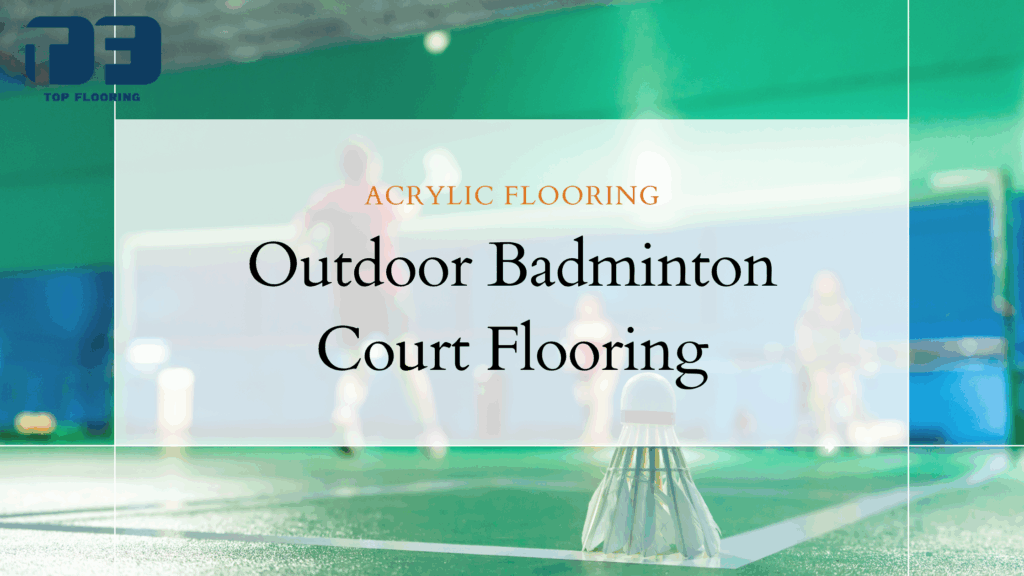
Badminton is liked by everyone around the world for its speed, agility and precision. While indoor courts have its advantages, outdoor badminton court flooring offer accessibility and the joy of playing in nature. But the choice of badminton court flooring is crucial to ensure safety, durability and performance.
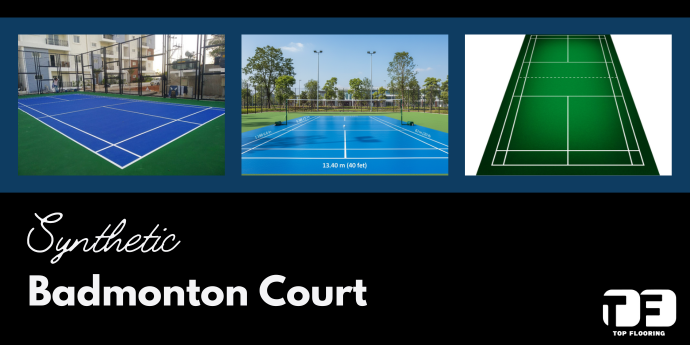
Synthetic acrylic flooring has become the preferred choice for outdoor badminton courts, offering resilience, low maintenance and good playability. This guide will deal with the benefits, installation process, maintenance tips of synthetic badminton court flooring.
Why Choose Synthetic Acrylic Outdoor Badminton Courts?
Durability and Weather Resistance
Outdoor badminton courts are exposed to different weather conditions, from scorching sun to heavy rain. Synthetic acrylic surfaces are designed to withstand these issues without compromising on performance.
Player Safety
The textured finish of acrylic for outdoor badminton flooring provides excellent grip, reducing the risk of slips and falls. And its shock absorbing properties reduce strain on players’ joints, perfect for casual and competitive play.
Low Maintenance
Unlike natural grass or clay courts, synthetic acrylic badminton court surfaces require minimum upkeep. Just regular cleaning and occasional inspections will keep the badminton court in top condition.
Aesthetic Appeal
Available in different types of badminton court colors. Our synthetic acrylic courts can be customized to match specific themes or branding, making sports facilities look best.
Synthetic Acrylic Badminton Court Installation
Installing a synthetic acrylic badminton court flooring is a technical and precise process. It requires expert planning, execution and high quality badminton court materials to ensure a long lasting and high performance sports surface. Below is a step by step breakdown of the installation process for both residential and commercial badminton infrastructure projects.
1. Site Preparation
Every badminton court installation starts with site preparation. This means surveying the area, clearing the land of debris, weeds and vegetation and levelling the ground to get rid of any irregularities. Proper grading is also important for outdoor courts as water accumulation can damage the acrylic surface over time. Engineers design a slight slope (1-1.5%) for water runoff. Drainage systems like French drains may be installed to prevent water seepage under the badminton court which can cause surface cracks and bubbles. A strong, stable and dry subgrade is crucial to support the base and surface layers.
2. Base Construction
Once the site is prepared, the next step is base construction which provides structural integrity and support for the synthetic acrylic basketball court layers. Depending on the project scope and budget the base is usually constructed with either asphalt or concrete. A concrete base is more durable and preferred for long term projects. The base is laid with the proper slope and thickness (100-150mm) to get a smooth flat surface. After laying the base, curing is done for 3-4 weeks to allow the concrete to reach its full strength. During this time waterproofing agents or alkali-resistant primers may be applied to prevent rising moisture. It’s important that the base is dry and crack free before moving on to the next stage to avoid bonding and surface failures.
3. Acrylic Layers
The core performance of a synthetic badminton court comes from the multiple acrylic layers applied on top of the base. These layers provide player comfort, shock absorption, anti-skid properties and UV resistance. The process starts with a primer coat to improve adhesion between the concrete or asphalt base and the upcoming layers. Next is the acrylic resurfacer, a blend of silica sand and polymer that fills minor imperfections and evens out the surface. If a cushioned surface required rubberized cushion layers are applied to absorb shock and reduce the risk of injuries.
After cushioning colored acrylic coats applied. These not only enhance the looks but also provide protection from UV rays and wear. The standard colors are green, red or blue and silica added to these coats for controlled surface texture and traction. Finally line markings applied using white, durable acrylic paint in exact dimensions per BWF guidelines to mark the service lines and boundaries of the court.
4. Curing and Final Inspection
After the coatings applied, the court must be allowed to cure naturally for at least 24 to 72 hours depending on weather conditions. This curing time ensures all layers bond properly and reach optimal hardness and elasticity. Once the basketball surface fully cured, a full inspection is done. Experts check for surface uniformity, adhesion, grip level and line markings. Any imperfections such as bubbling, inconsistent color or uneven texture are corrected before handover. The court must meet quality and safety standards for traction, bounce and visual clarity before it’s ready for play. Final walk-throughs with clients or sports facility managers often include demo play sessions to test performance under real game conditions.
Outdoor Badminton Court Construction Cost
The badminton synthetic court cost depends on several factors such as size, base preparation, badminton court surface material, location, and additional amenities. A standard badminton court requires proper land leveling, compaction, and a durable base layer like asphalt or concrete to ensure long-term performance. The choice of outdoor badminton court flooring material plays a major role. Synthetic acrylic flooring being the most preferred option for outdoor badminton courts due to its UV resistance, slip safety, and durability in different weather conditions.
Other options like PU or modular tiles can also be used depending on the purpose and maintenance preference. Badminton synthetic flooring cost further vary with location, as urban areas often involve higher labor and logistics charges compared to semi-urban regions. Additional features such as fencing, floodlights, seating, and customized line markings can add to the investment. Beyond badminton court construction, regular maintenance such as cleaning, recoating, and resurfacing badminton court every few years is necessary to keep the court safe and high-performing. Overall, the total badminton court cost is shaped by the combination of design choices, material quality, and long-term upkeep requirements.
Synthetic Acrylic Badminton Courts Maintenance
Proper maintenance is key to preserve the performance, safety and appearance of your synthetic acrylic badminton court. Although acrylic flooring is low maintenance compared to other surfaces, regular maintenance ensures it stays in top condition for years. Below expert recommended badminton court maintenance practices:
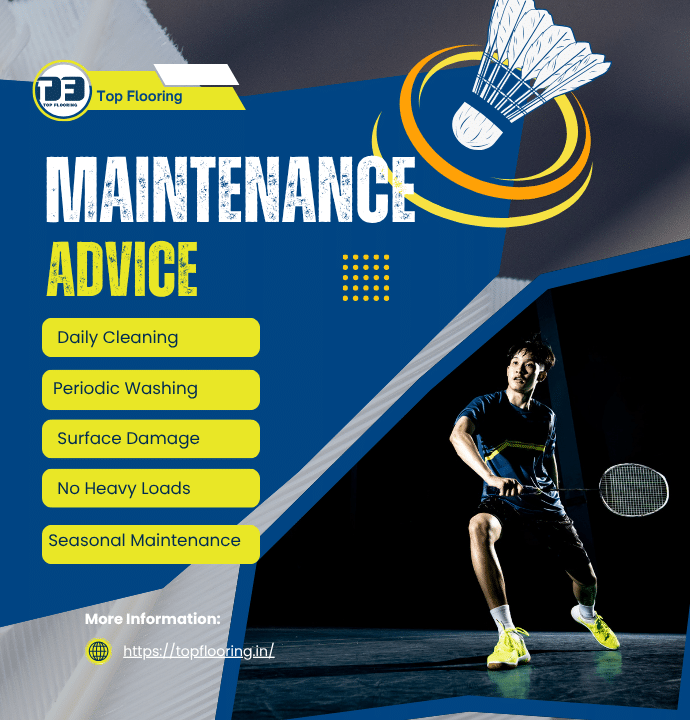
1. Daily Cleaning
Keep the outdoor badminton court flooring free from organic debris such as leaves, twigs, pollen and dust. Accumulated debris can trap moisture, promote mold or algae growth and cause discoloration or surface deterioration over time. Use a soft-bristled broom, leaf blower or non-abrasive sweeper to clean the court daily or as needed. Avoid hard or metal tools that can scratch the acrylic surface. For outdoor courts, cleaning should be more frequent during fall or after storms to prevent clogging of nearby drainage systems.
2. Periodic Washing
To remove dirt buildup, sweat stains and environmental pollutants, wash the court with clean water and mild pH-neutral detergent. Gently scrub with a soft mop or auto-scrubber with soft pads. Do not use harsh chemicals, pressure washers or abrasive pads as these can erode the top color coats and degrade the anti-skid properties. Washing every 2-3 weeks (or monthly depending on usage and environment) not only keeps the court looking fresh but also extends the life of the acrylic coatings.
3. Check for Surface Damage
Check the outdoor badminton court flooring every month or after heavy play. Look for cracks, surface bubbles, blistering, peeling paint or waterlogging. Small damage can caused by UV exposure, sub-base movement or poor drainage. Fixing small cracks or surface imperfections early on prevents them from spreading and costly repairs later on. For deep or structural issues, consult your flooring installer or maintenance contractor for professional repair solutions like patch recoating or micro-resurfacing.
4. No Heavy Loads or Sharp Objects
Synthetic acrylic surfaces designed for foot traffic and light sports equipment. Prevent access to cars, bicycles, ladders or heavy gym equipment, as these can dent, scratch or even delaminate. Also, do not let players wear spiked shoes or drag metal objects on the court. If temporary structures like tents or stages are to be used (e.g. during school events), always lay down rubber mats or plywood sheets underneath to distribute the weight.
5. Seasonal Maintenance & Recoating
In areas with extreme weather conditions (heavy rains, harsh sun or frost), it’s a good idea to do seasonal maintenance checks. Before the monsoon or winter season, clean the court thoroughly and ensure the drainage system is working. Every 3-5 years, depending on usage and wear, consider applying a recoat layer of acrylic paint or a full resurfacing. This will restore the grip, color and playability of the court. Always use badminton court surface material recommended by your original flooring provider.
Case Study: Revamping a Community Badminton Court in Pune
Background
A community in Pune had an outdoor badminton court flooring that had deteriorated over time due to weather exposure and lack of maintenance. The surface had cracks, faded markings and uneven areas making it unsafe and unappealing for players.
Solution
The community partnered with Top Flooring to revamp the court. The process involved:
- Surface Assessment: Identifying areas that needed repair and leveling.
- Base Repair: Fixing cracks and making the base smooth.
- Acrylic Application: Applying multiple layers of synthetic acrylic coatings, including cushioning and color layers.
- Final Touches: Adding official line markings and ensuring the surface met safety standards.
Outcome
The revamped court not only enhanced the playing experience but also attracted more community members to play the sport, promoting health and social interaction.
Conclusion
Choosing synthetic acrylic flooring for your outdoor badminton court flooring is a smart investment that offers great durability, superior player comfort and enhanced safety. Its ability to withstand varying weather conditions and minimal maintenance makes it the preferred choice for schools, sports clubs, community centers and professional complexes. Get a high performance playing surface for casual and competitive players in the long run. To get the best results partner with Top Flooring, who specialize in synthetic acrylic sports flooring installation — precision, quality and value for money.
Start now and talk to our experts for customize solutions for you and ensure a seamless process from start to end.
Frequently Asked Questions
With proper maintenance, a synthetic acrylic court can last between 5 to 10 years, depending on usage and environmental conditions.
Yes, synthetic acrylic surfaces are versatile and can adapted for sports like tennis, basketball, and volleyball with appropriate markings.
Compared to natural grass or clay, synthetic acrylic offers superior durability, lower maintenance, and consistent playability, making it a preferred choice for outdoor courts.
While DIY installation is possible, professional installation ensures the surface meets safety standards and performs optimally.
The main outdoor badminton court surface types include synthetic acrylic flooring, PU flooring, polypropylene (PP) tiles, and cement or asphalt base with acrylic coating.
A badminton court is made by preparing a level base of concrete or asphalt, applying synthetic acrylic or PU flooring for grip and durability, marking official dimensions (13.4m × 6.1m for doubles), and installing poles with a regulation net.