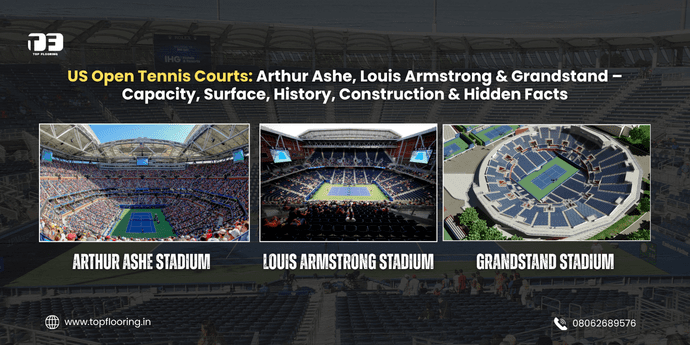
The US Open is played on Laykold acrylic hard courts at the USTA Billie Jean King National Tennis Center in New York. The tournament features 23 courts, including three iconic stadiums Arthur Ashe Stadium (23,771 capacity), Louis Armstrong Stadium (14,061), and the Grandstand (8,125).
These courts are not just playing surfaces—they represent the highest standard of tennis court engineering, surface technology, and stadium design in the world.
Quick Facts
- Surface: Laykold acrylic hard court (medium-fast)
- Total Courts: 23
- Main Stadium: Arthur Ashe Stadium (largest globally)
- Other Stadiums: Louis Armstrong, Grandstand
- Court Color: Blue (for visibility & broadcast clarity)
- Court Type: Cushion acrylic system
What Are US Open Tennis Courts?
The US Open is played across multiple courts, but three stadium courts define the tournament:
- Arthur Ashe Stadium → Finals & headline matches
- Louis Armstrong Stadium → High-intensity matches
- Grandstand Court → Close-view, fan-favorite battles
All courts use uniform Laykold surfaces, ensuring consistent speed, bounce, and fairness across matches.
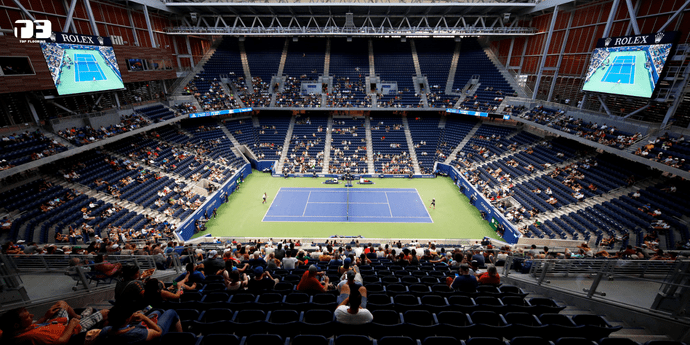
Arthur Ashe Stadium – Capacity, Architecture & Performance
Overview
- Capacity: 23,771
- Opened: 1997
- Roof: Retractable (2016)
- Surface: Laykold
Arthur Ashe Stadium is Named after Arthur Ashe, this is the largest tennis stadium in the world.
Engineering & Design Insights
- Massive steel structure handling 20,000+ spectators
- Roof weighs over 6,000 tons
- Advanced drainage allows quick post-rain recovery
- Surface tolerance maintained within ±2 mm precision
Playing Conditions
- Medium-fast speed
- Wind influence due to open design
- High-pressure environment
Players like Novak Djokovic often adjust gameplay here due to wind variability.
Hidden Facts
- Night matches create the most electric atmosphere in tennis
- Sound dispersion differs from enclosed stadiums
- Considered the “big stage” of global tennis
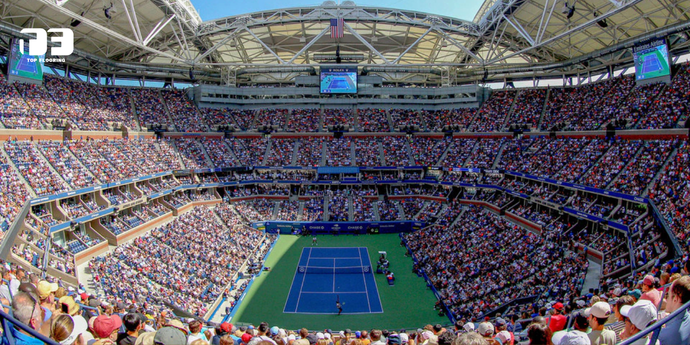
Louis Armstrong Stadium – Smart Design & Player Balance
Overview
- Capacity: 14,061
- Rebuilt: 2018
- Roof: Canopy (open-air airflow)
- Surface: Laykold
Louis Armstrong Stadium is named after Louis Armstrong.
Architectural Innovation
- Open sides for natural ventilation
- Lightweight canopy roof
- No artificial cooling → natural conditions
Playing Advantage
- Minimal wind disturbance
- Consistent ball trajectory
- Better player rhythm
Widely considered the most balanced court at the US Open.
Hidden Facts
- Louder crowd feel due to compact design
- Better shadow control for visibility
- Preferred by many professionals
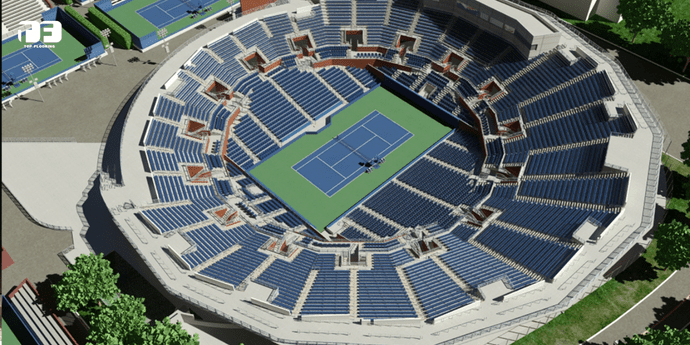
Grandstand Court – The Most Intimate Tennis Experience
Overview
- Capacity: 8,125
- Opened: 2016
- Surface: Laykold
- Roof: Open
Why It Stands Out
- Closest fan-to-player interaction
- Steep seating for immersive viewing
- High-energy matches
Hidden Facts
- Known for major upsets
- Best court for photographers
- Outdoor-only → weather plays a key role
US Open Court Surface (Laykold) – Complete Technical Breakdown
The US Open uses Laykold acrylic hard courts, replacing DecoTurf in recent years.
Layer Structure
- Asphalt/Concrete Base
- Acrylic Resurfacer
- Cushion System
- Color Coating
- Line Marking
Performance Benefits
- Consistent bounce
- Medium-fast speed
- High durability
- Weather resistance
- Reduced injury risk
This same surface was used in the Tokyo Olympics 2020.
Stadium Comparison Table
| Stadium | Capacity | Roof | Experience |
| Arthur Ashe | 23,771 | Retractable | Grand & dramatic |
| Louis Armstrong | 14,061 | Canopy | Balanced |
| Grandstand | 8,125 | Open | Intimate |
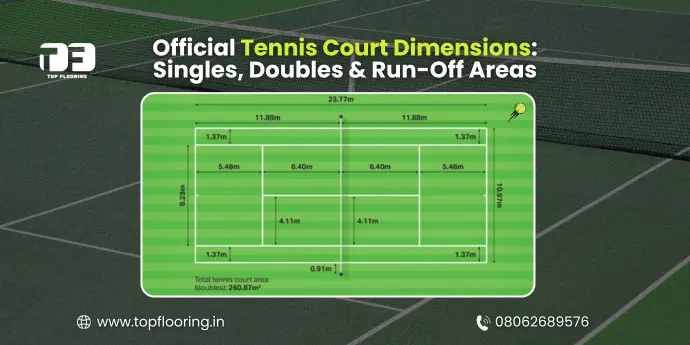
Official Tennis Court Dimensions
| Parameter | Measurement |
| Length | 23.77 m |
| Singles Width | 8.23 m |
| Doubles Width | 10.97 m |
| Net Height | 0.91 m |
US Open vs Wimbledon vs French Open
| Tournament | Surface | Speed | Bounce |
| US Open | Hard (Acrylic) | Medium-fast | Consistent |
| Wimbledon | Grass | Fast | Low |
| French Open | Clay | Slow | High |
How US Open-Style Courts Are Built (Expert Guide)
Based on real-world sports flooring execution:
Step-by-Step Process
- Sub-base preparation
- Asphalt installation
- Laser-guided leveling
- Acrylic coating application
- Cushion layer integration
- Line marking
Real Case Insight
A multi-sport project in North India used:
- 5-layer acrylic system
- Silica sand textured finish
- UV-resistant coating
Results:
- 30% longer surface life
- Improved player comfort
- Lower maintenance costs
Cost of Building US Open-Type Courts in India
| Type | Cost (INR) |
| Basic Acrylic Court | ₹8–12 lakh |
| Cushion Court | ₹12–18 lakh |
| Stadium-Level Court | ₹25 lakh+ |
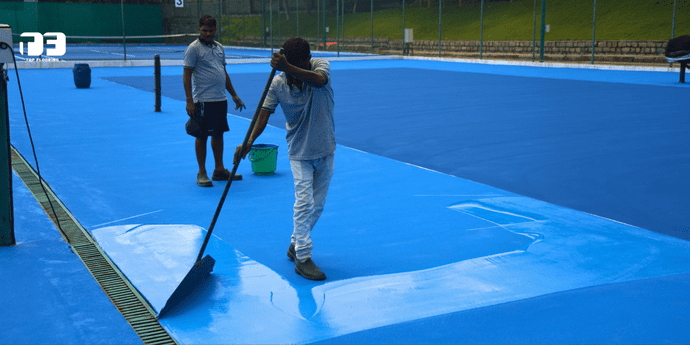
Can You Build a US Open Court at Home?
Yes, with scaled adjustments:
| Type | Size | Cost |
| Mini Court | 18m x 9m | ₹4–8 lakh |
| Full Court | Standard | ₹10–15 lakh |
Common Construction Mistakes
- Poor drainage → water damage
- Uneven base → cracks
- Low-quality coatings → fading
- Incorrect slope → water pooling
Safety Features in Modern Tennis Courts
- Anti-slip acrylic layers
- Shock absorption cushioning
- Proper lighting systems
- Efficient drainage
Future Trends in Tennis Court Infrastructure
- Smart sensor-based courts
- Eco-friendly acrylic coatings
- Modular sports flooring
- AI-based maintenance systems
Final Verdict
The US Open courts Arthur Ashe, Louis Armstrong, and Grandstand—represent the pinnacle of tennis court design, surface technology, and performance engineering.
From a professional perspective, replicating these courts requires:
- Precision construction
- High-quality acrylic systems
- Expert execution
Whether for stadiums, academies, or private courts, adopting US Open-level standards ensures durability, safety, and world-class performance.
FAQ (Frequently Asked Questions)
Laykold acrylic hard court with medium-fast speed.
Arthur Ashe Stadium (23,771 capacity).
To improve ball visibility and broadcast clarity.
A total of 23 courts, including 3 stadium courts.
Medium-fast, offering a balance of speed and control.
Yes, using synthetic acrylic flooring systems.