The size of a skating rink plays a crucial role in determining performance, safety, user experience, and long-term durability. Whether planning a roller skating rink for a school, a recreational facility in a park, or a professional-level sports arena, understanding the correct skating rink dimensions, layout, and construction process is essential.
A well-designed rink is not just about space it’s about precision, flow, safety zones, and surface performance. From beginner-friendly layouts to international-standard arenas, every inch matters in ensuring smooth skating, proper movement, and reduced risk of injury.
This comprehensive guide explores everything needed to plan a skating rink from standard sizes and dimension charts to layout strategies, construction insights, and real-world case studies.
Table of contents
- Why the Size of a Skating Rink Matters
- Standard Size of Skating Rink (Global Guidelines)
- Skating Rink Size in India (Practical Standards)
- Minimum Size of Skating Rink
- Maximum Size of Skating Rink
- Skating Rink Layout Design
- Surface Considerations Based on Size
- Skating Rink Dimension Markings
- Construction Guide for Skating Rink
- Cost vs Size of Skating Rink
- Expert Tips for Choosing the Right Size
- Common Mistakes to Avoid
- Skating Rink Size Comparison Chart
- Future Trends in Skating Rink Design
- Conclusion
- Frequently Asked Questions
Why the Size of a Skating Rink Matters
The size of a skating rink directly influences:
- Skater performance – Adequate space ensures better speed and movement.
- Safety – Proper dimensions reduce collision risks.
- Usage type – Training, recreation, competitions, or multi-purpose use.
- Cost efficiency – Larger rinks require higher investment in materials and land.
- Maintenance – Bigger areas increase upkeep requirements.
Choosing the wrong size can lead to poor usability, safety issues, and inefficient space utilization.
Standard Size of Skating Rink (Global Guidelines)
There is no single universal size for all skating rinks, but there are widely accepted standards depending on usage.
1. Standard Roller Skating Rink Size
- Minimum Size: 50 ft × 100 ft (15 m × 30 m)
- Recommended Size: 60 ft × 120 ft (18 m × 36 m)
- Professional Size: 75 ft × 150 ft (23 m × 46 m)
These dimensions are ideal for:
- Recreational skating
- School-level activities
- Training sessions
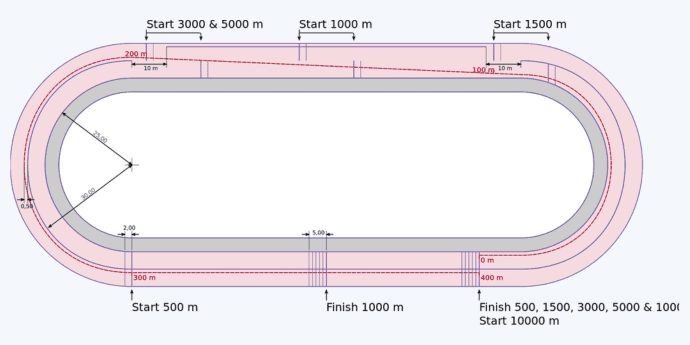
2. Inline Skating / Speed Skating Rink
- Track Length: 100 m to 200 m (oval track)
- Track Width: 5 m to 8 m
- Inner Radius: 10 m to 25 m
Used for:
- Competitive racing
- Professional training
- National-level events
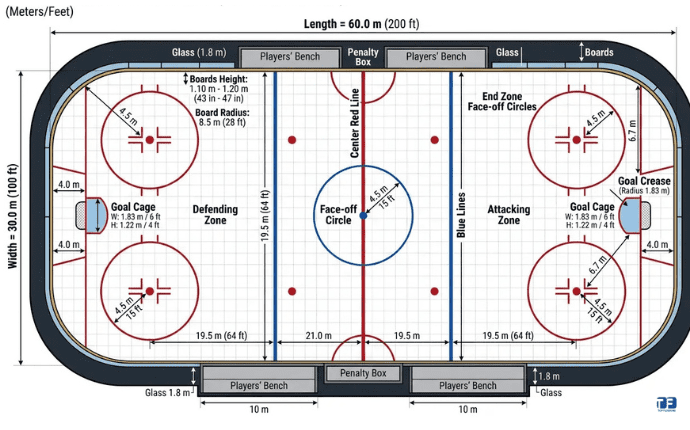
3. Ice Skating Rink Size (for reference)
- NHL Standard: 200 ft × 85 ft (61 m × 26 m)
- Olympic Standard: 60 m × 30 m
Though different from roller skating, these sizes help in planning multi-purpose facilities.
Skating Rink Size in India (Practical Standards)
In India, skating rink sizes vary depending on land availability and budget constraints.
Common Sizes Used:
| Type | Dimensions |
| Small School Rink | 15 m × 30 m |
| Medium Facility | 20 m × 40 m |
| Large Club Rink | 30 m × 60 m |
| Competition Level | 40 m × 80 m |
Most projects focus on optimized space utilization rather than strict international dimensions.
Minimum Size of Skating Rink
For basic functionality:
- Absolute Minimum: 12 m × 24 m
- Suitable for:
- Kids learning
- Small indoor setups
- Private facilities
However, smaller rinks:
- Limit movement
- Increase collision chances
- Reduce professional usability
Maximum Size of Skating Rink
There is technically no fixed upper limit, but practical constraints include:
- Land availability
- Budget
- Maintenance capacity
Large skating arenas may go up to:
- 50 m × 100 m or more
Used for:
- Sports complexes
- National training centers
- Multi-sport facilities
Skating Rink Layout Design
A well-planned layout ensures smooth skating and safety.
Key Layout Components
1. Skating Area
- Main surface where skating happens
- Should be free of obstructions
2. Safety Zone
- 1.5 m to 3 m buffer around the rink
- Prevents injuries during falls
3. Boundary Markings
- Clearly visible lines
- Define skating zones and directions
4. Entry & Exit Points
- Positioned strategically
- Avoid congestion
5. Seating Area
- Optional but useful for spectators
- Located outside safety zone
6. Lighting Layout
- Uniform illumination
- No shadows or glare
Surface Considerations Based on Size
The surface quality becomes more critical as the rink size increases.
Recommended Surface: Acrylic Flooring
- Smooth and seamless finish
- Anti-skid properties
- UV resistant
- Weatherproof
- Ideal for Indian climate
Thickness Guide
- Base layer: Concrete or asphalt
- Acrylic layers: 2–5 mm coating
Skating Rink Dimension Markings
Markings depend on usage type.
Basic Markings
- Center line
- Boundary lines
- Direction arrows
Advanced Markings (for competitions)
- Track lanes
- Start/finish lines
- Timing zones
Construction Guide for Skating Rink
Step 1: Site Selection
- Flat land preferred
- Proper drainage system
- Accessibility
Step 2: Base Preparation
- Compacted soil
- PCC (Plain Cement Concrete) layer
- Asphalt or concrete base
In Step 3: Surface Leveling
- Laser leveling ensures accuracy
- Slope: 1% for water drainage
Step 4: Acrylic Coating Application
- Primer layer
- Cushion layer
- Color coating
- Line marking
Step 5: Finishing
- Edge protection
- Fencing (optional)
- Lighting installation
Cost vs Size of Skating Rink
The cost increases proportionally with size.
Cost Factors
- Area (square meters)
- Material quality
- Base construction
- Location
Approximate Cost (India)
- ₹250 to ₹500 per sq. ft (acrylic surface)
Example:
- 20 m × 40 m rink ≈ ₹20–40 lakhs
Case Study 1: School Skating Rink (Delhi)
Project Overview
- Size: 20 m × 40 m
- Type: Recreational + training
- Surface: Acrylic
Challenges
- Limited space
- Budget constraints
Solution
- Optimized rectangular layout
- Multi-purpose design
Result
- Increased student participation
- Low maintenance cost
- Safe skating environment
Case Study 2: Club-Level Skating Arena (Mumbai)
Project Overview
- Size: 30 m × 60 m
- Type: Semi-professional
- Surface: Cushioned acrylic
Features
- Spectator seating
- Night lighting
- Advanced markings
Outcome
- Hosted local competitions
- Boosted club membership
- Enhanced training quality
Case Study 3: Multi-Sport Facility Rink (Bangalore)
Project Overview
- Size: 40 m × 80 m
- Type: Multi-purpose court
- Usage: Skating + basketball + events
Strategy
- Flexible markings
- Durable acrylic coating
Impact
- Maximum ROI
- Year-round usability
- High footfall
Expert Tips for Choosing the Right Size
1. Define Purpose First
- Training – Medium size
- Competition – Large size
- Recreation – Flexible size
2. Consider Future Expansion
- Leave extra space
- Plan scalable design
3. Prioritize Safety Zones
- Never compromise buffer area
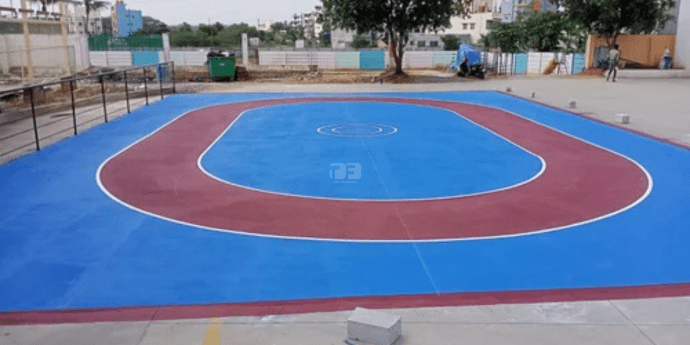
4. Optimize Shape
- Rectangular is most efficient
- Oval for speed skating
5. Choose the Right Surface
- Acrylic is best for durability and performance
Common Mistakes to Avoid
- Ignoring drainage slope
- Choosing incorrect size for usage
- Skipping safety buffer zones
- Poor surface leveling
- Low-quality materials
Skating Rink Size Comparison Chart
| Type | Size | Use Case |
| Small | 15 × 30 m | Schools |
| Medium | 20 × 40 m | Training |
| Large | 30 × 60 m | Clubs |
| Extra Large | 40 × 80 m | Competitions |
Future Trends in Skating Rink Design
- Smart lighting systems
- Eco-friendly materials
- Multi-purpose surfaces
- Modular rink designs
- Digital performance tracking
Modern skating rinks are evolving into high-performance sports infrastructure.
Conclusion
The size of a skating rink is the foundation of its functionality, safety, and long-term success. From small school setups to large professional arenas, choosing the right dimensions ensures:
- Better performance
- Enhanced safety
- Efficient space utilization
- Higher return on investment
By combining accurate dimensions, smart layout planning, and high-quality acrylic flooring, a skating rink can deliver exceptional results for years.
Whether planning a new project or upgrading an existing facility, following these guidelines ensures a well-optimized, durable, and professional skating rink.
Frequently Asked Questions
The standard size usually ranges from 15 m × 30 m to 30 m × 60 m, depending on usage.
The minimum recommended size is around 12 m × 24 m for basic use.
A 20 m × 40 m rink is ideal for school-level training and activities.
Professional rinks are typically 30 m × 60 m or larger.
A 1.5 m to 3 m safety zone is required around the rink.
Yes, larger rinks allow better movement, speed, and safety.