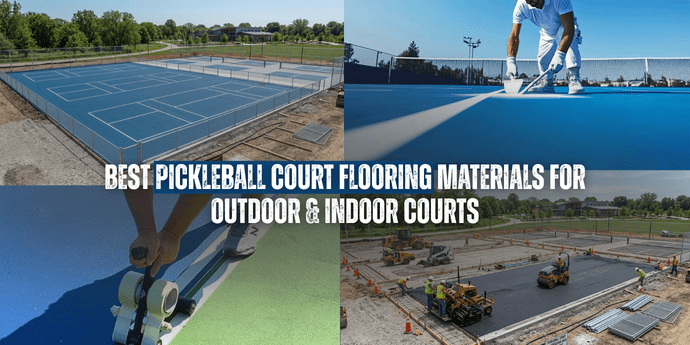
Pickleball has rapidly become one of the fastest-growing sports worldwide, creating a massive demand for high-quality pickleball court flooring solutions. Whether for residential backyards, schools, sports clubs, commercial facilities, or professional tournaments, selecting the right pickleball court surface directly impacts player performance, safety, durability, and maintenance costs.
From synthetic acrylic flooring systems to modular tiles and concrete surfaces, there are multiple pickleball court flooring materials available today. However, not every flooring system performs equally under different weather conditions, player traffic, and usage requirements.
This comprehensive guide explains the best pickleball court flooring materials for outdoor and indoor courts, compares their performance, highlights installation considerations, includes real-world case studies, and shares expert recommendations for long-lasting pickleball court construction.
Table of contents
- Why Pickleball Court Flooring Matters
- Key Requirements of a Good Pickleball Court Surface
- Best Pickleball Court Flooring Materials
- 2. Modular PP Tiles
- 3. Concrete Pickleball Courts
- 4. Asphalt Pickleball Courts
- Indoor Pickleball Court Flooring Options
- Outdoor Pickleball Court Flooring Options
- Acrylic vs Modular Tiles for Pickleball Courts
- Pickleball Court Flooring Installation Process
- Expert Guide: How to Choose the Right Pickleball Court Flooring
- Case Study 1: Outdoor Pickleball Club Court
- Case Study 2: School Indoor Pickleball Facility
- Common Mistakes to Avoid in Pickleball Court Flooring
- Pickleball Court Dimensions
- Maintenance Tips for Pickleball Court Flooring
- Future Trends in Pickleball Court Flooring
- Final Thoughts
- Frequently Asked Questions (FAQs)
Why Pickleball Court Flooring Matters
A pickleball court is more than just painted lines on concrete. The flooring system determines:
- Ball bounce consistency
- Surface grip and traction
- Player comfort
- Shock absorption
- Slip resistance
- UV protection
- Water resistance
- Maintenance requirements
- Surface lifespan
Poor flooring choices can lead to surface cracks, fading, slippery conditions, player injuries, and expensive repairs. On the other hand, professional-grade pickleball court flooring enhances gameplay while ensuring long-term durability.
Key Requirements of a Good Pickleball Court Surface
Before selecting a flooring material, it is important to understand what makes a high-performance pickleball court.
1. Consistent Ball Bounce
The surface must provide predictable and uniform bounce characteristics to support competitive gameplay.
2. Proper Grip and Traction
Players constantly move laterally and change direction quickly. The flooring should prevent slipping while allowing smooth movement.
3. Weather Resistance
Outdoor pickleball courts require UV-resistant and waterproof surfaces capable of handling heat, rain, and temperature fluctuations.
4. Cushioning and Comfort
Shock-absorbing flooring reduces stress on knees, ankles, and joints during long matches.
5. Low Maintenance
A durable surface minimizes repair frequency and long-term maintenance expenses.
Best Pickleball Court Flooring Materials
1. Synthetic Acrylic Flooring
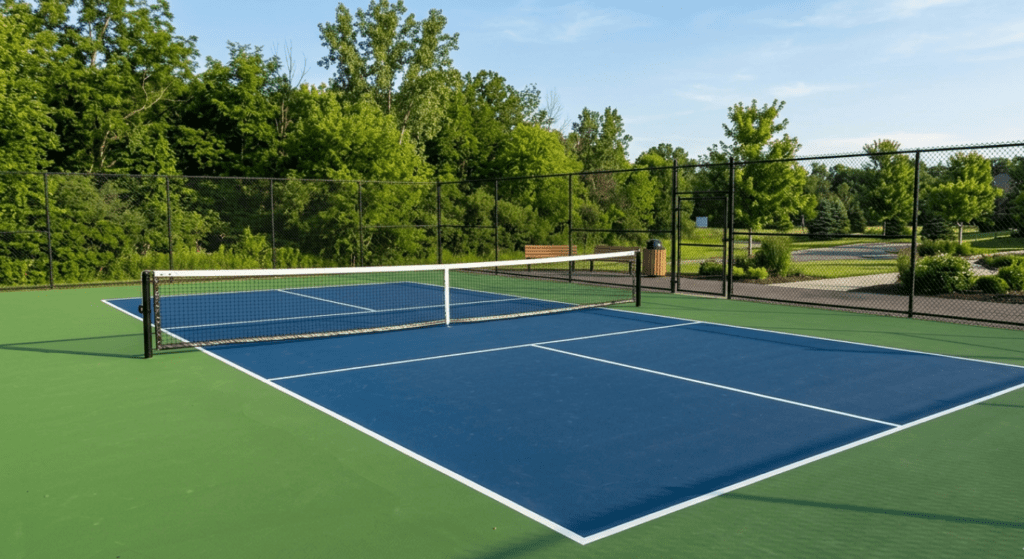
Synthetic acrylic flooring is widely considered the best pickleball court flooring material for both outdoor and indoor courts.
What is Acrylic Pickleball Flooring?
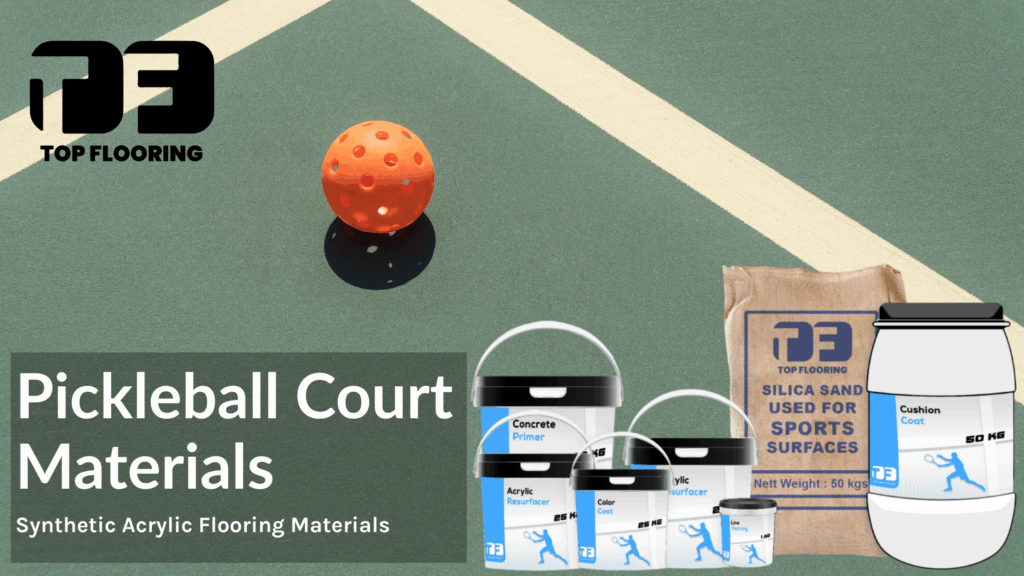
Acrylic flooring systems are multi-layer sports coatings applied over asphalt or concrete surfaces. These systems include:
- Primer coating
- Acrylic resurfacer
- Cushion layers (optional)
- Color coatings
- Line marking
The textured acrylic finish provides excellent grip, UV stability, and professional playability.
Benefits of Acrylic Pickleball Court Flooring
Excellent Ball Bounce
Acrylic surfaces provide true and consistent ball response, making them ideal for professional gameplay.
Superior UV Resistance
The surface maintains color stability and performance under direct sunlight.
Slip Resistance
Textured coatings improve traction and player safety.
Weather Durability
Acrylic flooring withstands rain, heat, and outdoor exposure effectively.
Low Maintenance
Routine cleaning and occasional resurfacing are generally sufficient.
Customizable Surface Speed
Different coating systems can adjust court speed according to playing preferences.
Best Applications
- Outdoor pickleball courts
- Sports clubs
- Schools and universities
- Residential courts
- Multi-purpose sports courts
2. Modular PP Tiles
Polypropylene modular tiles are another popular option, especially for temporary or portable pickleball courts.
Advantages of PP Tile Flooring
- Fast installation
- Portable court setup
- Water drainage capability
- Minimal civil work
- Shock absorption
Limitations
Although modular tiles offer convenience, they may not provide the same professional ball bounce consistency as acrylic flooring systems. Tile movement and unevenness can also occur over time in heavy-use areas.
Best Applications
- Recreational courts
- Community centers
- Indoor temporary courts
- Multipurpose facilities
3. Concrete Pickleball Courts
Concrete is commonly used as the base foundation for pickleball courts but is not ideal as a final playing surface without coatings.
Advantages
- Strong structural durability
- Long-lasting base
- Cost-effective foundation
Disadvantages
- Hard surface impact on joints
- Slippery when wet
- Surface cracking over time
- Poor aesthetics without coatings
Concrete works best when combined with acrylic sports coatings.
4. Asphalt Pickleball Courts
Asphalt is another common substrate used beneath acrylic systems.
Advantages
- Smooth playing surface
- Lower initial construction cost
- Good ball bounce support
Limitations
- Heat absorption
- Crack development
- Periodic resurfacing needs
Professional acrylic coating systems significantly improve asphalt court performance.
Indoor Pickleball Court Flooring Options
Indoor pickleball courts require slightly different flooring characteristics because weather exposure is not a major concern.
Best Indoor Flooring Choices
Acrylic Sports Flooring
Indoor acrylic courts provide professional gameplay and excellent traction.
Wooden Sports Flooring
Used in multi-sport indoor halls, wooden flooring offers cushioning and aesthetics but requires regular maintenance.
Synthetic PU Flooring
PU flooring delivers superior cushioning and comfort but may increase project costs.
Outdoor Pickleball Court Flooring Options
Outdoor courts face continuous environmental exposure. Therefore, UV resistance and waterproofing become critical.
Best Outdoor Flooring Material
Synthetic acrylic flooring remains the preferred outdoor pickleball court surface because it offers:
- UV resistance
- Anti-slip texture
- Water resistance
- Long lifespan
- Color stability
- Easy maintenance
Acrylic vs Modular Tiles for Pickleball Courts
| Feature | Acrylic Flooring | Modular PP Tiles |
|---|---|---|
| Ball Bounce | Excellent | Moderate |
| Surface Grip | High | Moderate |
| UV Resistance | Excellent | Good |
| Longevity | Long-lasting | Moderate |
| Maintenance | Low | Low |
| Professional Play | Ideal | Recreational |
| Surface Stability | Stable | Slight movement possible |
| Customization | High | Moderate |
For professional and long-term pickleball court construction, acrylic flooring is generally the superior option.
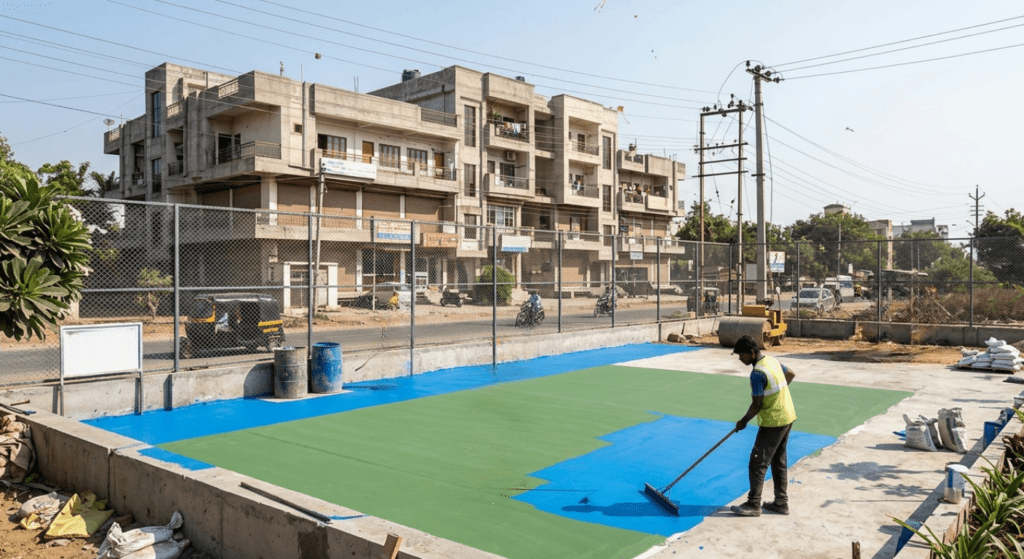
Pickleball Court Flooring Installation Process
Step 1: Surface Preparation
The asphalt or concrete base is cleaned and repaired.
Step 2: Primer Application
Primer improves bonding between the substrate and coating layers.
Step 3: Acrylic Resurfacer
Acrylic Resurfacer smoothens the playing surface.
In Step 4: Cushion Layer (Optional)
Cushion coatings improve comfort and reduce impact stress.
Step 5: Color Coating
UV-resistant acrylic color coatings are applied.
Step 6: Line Marking
Official pickleball court lines are marked precisely.
Expert Guide: How to Choose the Right Pickleball Court Flooring
Choose Acrylic Flooring If:
- You want professional-level gameplay
- The court is outdoors
- Long-term durability is important
- You need UV-resistant surfaces
- Low maintenance is preferred
Choose Modular Tiles If:
- You need portable courts
- Installation speed is a priority
- Temporary setups are required
- Budget flexibility is limited
Case Study 1: Outdoor Pickleball Club Court
Project Overview
A sports club planned to construct four outdoor pickleball courts in a high-temperature region.
Challenges
- Extreme UV exposure
- Heavy daily usage
- Surface cracking concerns
Solution
A multi-layer synthetic acrylic flooring system with UV-resistant color coatings and cushion layers was installed.
Results
- Improved player traction
- Reduced surface temperature
- Excellent durability after continuous usage
- Minimal maintenance requirements
The club reported increased member satisfaction and tournament hosting opportunities.
Case Study 2: School Indoor Pickleball Facility
Project Overview
A school converted an indoor badminton hall into a multi-purpose pickleball facility.
Challenges
- Existing slippery flooring
- Multi-sport compatibility
- Budget constraints
Solution
An indoor acrylic sports flooring system was applied over the existing base.
Results
- Enhanced grip and safety
- Improved gameplay quality
- Easy maintenance for school staff
- Multi-sport functionality retained
Common Mistakes to Avoid in Pickleball Court Flooring
Ignoring Surface Slope
Improper drainage can lead to water accumulation and surface damage.
Using Low-Quality Coatings
Cheap coatings fade quickly and lose traction.
Skipping Surface Repairs
Cracks beneath coatings eventually reappear on the surface.
Incorrect Line Measurements
Improper dimensions affect gameplay standards.
Pickleball Court Dimensions
Standard pickleball court dimensions are:
- Court Size: 20 ft × 44 ft
- Non-Volley Zone: 7 ft
- Recommended Playing Area: 30 ft × 60 ft minimum
Professional facilities may provide larger safety clearance areas.
Maintenance Tips for Pickleball Court Flooring
Regular Cleaning
Remove dirt, dust, and debris frequently.
Surface Inspection
Check for cracks, peeling, or drainage issues.
Periodic Resurfacing
Acrylic courts may require resurfacing after several years depending on usage intensity.
Proper Water Drainage
Ensure surrounding areas prevent water stagnation.
Future Trends in Pickleball Court Flooring
The pickleball flooring industry continues evolving with innovations such as:
- Cushioned acrylic systems
- Heat-reflective coatings
- Eco-friendly flooring materials
- Smart sports surfaces
- Multi-sport court integration
Modern synthetic flooring systems are focusing more on player comfort, sustainability, and long-term durability.
Final Thoughts
Choosing the best pickleball court flooring material is essential for creating a safe, durable, and high-performance playing environment. While multiple flooring options are available, synthetic acrylic pickleball court flooring consistently stands out as the most reliable solution for both outdoor and indoor courts.
Its combination of durability, UV resistance, slip resistance, low maintenance, and professional playability makes acrylic flooring the preferred choice for sports clubs, schools, residential facilities, and commercial sports infrastructure projects.
Whether planning a backyard pickleball court or a professional sports facility, investing in the right flooring system ensures long-term value, better gameplay, and improved player satisfaction.
Frequently Asked Questions (FAQs)
Synthetic acrylic flooring is considered the best outdoor pickleball court surface due to its UV resistance, durability, and anti-slip performance.
Yes, acrylic sports flooring provides excellent traction, consistent bounce, and professional gameplay for indoor facilities.
High-quality acrylic flooring systems can last many years with proper maintenance and periodic resurfacing.
Modular tiles are suitable for recreational and temporary courts, but acrylic flooring generally performs better for professional gameplay.
Both can work effectively, but they perform best when coated with professional acrylic sports flooring systems.