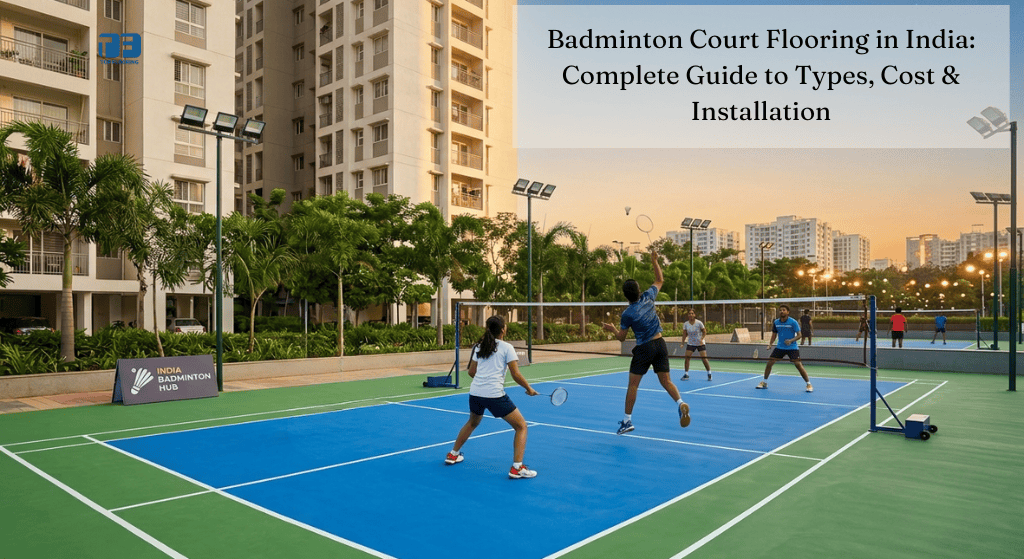
Badminton has become one of India’s fastest-growing sports. From schools and universities to sports academies, clubs, residential societies, and private homes, the demand for high-quality badminton courts continues to rise. The foundation of every great court is its flooring, as the playing surface directly affects player safety, comfort, performance, and long-term maintenance costs.
If you’re planning to build a badminton court in 2026, choosing the right flooring material is one of the most important decisions you’ll make. This guide explains the different types of badminton court flooring available in India, their advantages, approximate costs, installation process, and factors to consider before making your investment.
Table of contents
Why Badminton Court Flooring Matters
Badminton is a fast, direction-changing sport – players lunge, pivot, and land repeatedly during a single rally. The floor beneath them isn’t a cosmetic choice; it directly affects shock absorption, traction, ball bounce consistency, and long-term injury risk. A surface that’s too hard accelerates joint fatigue, while one that’s too soft or too grippy can cause ankle strain during quick pivots.
In India, badminton has grown rapidly across schools, residential societies, sports academies, and commercial arenas over the past decade – partly fuelled by the sport’s rising visibility at the international level. That growth has also widened the range of flooring products available, from budget PVC rolls to BWF-certified wooden systems, which makes choosing the right one more confusing than it used to be. This guide breaks down each option along with realistic 2026 pricing for the Indian market.
Types of Badminton Court Flooring
There are four main categories of badminton court flooring used across India today. Each suits a different combination of budget, location (indoor/outdoor), and performance level.
1. Wooden Sprung Flooring
The gold standard for professional and tournament-level courts. Typically built using maple or teak wood boards over a sprung sub-frame with EPDM cushioning pads, and is the surface preferred and BWF-recommended for elite play.
Strengths
Best-in-class shock absorption, consistent ball bounce, BWF Grade 1A/1B certification available.
Trade-offs
Highest cost, indoor-only, needs regular polishing and humidity control.
2. PVC / Synthetic Vinyl Flooring
Rolled-out synthetic mats with a cushioned foam backing, widely used in indoor academies, sports halls, and multi-purpose courts. Offers a good balance of grip and comfort at a fraction of wooden flooring’s cost.
Strengths
Strong anti-slip grip, fast installation, low maintenance, wide color/branding options.
Trade-offs
Shorter lifespan than wood, indoor-only, can show seam wear over time.
3. Synthetic Acrylic Flooring
Synthetic Acrylic Flooring an applied multi-layer acrylic coating system over a concrete or asphalt base. Because it’s UV-resistant and waterproof, it’s the standard choice for outdoor and semi-indoor courts across most of India’s climate zones.
Strengths
Handles heat, rain and UV exposure, low upkeep, long lifespan, highly customizable colors.
Trade-offs
Firmer underfoot than wood or PVC, needs a properly cured concrete base to perform well.
4. Interlocking Modular Tiles
PP (polypropylene) tiles that click together without adhesive, commonly used for temporary courts, societies, and multi-sport spaces. Fast to install and easy to relocate or replace tile-by-tile.
Strengths
Lowest upfront cost, quick DIY-friendly installation, good drainage for outdoor use.
Trade-offs
Less consistent ball bounce, not suitable for competitive/tournament play, tiles can shift under heavy use.
Badminton Court Flooring Cost in India
Pricing varies by material, brand, sub-base condition, and city, but here’s a realistic per-square-foot range based on current market rates across major Indian metros.
| Flooring Type | Cost per sq ft | Approx. cost for 1 court* | Best for |
|---|---|---|---|
| Interlocking modular tiles | ₹35 – ₹70 | ₹3.5L – ₹7L | Societies, budget setups |
| Synthetic acrylic (outdoor) | ₹45 – ₹90 | ₹4.5L – ₹9L | Outdoor / semi-indoor courts |
| PVC / vinyl flooring | ₹80 – ₹150 | ₹8L – ₹15L | Indoor academies, halls |
| Wooden sprung (BWF-grade) | ₹150 – ₹250 | ₹15L – ₹25L | Professional / tournament courts |
Based on a standard single badminton court (~2,000 sq ft including run-off area). Figures are indicative and vary by city, base condition, and vendor.
What Affects the Final Price
- Sub-base condition — Whether you’re building on raw ground, existing concrete, or a damaged surface changes prep costs significantly. Acrylic and PVC systems both need a properly leveled, cured base.
- Court count and layout — Multi-court installations reduce the per-square-foot cost due to shared setup and material bulk-buying.
- Certification requirements — BWF-approved and Labosport-certified systems cost more due to material grade and testing, but are necessary for tournament-hosting venues.
- Accessories — Net posts, court markings, LED lighting, and boundary padding are usually quoted separately from the flooring itself.
- Location and logistics — Material transport and skilled labor availability vary by city and can shift installation costs by 10–20%.
- Warranty and after-sales service — Vendors offering longer warranties (5+ years) and resurfacing support typically price slightly higher.
Tip: Always ask vendors for a cost breakdown separating material, labor, sub-base preparation, and accessories. Bundled “per court” quotes can hide which component is driving the price up, making it harder to compare across suppliers.
Installation Process, Step by Step
While exact steps vary slightly by flooring type, most badminton court installations in India follow this general sequence:
Site assessment and base preparation
The team inspects drainage, levelness, and existing surface condition. For acrylic and PVC systems, the concrete base needs to be cured, crack-free, and properly sloped for drainage (outdoor courts).
Sub-floor / primer layer
A primer or leveling compound is applied to seal the base and improve adhesion for the flooring layers that follow. For wooden systems, this stage involves building the sprung sub-frame instead.
Cushioning layer application
Shock-absorbing layers are applied – acrylic cushion coats, foam-backed PVC rolls, or EPDM pads under wooden boards – to bring the surface to BWF or facility-appropriate shock absorption standards.
Surface / color coat
The final playing surface is laid: acrylic color coats, top-layer PVC sheets, or finished maple/teak boards, depending on the system chosen.
Court markings and curing
Official badminton court lines are marked as per BWF dimensions, and the surface is left to cure – typically 2–5 days for acrylic, longer for wooden systems.
Final inspection and handover
The completed court is checked for bounce consistency, surface evenness, and line accuracy before handover, along with maintenance guidelines and warranty documentation.
Indoor vs Outdoor Badminton Courts: Flooring Considerations
Climate exposure is the single biggest factor separating indoor and outdoor flooring choices in India.
Indoor courts
Protected from sun and rain, indoor courts can use wooden or PVC flooring, both of which offer better cushioning and ball response but are not built to withstand weather exposure. Humidity control matters more here, especially for wooden systems, which can warp in high-moisture environments without proper climate control.
Outdoor courts
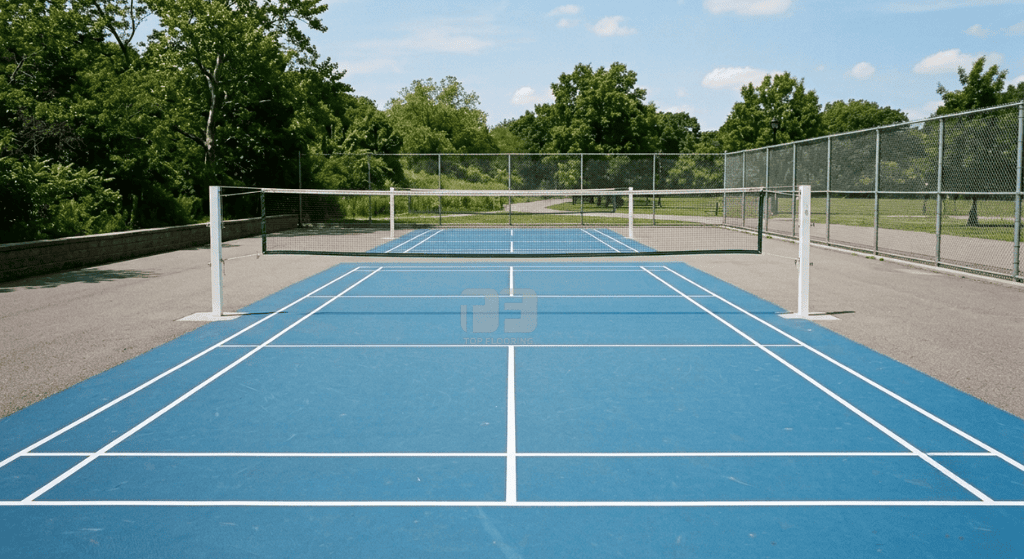
Outdoor courts in India face intense heat, monsoon rain, and UV exposure for most of the year, which is why synthetic acrylic flooring dominates this segment. It resists surface cracking under heat, drains water effectively when properly sloped, and holds color better under prolonged sun exposure than PVC alternatives.
How to Choose the Right Flooring for Your Court
- Define the usage level — Recreational/society courts don’t need BWF-grade wooden flooring; acrylic or modular tiles are usually sufficient and far more cost-effective.
- Check the location — Outdoor and semi-open spaces should default to synthetic acrylic; fully enclosed halls can consider PVC or wood.
- Factor in long-term maintenance — Wooden floors need periodic polishing; acrylic and PVC are comparatively low-maintenance, which matters for facilities without dedicated upkeep staff.
- Confirm certification needs — If you plan to host tournaments, verify the flooring carries BWF or equivalent certification before finalizing a vendor.
- Get a written cost breakdown — As covered above, insist on itemized quotes rather than a single bundled number.
Maintenance Tips
Proper maintenance extends the life of your badminton court.
- Clean the surface regularly.
- Remove dust and debris.
- Repair cracks promptly.
- Avoid dragging heavy equipment.
- Use recommended cleaning products.
- Schedule periodic inspections.
- Repaint line markings when required.
Frequently Asked Questions
For indoor professional courts, BWF-approved wooden or PU flooring is considered the best due to superior shock absorption. For outdoor and semi-indoor courts in Indian climate conditions, synthetic acrylic flooring is the most practical choice because it’s weatherproof, UV-resistant, and low maintenance.
Badminton court flooring in India typically ranges from ₹35 to ₹250 per square foot depending on the material, with PVC and acrylic synthetic options at the lower end and BWF-certified wooden flooring at the higher end. A full single court, including sub-base preparation, generally costs between ₹3.5 lakh and ₹15 lakh.
Acrylic and PVC synthetic flooring typically takes 5 to 10 days including curing time, while wooden sprung flooring systems can take 15 to 25 days due to sub-frame construction and board fitting.
PVC flooring is generally preferred for indoor courts because it offers superior cushioning and is easy to roll out, while acrylic is better suited for outdoor and semi-indoor courts because of its weather resistance and durability under sun and rain exposure.
Planning a Badminton Court Installation?
Top Flooring specializes in premium synthetic acrylic flooring for indoor and outdoor badminton courts — built for durability, weather resistance, and consistent play in Indian conditions.
Get a Free Quote