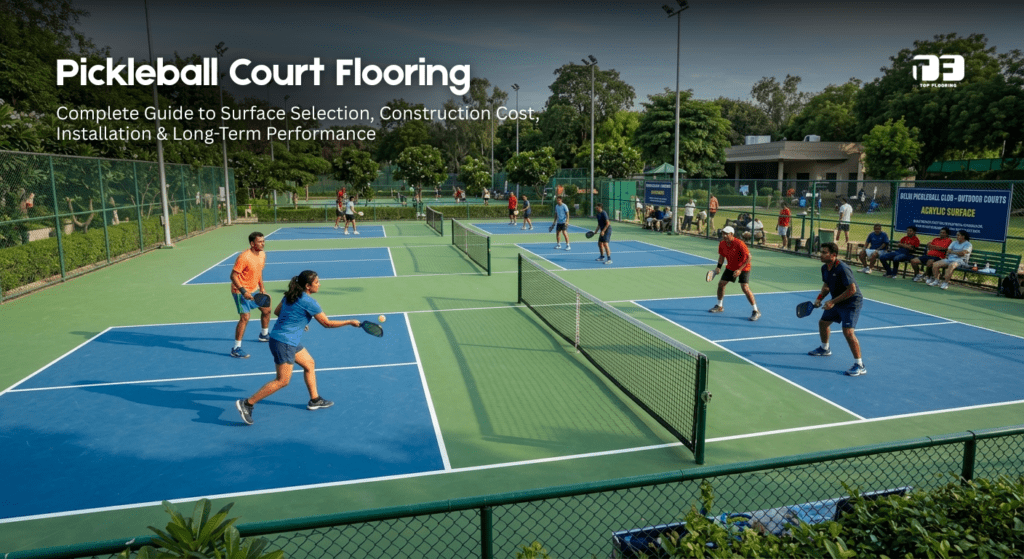
Pickleball has rapidly become one of the most popular sports across residential communities, schools, sports clubs, resorts, and commercial facilities. As demand for dedicated courts grows, the quality of court flooring has become a critical factor in performance, safety, durability, and long-term value.
A pickleball court is much more than a painted surface. The flooring system influences ball bounce, player movement, maintenance requirements, and the overall lifespan of the facility. Choosing the right surface can provide years of reliable performance, while poor decisions can result in costly repairs and inconsistent gameplay.
This guide covers everything facility owners, architects, schools, clubs, and sports developers need to know about pickleball court flooring, from surface selection and construction costs to installation and long-term performance.
Table of contents
- Why Pickleball Court Flooring Matters
- Official Court Dimensions
- Choosing the Right Pickleball Court Flooring
- Which Surface Is Best?
- Step-by-Step Installation Process
- The 10-Year Lifecycle of a Pickleball Court
- Real-World Project Scenarios
- Common Mistakes to Avoid
- Maintenance Guide
- Expert Advice
- Future Trends
- Conclusion
Why Pickleball Court Flooring Matters
A quality pickleball court delivers consistent ball bounce, reliable traction, player comfort, weather resistance, and long-term durability. Flooring directly affects safety and user satisfaction. Courts with uneven or poorly designed surfaces often experience cracking, water accumulation, fading, and reduced playability.
Understanding the Structure of a Pickleball Court
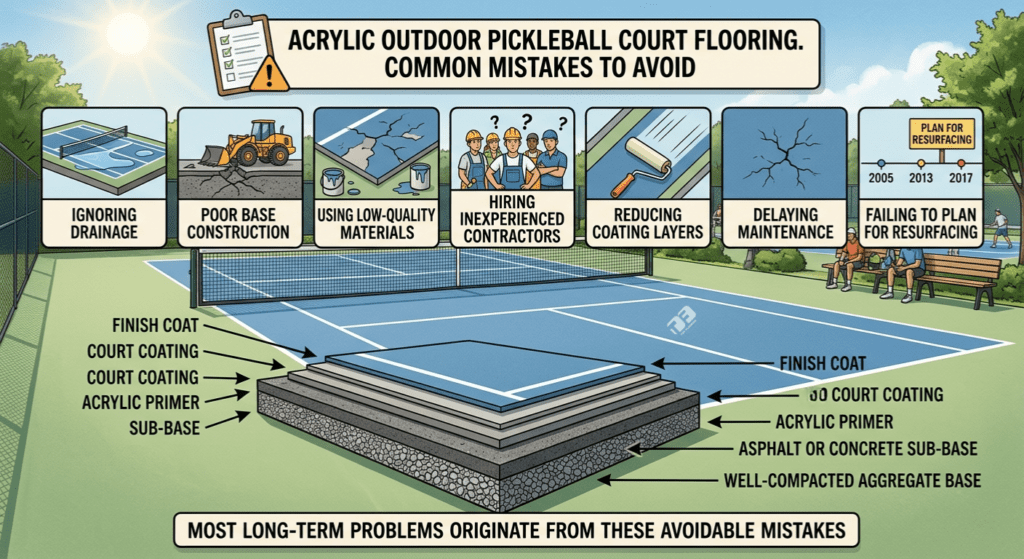
A professional court consists of multiple layers:
• Foundation Layer – compacted soil and aggregates.
• Base Layer – typically concrete or asphalt.
• Surface Preparation Layer – repairs and leveling.
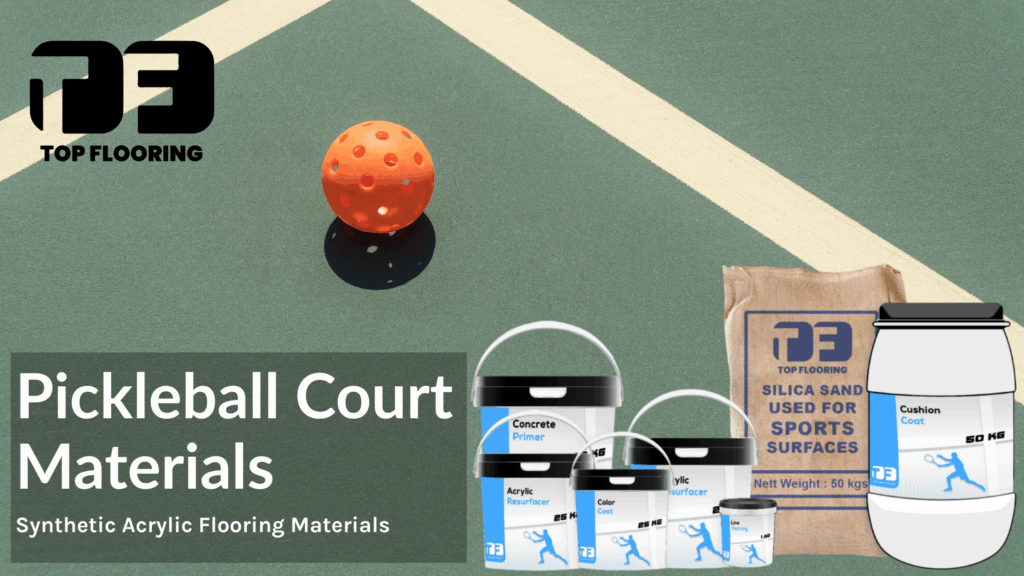
• Sports Surfacing System – acrylic coatings, textures, colors, and line markings.
Every layer contributes to the court’s overall performance and lifespan.
Official Court Dimensions
The standard pickleball court measures 20 feet by 44 feet. For safe play, most facilities allocate a total area of approximately 30 feet by 60 feet, while tournament-level facilities often prefer 34 feet by 64 feet.
Choosing the Right Pickleball Court Flooring
Acrylic Sports Flooring
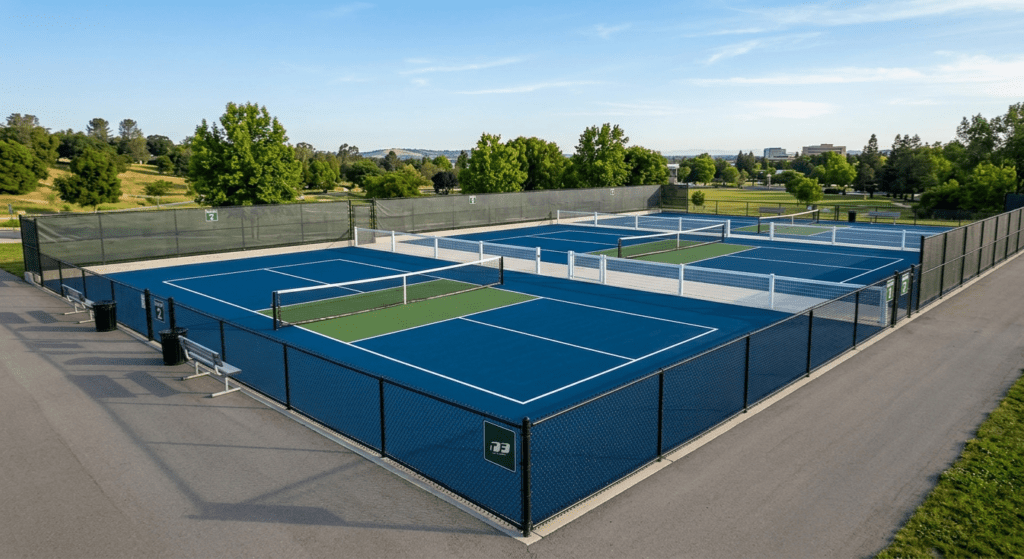
Acrylic flooring is widely considered the preferred solution for outdoor pickleball courts. It provides excellent ball response, UV resistance, weather protection, customizable colors, and low maintenance requirements.
Concrete Surface Systems
Concrete offers structural stability and long service life but is generally used as a base rather than a final playing surface.
Asphalt Surface Systems
Asphalt can reduce initial costs and provide good playability when combined with a quality sports surfacing system.
Modular Sports Tiles
Interlocking tiles provide portability and quick installation but may produce a different playing experience than acrylic surfaces.
Indoor Polyurethane Systems
PU flooring offers cushioning and comfort, making it suitable for indoor sports facilities.
Which Surface Is Best?
For most outdoor projects, acrylic sports flooring provides the best balance of performance, durability, maintenance, appearance, and long-term value. This is why it is commonly selected for schools, clubs, residential communities, and professional facilities.
Climate Considerations
Hot Regions:
Choose UV-resistant and heat-stable coatings.
High Rainfall Areas:
Prioritize drainage design and moisture-resistant surfacing.
Temperature Fluctuation Zones:
Use flexible systems that accommodate expansion and contraction.
Climate-specific planning significantly improves court lifespan.
The Science Behind Court Performance
The surface texture of a pickleball court influences traction, ball bounce, and player movement. A properly engineered surface provides enough grip for quick direction changes while maintaining smooth movement and consistent gameplay.
Construction Cost Breakdown
Major cost components include:
• Site preparation
• Base construction
• Sports surfacing system
• Fencing
• Lighting
• Court accessories
The lowest upfront cost is not always the best value. Long-term performance and maintenance costs should be considered when evaluating flooring options.
Step-by-Step Installation Process
- Site Assessment
- Earthwork and Grading
- Base Installation
- Surface Preparation
- Acrylic Resurfacer Application
- Texture and Color Coatings
- Court Line Marking
- Final Inspection
Proper installation is often more important than the material itself.
The 10-Year Lifecycle of a Pickleball Court
Years 1–2: New Surface Phase
Years 3–5: Peak Performance Phase
Years 6–8: Maintenance Planning Phase
Years 9–12: Surface Renewal Phase
Understanding lifecycle planning helps owners maximize return on investment.
Real-World Project Scenarios
Residential Community:
A dedicated pickleball court increased resident engagement and recreational participation.
School Facility:
An underutilized sports area was converted into pickleball courts, increasing student activity and facility usage.
Sports Club Expansion:
A club added multiple courts to meet growing demand, resulting in higher member engagement and better facility utilization.
Common Mistakes to Avoid
• Ignoring drainage
• Poor base construction
• Using low-quality materials
• Hiring inexperienced contractors
• Reducing coating layers
• Delaying maintenance
• Failing to plan for resurfacing
Most long-term problems originate from these avoidable mistakes.
Maintenance Guide
Weekly: Remove debris and inspect the surface.
Monthly: Wash the court and inspect markings.
Annually: Perform professional inspections and minor repairs.
Every 5–8 Years: Plan for resurfacing depending on usage and environmental conditions.
Expert Advice
The quality of a pickleball court is determined long before the final color coating is applied. Proper drainage, a strong base, quality materials, and professional installation contribute more to long-term success than aesthetics alone.
Facility owners should think in decades rather than months when evaluating court investments.
Future Trends
- Cushioned acrylic systems
- Heat-reflective coatings
- Sustainable sports surfaces
- Multi-sport court concepts
- Smart sports facility technologies
These innovations are shaping the next generation of pickleball facilities.
Conclusion
Selecting the right pickleball court flooring is one of the most important decisions in any court construction project. The surface affects safety, gameplay, maintenance requirements, and long-term value.
For most outdoor applications, acrylic sports flooring remains the preferred choice because of its durability, weather resistance, consistent performance, and cost-effectiveness. Whether developing a residential court, school facility, sports academy, or commercial sports complex, investing in quality flooring and professional installation will ensure years of reliable performance and player satisfaction.