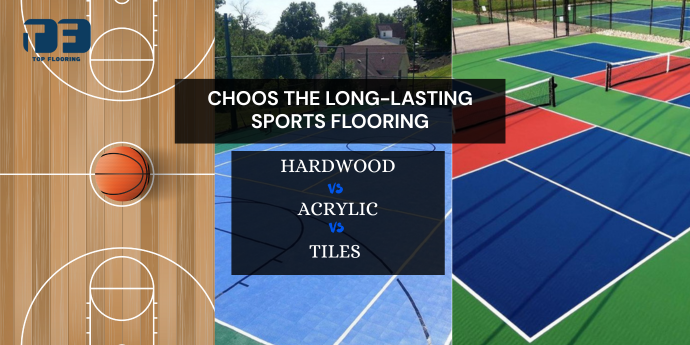
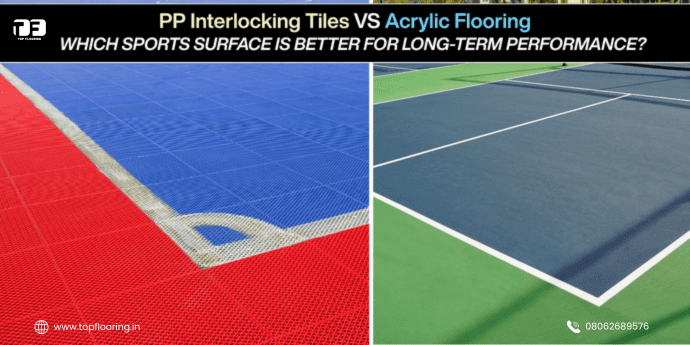
Choosing the right sports flooring is not just about installation it directly impacts player performance, safety, maintenance costs, and long-term durability. Among the most debated options in modern court construction are PP interlocking tiles and acrylic sports flooring. Both have their place in the industry, but when the focus shifts to long-term performance, the difference becomes much clearer.
This in-depth guide explores every critical aspect performance, durability, maintenance, cost efficiency, real-world case studies, and expert insights to help identify the better long-term solution.
Table of contents
- Understanding the Two Surfaces
- PP Interlocking Tiles vs Acrylic Flooring (Quick Comparison Table)
- Performance Comparison: Real Game Experience
- Durability & Lifespan
- Maintenance & Upkeep
- Cost Analysis: Short-Term vs Long-Term ROI
- Weather Performance (Especially in India)
- Case Study: School Sports Complex Upgrade
- Expert Advice: What Industry Professionals Say
- Where PP Tiles Still Make Sense
- Final Verdict: Which Is Better for Long-Term Performance?
- Conclusion
- Frequently Asked Question
Understanding the Two Surfaces
What Are PP Interlocking Tiles?
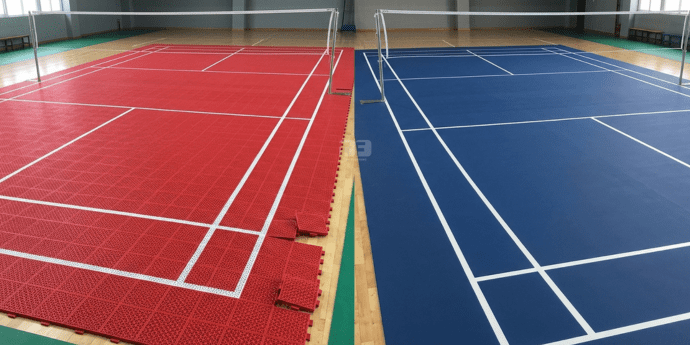
PP (polypropylene) interlocking tiles are modular plastic tiles that snap together to form a sports surface. These are often used for temporary or semi-permanent courts and are marketed as quick-install solutions.
Key Features:
- Modular and portable
- Easy to install and replace
- Shock-absorbing surface
- Suitable for multipurpose usage
What Is Acrylic Sports Flooring?
Acrylic flooring is a layered, surface-coated system applied over a concrete or asphalt base. It is widely used for tennis courts, basketball courts, pickleball courts, and multi-purpose sports surfaces.
Key Features:
- Seamless and uniform finish
- UV-resistant and weatherproof
- Customizable speed and cushioning
- Professional-grade performance
PP Interlocking Tiles vs Acrylic Flooring (Quick Comparison Table)
| Feature | PP Interlocking Tiles | Acrylic Flooring |
| Surface Type | Modular (jointed) | Seamless |
| Lifespan | 4–6 years | 8–12+ years |
| Maintenance | High (tile replacement) | Low |
| Ball Bounce | Inconsistent over time | Consistent & professional |
| Weather Resistance | Moderate | Excellent (UV-resistant) |
| Installation | Quick | Structured system |
| Long-Term Cost | High | Cost-effective |
| Player Safety | average | High grip & stability |
Verdict: Acrylic flooring clearly delivers better long-term value and performance.
Performance Comparison: Real Game Experience
Ball Bounce & Playability
- PP Tiles: Ball bounce can feel inconsistent due to tile joints and slight movement between panels. Over time, uneven locking may affect playability.
- Acrylic Flooring: Offers true, consistent bounce across the entire court, making it ideal for professional and competitive play.
Winner: Acrylic Flooring
Consistency is critical for serious gameplay, and acrylic surfaces deliver unmatched uniformity.
Player Comfort & Safety
- PP Tiles: Provide some cushioning but can feel slightly “plastic-like,” which may affect grip and foot stability.
- Acrylic Flooring: Engineered with anti-slip textures and optional cushioning layers, ensuring better grip, reduced fatigue, and injury prevention.
Winner: Acrylic Flooring
Better traction and controlled movement make it safer for long-term use.
Durability & Lifespan
Resistance to Wear & Tear
- PP Tiles: Susceptible to cracking, warping, and loosening under extreme weather conditions—especially in hot climates like India.
- Acrylic Flooring: Designed to withstand UV rays, heavy usage, and harsh weather without surface deformation.
Lifespan Comparison
- PP Tiles: 4–6 years (often requires part replacements)
- Acrylic Flooring: 8–12+ years with minimal resurfacing
Winner: Acrylic Flooring
Long-term durability clearly favors acrylic systems.
Maintenance & Upkeep
PP Interlocking Tiles
- Dirt accumulates in joints
- Tiles may need frequent replacement
- Cleaning can be time-consuming
Acrylic Flooring
- Smooth, joint-free surface
- Easy to clean and maintain
- Occasional repainting keeps it fresh
Winner: Acrylic Flooring
Lower maintenance effort and cost over time.
Cost Analysis: Short-Term vs Long-Term ROI
| Cost Factor | PP Tiles | Acrylic Flooring |
| Initial Cost | Lower | Slightly higher |
| Maintenance Cost | High | Low |
| Replacement Frequency | Frequent | Rare |
| 10-Year Cost | Higher overall | Lower overall |
Insight: Acrylic flooring offers better ROI despite higher upfront cost
Initial Cost
- PP Tiles: Lower upfront investment
- Acrylic Flooring: Slightly higher installation cost
Long-Term Cost Efficiency
- PP Tiles: Frequent repairs and replacements increase total cost
- Acrylic Flooring: Minimal maintenance and longer lifespan reduce overall expenses
Winner: Acrylic Flooring
While PP tiles may seem budget-friendly initially, acrylic flooring proves more economical in the long run.
Weather Performance (Especially in India)
India’s climate extreme heat, heavy rain, and UV exposure—demands a resilient surface.
- PP Tiles: Expand and contract with temperature, leading to gaps and instability
- Acrylic Flooring: UV-stable coatings resist fading, cracking, and weather damage
Winner: Acrylic Flooring
Built specifically for outdoor conditions.
Case Study: School Sports Complex Upgrade
Location: North India
Initial Surface: PP Interlocking Tiles
Issue Faced:
- Tiles started loosening within 2 years
- Uneven surface affected gameplay
- High maintenance complaints
Solution: Upgraded to acrylic sports flooring
Results After 3 Years:
- Consistent performance across all sports
- 40% reduction in maintenance costs
- Increased student participation and satisfaction
Conclusion: Acrylic flooring delivered superior durability and performance over time.
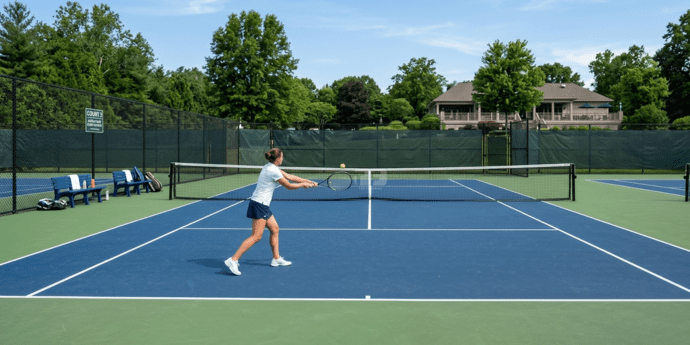
Case Study: Community Multi-Sport Court
Location: Tier-2 City, India
Requirement: Budget-friendly, long-lasting surface
Comparison Done:
- PP tiles were initially selected due to cost
- Switched to acrylic after expert consultation
Outcome:
- No major repairs in 5+ years
- High resistance to weather damage
- Better ROI despite higher initial investment
Expert Advice: What Industry Professionals Say
Sports Infrastructure Consultant (15+ years experience):
“PP tiles are suitable for temporary setups or low-usage areas. But for any serious sports facility aiming for longevity, acrylic flooring is the clear winner.”
Court Contractor Insight:
“Clients who initially choose PP tiles often switch to acrylic within a few years due to maintenance issues. Acrylic is a one-time smart investment.”
Where PP Tiles Still Make Sense
To be fair, PP interlocking tiles are useful in certain situations:
- Temporary courts or events
- Indoor recreational spaces
- Portable or rental sports setups
However, for permanent outdoor courts and long-term performance, they fall short.
Final Verdict: Which Is Better for Long-Term Performance?
When all factors are considered durability, performance, maintenance, weather resistance, and cost efficiency—the answer is clear:
Acrylic Sports Flooring is the Superior Choice for Long-Term Performance
It delivers:
- Professional-level playability
- Long-lasting durability
- Lower lifecycle costs
- Better safety and comfort
Conclusion
The debate between PP interlocking tiles and acrylic flooring ultimately comes down to short-term convenience vs long-term value. While PP tiles may offer quick installation and lower initial cost, they struggle to maintain performance over time.
Acrylic flooring, on the other hand, stands out as a future-ready solution trusted by professionals, designed for Indian conditions, and proven to deliver consistent results for years.
For anyone planning a tennis court, basketball court, pickleball court, or multi-sport facility, investing in acrylic flooring is not just a choice it’s a strategic decision for long-term success.
Frequently Asked Question
Yes, acrylic flooring provides better durability, consistent performance, and lower long-term cost compared to PP tiles.
Acrylic flooring lasts 8–12+ years, while PP tiles typically last 4–6 years.
Acrylic flooring is considered the best due to its UV resistance, weather durability, and performance stability.
PP tiles are not ideal for professional courts due to inconsistent ball bounce and joint-related issues.
Acrylic flooring is more cost-effective in the long run due to low maintenance and longer lifespan.