Pickleball has rapidly evolved from a niche hobby to one of India’s fastest-growing sports. Schools, clubs, resorts, housing societies, and private property owners are actively investing in dedicated pickleball court construction. However, constructing a technically accurate pickleball court flooring requires far more than paint and a net—it demands engineering precision, high-quality synthetic acrylic sport systems, long-term weather resistance, and compliance with USA Pickleball & IFP (International Federation of Pickleball) standards.
With 14+ years of experience and 2000+ completed sports flooring projects, Top Flooring is one of India’s most trusted names in pickleball court construction. Our courts are engineered using 5–9 layer synthetic acrylic systems, built across 800,000+ sq. ft., and available in 9 vibrant, UV-stable standard colours. Designed for all-weather performance, every court delivers consistent bounce, superior grip, and long-term durability. This guide explains everything involved in professional pickleball court construction in India, including materials, dimensions, base engineering, acrylic surfacing, line marking standards, cost ranges, and long-term maintenance.
Standard Pickleball Court Dimensions (USA Pickleball / IFP Standard)
A standard pickleball court measurement is 20 feet wide and 44 feet long, the same dimensions used for both singles and doubles play. This size is identical to a doubles badminton court and includes a non-volley zone, commonly known as the “kitchen,” which extends 7 feet from the net on both sides. The court is divided by a 36-inch high net at the sidelines and 34 inches at the center, ensuring balanced play and consistent ball bounce.
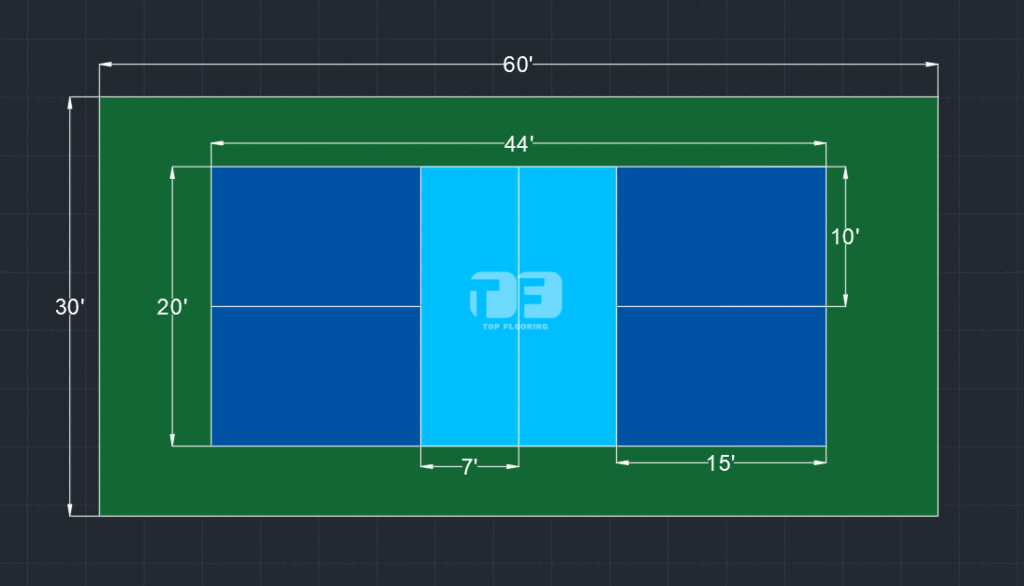
These measurements are set by USA Pickleball and the International Federation of Pickleball, making them the global standard for recreational and competitive games. When designing a full facility, it’s also important to include adequate space around the court—typically an additional 10 feet on each side and 22 feet behind each baseline, for player movement and safety. Whether you’re building a court in a community center, sports club, or private property, adhering to these dimensions ensures optimal performance and playability.
| Section | Measurement |
|---|---|
| Total Playing Area | 20 ft × 44 ft |
| Non-Volley Zone (Kitchen) | 7 ft from net on each side |
| Net Height at Center | 34 inches |
| Net Height at Posts | 36 inches |
Total Playing Area & Run-Off Space
To ensure safe movement and avoid collisions, additional free space around the court is necessary.
| Area | Recommended Size |
|---|---|
| Playing Area Only | 20 ft × 44 ft |
| Total Court Area | 30 ft × 60 ft |
| Ideal Tournament Space | 34 ft × 64 ft |
Pickleball Court Construction
Our most popular option – synthetic acrylic flooring is a smooth and durable surface for long-term use. Ideal for schools, clubs, and communities, as it’s strong and low maintenance.
Concrete Base (Recommended for India)
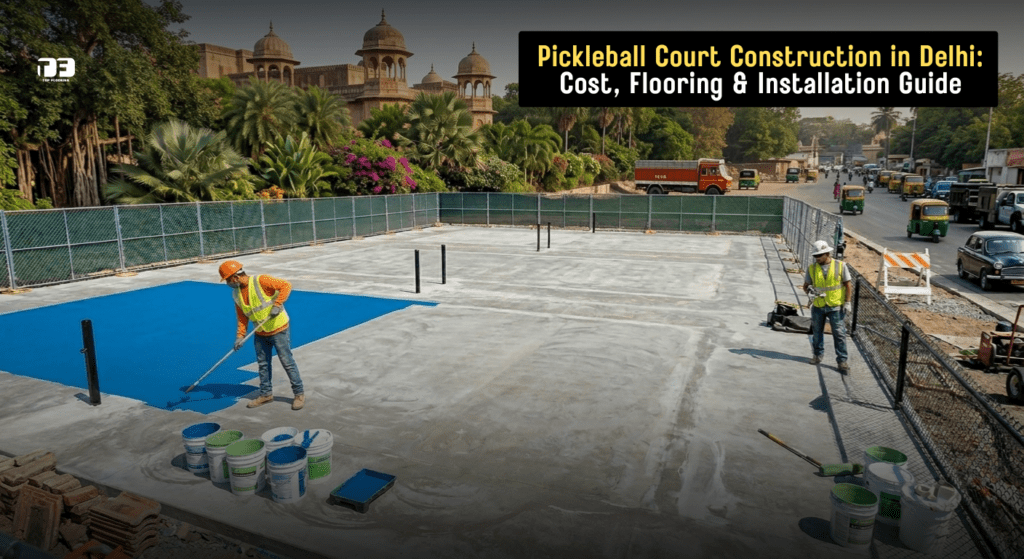
A solid concrete base is the foundation of choice for building pickleball courts in India . It’s got one huge advantage over other materials – it’s super stable, resistant to cracking and will give you long term performance that’ll hold up to all the Indian weather can throw at it. Building it with M20 grade concrete that’s 4-6 inches thick, and using steel or fibre mesh for reinforcement will keep it structurally sound and keep any potential cracks well and truly contained from showing up on the acrylic surface.
To get the best out of it , the slab needs to be left to cure for a minimum of 28 days, then once that’s done, finish it with a smooth trowel-finish with no dips or undulations. And the good news is that it’s able to withstand India’s extremely hot summers, and it’ll stay stable even in the heavy monsoon rains – so this high quality concrete base really is the perfect base for any outdoor pickleball courts you build.
Asphalt Base (Optional Alternative)
An asphalt base is another option for building a pickleball court and is widely used overseas, but to be honest it’s generally not the best choice for Indian climate conditions. Asphalt is at its best in arid regions with hardly any rainfall as it needs a seal-coat every 3-4 yrs to keep the surface intact. And the problem is that it’s far from ideal in extreme heat – it’ll start to soften and deform, and that can cause problems for the acrylic layers on top. It does flex a bit which is good, but it’s still not as good as a concrete base, especially when it comes to durability and maintenance – so in India it’s best used for temporary or low-use courts while concrete is the clear winner for long term stability and consistent gameplay.
Drainage & Slope Engineering
Getting the drainage and slope right is vital for making sure your pickleball court lasts for a long time. Every court needs a uniform 1% slope, or 1:100 gradient – which means a 1 inch drop for every 10 feet of surface. This makes sure water just runs off and prevents puddling or water retention which can cause problems for the acrylic layers. A slope that’s been properly engineered will help dry the court quickly after it rains, reduces the risk of cracking and means the whole acrylic system will last a lot longer. Unless you get the slope right, even the best base and quality materials will go to pot in no time.
Pickleball Court Layout and Line Marking
A well-laid-out pickleball court ensures consistent gameplay and minimizes disputes. The official layout includes marked boundaries and zones that are essential for fair play. All lines should be 2 inches wide and white for maximum visibility against the colored surface. The non-volley zone, or “kitchen,” must be marked 7 feet from the net on both sides, helping maintain the game’s unique dynamic. Additionally, sidelines, baselines, service areas, and centerlines should be precisely measured and painted to align with official regulations. Proper line marking not only supports competitive fairness but also enhances the players’ court awareness and safety.
Pickleball Court Colors & Lines
Beyond functionality, pickleball courts should offer visual appeal and clear differentiation of playing zones. Common color combinations like Blue and Green provide high contrast, making it easy to spot balls in motion. Red and Green courts deliver a bold, traditional look, while Purple and Blue are increasingly popular for their vibrant, modern feel. Regardless of the base color, white lines are the standard for clear definition. Choosing the right court color scheme not only improves aesthetics but also supports visibility and focus during intense gameplay.
Pickleball Court Materials: What to Use?
When it comes to pickleball court surfacing in India, synthetic acrylic sports flooring is the most reliable and high-performing material. Acrylic systems are engineered to withstand India’s harsh climate, offering exceptional resistance to UV exposure and maintaining structural integrity even in temperatures exceeding 45°C. They perform equally well during the monsoon, preventing moisture absorption and surface deterioration. The textured finish provides a safe, anti-slip grip for players, while the consistent ball bounce ensures professional-level playability. Acrylic coatings also retain their color for 5–7 years before requiring a recoat and demand very low maintenance compared to other surface options. These qualities make synthetic acrylic the preferred choice for durable, long-lasting outdoor pickleball courts in India.
These coatings are:
- Acrylic flooring is built to withstand harsh sunlight without fading or cracking, making it ideal for outdoor use year-round.
- Designed for safety, the anti-slip texture ensures a firm grip even during fast-paced play or in wet conditions.
- Requires minimal upkeep—just occasional cleaning and periodic checks—to keep the court looking and performing its best.
- Whether it’s extreme heat, heavy rains, or humidity, our materials are specially suited to handle diverse weather conditions across India.
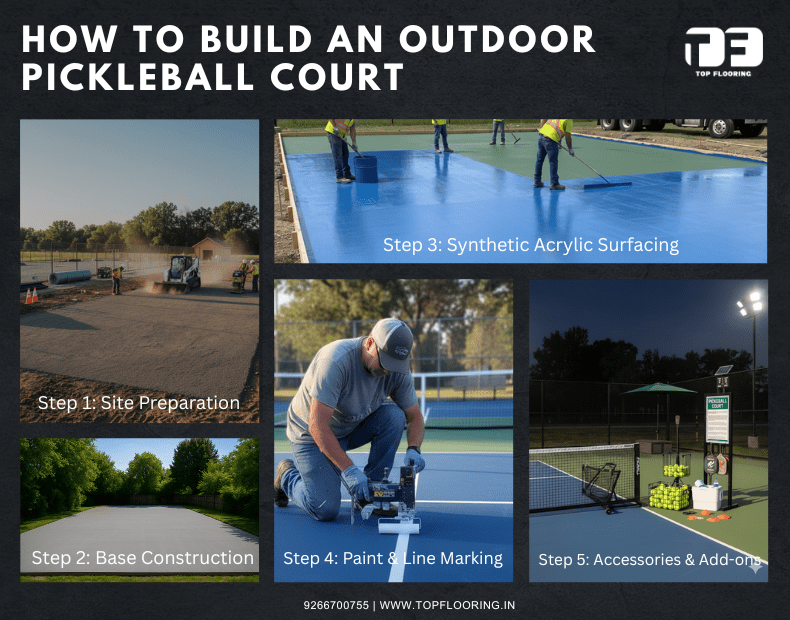
How to Build an Outdoor Pickleball Court
Step 1: Site Preparation
Begin by selecting a flat, well-drained area to ensure a stable foundation. Ideally, the court should have a north–south orientation to minimize sun glare during play, enhancing visibility and comfort for players throughout the day.
Step 2: Base Construction
A solid concrete or asphalt base is essential for long-term performance. The surface must include a 1% slope (1:100 gradient) to allow proper water runoff, preventing pooling and surface damage after rain.
Step 3: Synthetic Acrylic Surfacing
Apply synthetic acrylic layers, which offer excellent durability, UV resistance, and consistent ball bounce. These surfaces are designed for optimal grip, player comfort, and weather endurance, making them ideal for outdoor pickleball courts.
Step 4: Paint & Line Marking
Use vibrant, non-slip court paints and apply precision line markings as per official pickleball specifications. Lines should be 2 inches wide and white to ensure clarity and regulatory compliance.
Step 5: Accessories & Add-ons
Install quality net systems, perimeter fencing for safety, and lighting solutions for extended play hours. Optional features like drainage systems and benches can further enhance the court’s functionality.
Each of these steps ensures a professional-grade pickleball court that meets international standards and provides a superior playing experience.
Pickleball Court Construction Cost in India
Understanding the cost of a pickleball court helps in planning your budget better. The pickleball court construction cost in India can vary based on materials, location, and add-ons:
| Court Type | Approximate Cost (INR) |
| Concrete base + acrylic surfacing | ₹5 – ₹8 lakhs |
| Acrylic + fencing + lighting | ₹10 – ₹15 lakhs |
| High-end custom courts | ₹15 – ₹20 lakhs |
While the core construction of a pickleball court covers surfacing, layout, and markings, several optional add-ons can influence the total cost. Common additional expenses include site grading, which ensures a level foundation for optimal drainage and durability. If you’re looking to enhance visual appeal or branding, custom logos or court graphics can be added for a personalized touch. Functional upgrades like LED lighting, fencing, and drainage systems also contribute to better playability and long-term performance.
To help clients plan effectively, professional builders like Top Flooring provide transparent, itemized quotes that clearly outline every cost involved. This ensures there are no surprises and allows clients to make informed decisions based on their budget and vision.
Best Pickleball Court Construction Companies
Choosing the right pickleball court construction company is crucial for achieving a long-lasting, professional-grade playing surface. Reputable builders bring years of experience, backed by positive client reviews and detailed case studies that reflect consistent performance. Their ability to understand sport-specific requirements ensures optimal gameplay and player safety. Always explore a contractor’s portfolio to evaluate the quality of previous installations, which can give insight into their craftsmanship and attention to detail.
Leading companies such as Top Flooring, Pacecourt, AQS, SLT Sports, and Laykold offer customization options, such as unique court colors, textured finishes, and custom logo placements to reflect your brand or personal style. A reliable builder will include warranty coverage on materials and construction, along with ongoing support and maintenance services. At Top Flooring, expertise meets innovation. We specialize in premium synthetic acrylic flooring and deliver end-to-end solutions for pickleball court design, construction, and care, ensuring courts that perform and impress.
Successful Pickleball Court Construction requires precise engineering, high-quality acrylic materials, and accurate compliance with IFP standards. With the right base, slope, surfacing system, and expert installation, you can build a long-lasting, all-weather pickleball court anywhere in India. For reliable Pickleball Court Construction that delivers consistent bounce, durability, and professional playability, Top Flooring provides complete guidance, materials, and technical expertise.
Pickleball Court Maintenance Checklist
- Sweep the court every week to get rid of dust, leaves, sand and loose debris that can affect grip and wear down the acrylic over time.
- Wash the surface once a month with mild detergent and water to prevent dirt buildup, keep the color vibrant and the texture consistent.
- Repaint all court lines every 2-3 years to keep the lines visible during play and accurate for competitive matches.
- Recoat the acrylic every 5-7 years to restore texture, improve grip and protect the court from UV, fading and long term weather damage.
- Keep all surrounding drainage areas clear to prevent water from pooling near the edges which can seep under the surface and weaken the acrylic layers.
- Inspect the court every year for cracks or surface irregularities and repair before minor issues become major and affect bounce uniformity or safety.
- Don’t drag heavy objects or equipment across the surface as this can cause scratches, gouges or peeling that will shorten the life of the acrylic.
With proper care and timely maintenance, a synthetic acrylic pickleball court can deliver 10–12 years of safe, consistent, and high-quality performance.
Why Choose Top Flooring?
Top Flooring stands out as one of India’s leading pickleball court construction companies, known for quality, reliability, and innovation. We specialize in high-performance synthetic acrylic materials, engineered for durability, slip resistance, and player comfort. Whether it’s new court construction or resurfacing old surfaces, our team delivers turnkey solutions tailored to client needs.
We handle every detail with precision, from custom court colors and textures to branded logos and layouts. With successful pickleball projects across India, we deliver courts that meet international standards, on time and within budget. Top Flooring combines technical expertise with a passion for sports infrastructure, making us the trusted choice for institutions, clubs, and private projects alike.
Conclusion
Building a professional pickleball court takes skill, quality materials, and smart planning. This guide covers everything from pickleball court specs to choosing the right builder. Looking for reliable pickleball court construction companies in India? Top Flooring is your go-to partner. Build your dream court with top-notch synthetic acrylic flooring and expert installation.
Contact us today for a free site visit and consultation. Built with confidence, built to last, built by Top Flooring.
Frequently Asked Questions
The cost of a pickleball court in India ranges from ₹5 lakhs to ₹15 lakhs. It depends on factors like materials, location, surface type, and extras. Extras include fencing and lighting.
Synthetic acrylic materials are best for surfacing pickleball courts. Due to its durability and weather resistance. It offers excellent playability on outdoor courts.
The pickleball court dimensions are 20 x 44 feet. It has a 7-foot non-volley zone on each side. The court also has marked sidelines, centerlines, and service areas.
Typical construction of pickleball courts takes 3 to 6 weeks, depending on site conditions, materials used, and weather.