Pickleball is easily one of the fastest-growing sports in India right now, and with that growth comes a simple truth – a court is only as good as its upkeep. Whether you’re managing a residential society court, a school facility, or a commercial pickleball club, regular maintenance is what separates a court that plays great for 8 years from one that starts cracking, fading, or turning slippery within 18 months.
At Top Flooring, we’ve built and maintained acrylic pickleball courts across India for over 14 years, and we’ve seen firsthand how a little routine care can dramatically extend a court’s life, protect player safety, and keep the surface performing like new. This guide walks you through everything you need to know – daily cleaning, seasonal upkeep, common problems, and when it’s time to call in the professionals.
Why Pickleball Court Maintenance Matters
An acrylic pickleball court isn’t just a painted surface – it’s a multi-layer system engineered for grip, shock absorption, and consistent ball bounce. Over time, dirt, moisture, UV exposure, and heavy foot traffic wear down that system. Left unchecked, this leads to:
- Reduced grip and increased risk of player slips or falls
- Faded lines and colors that affect visibility during play
- Surface cracks that let water seep into lower layers
- Inconsistent ball bounce, which affects competitive play
- Costly full resurfacing instead of simple, affordable upkeep
The good news: most of this is preventable with a consistent maintenance routine.
Daily and Weekly Maintenance
1. Sweep the Court Regularly
Dust, leaves, and debris are the biggest everyday enemies of a pickleball court. A daily or every-other-day sweep with a soft-bristle push broom keeps grit from grinding into the acrylic surface, which over time can dull the finish and reduce traction.
2. Remove Standing Water Promptly
Acrylic courts are designed to drain well, but puddles that sit for extended periods – especially after monsoon rain – can encourage algae or moss growth in shaded areas. Use a soft squeegee to clear standing water after rainfall.
3. Spot-Clean Stains Immediately
Shoe scuff marks, spilled drinks, or bird droppings should be cleaned as soon as they’re noticed. Use a mild detergent solution with water and a soft brush – never a wire brush or anything abrasive that can scratch the color coat.
Monthly Maintenance
4. Deep Clean the Surface
Once a month, give the court a thorough wash using a low-pressure hose and a mild, non-abrasive cleaning solution. Avoid high-pressure jet washers, as excessive pressure can wear down the top color coat over time. Focus on corners and edges where debris tends to accumulate.
5. Inspect for Cracks and Bubbling
Walk the full court surface and check for hairline cracks, bubbling, or peeling, particularly near the net posts and court edges where stress is highest. Catching these early prevents small issues from turning into major resurfacing jobs.
6. Check Net and Post Hardware
While it’s not part of the flooring itself, loose net posts or anchors can cause players to trip or place uneven stress on the surrounding surface. Tighten hardware as needed.
Seasonal Maintenance (Especially for Indian Weather)
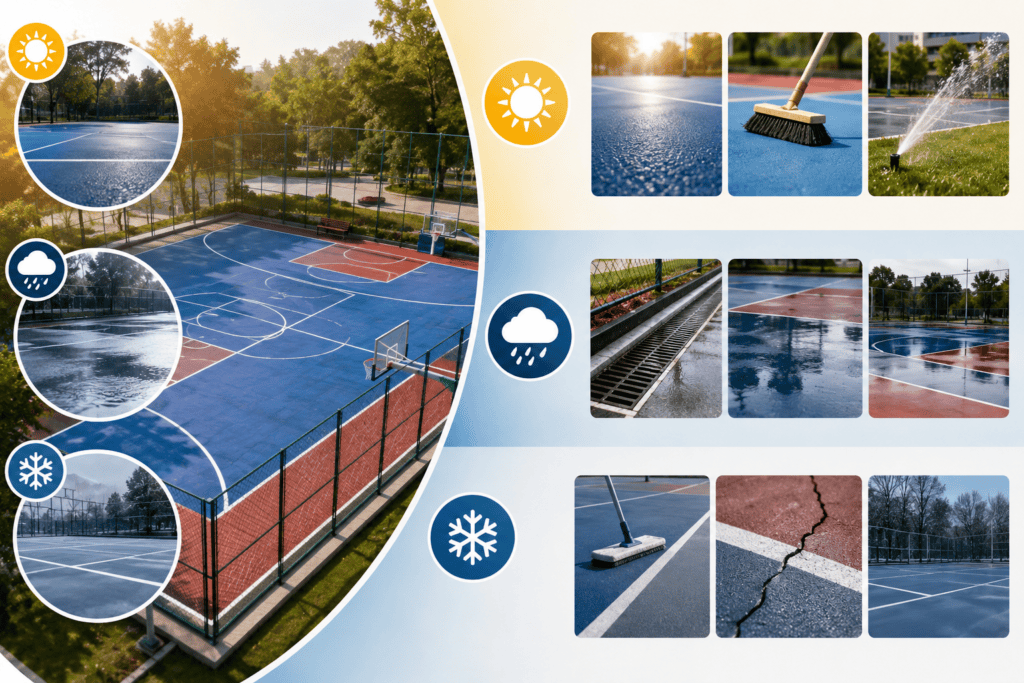
India’s climate – intense summer heat, heavy monsoons, and in some regions, cold winters – puts unique demands on outdoor sports courts.
Summer Care
- UV exposure can gradually fade color coats. A quality acrylic system (like Top Flooring’s UV-resistant color coat) resists this, but periodic inspection for fading is still smart.
- Water the surrounding landscaping carefully to avoid excess runoff onto the court.
Monsoon Care
- Check drainage points before the rains start; clear any blocked drains around the court perimeter.
- After heavy rain, clear pooled water quickly to prevent moss or algae growth, especially in shaded corners.
- Avoid play immediately after rainfall until the surface is fully dry – a wet acrylic surface, while designed to be rain-safe, is still safer to use once drained and dried.
Winter Care
- In cooler regions, avoid harsh chemical cleaners that can affect the acrylic coating in low temperatures.
- Inspect for any cracking caused by contraction, particularly in courts built on older asphalt bases.
Annual Maintenance
7. Professional Inspection
Once a year, it’s worth having a professional team inspect the full system – from the base layer to the top color coat. This is especially important for courts nearing the 5–6 year mark, when normal wear starts to show.
8. Reapply Line Markings if Needed
High-traffic courts may see line markings fade faster than the surrounding color coat. Refreshing line marking paint keeps the court compliant with official pickleball court dimensions and improves visibility for players.
9. Consider a Color Coat Refresh
If the surface is showing consistent fading or minor surface wear but the base structure is still sound, a fresh color coat application can restore the court’s appearance and grip without a full resurfacing project.
Common Pickleball Court Problems – and What They Mean
| Issue | Likely Cause | What To Do |
|---|---|---|
| Slippery surface | Dirt/algae buildup or worn color coat | Deep clean; assess if resurfacing is needed |
| Fading colors | UV exposure over years | Apply UV-resistant color coat refresh |
| Hairline cracks | Base movement or age | Inspect early; patch before it spreads |
| Faded lines | High foot traffic | Reapply line marking paint |
| Water pooling | Drainage or leveling issue | Professional assessment of surface grading |
How Often Should You Maintain a Pickleball Court?
| Task | Frequency |
|---|---|
| Sweeping | Daily to every 2–3 days |
| Spot-cleaning stains | As needed, immediately |
| Deep cleaning | Monthly |
| Crack/surface inspection | Monthly |
| Professional inspection | Annually |
| Line marking refresh | Every 1–2 years (traffic-dependent) |
| Full resurfacing | Every 6–8 years (varies by usage and climate) |
When Is It Time to Resurface Instead of Maintain?
Routine cleaning and small repairs go a long way, but if you’re noticing widespread cracking, consistent slipperiness even after cleaning, or a color coat that’s visibly worn through to the layer below, it’s likely time for resurfacing rather than continued patch maintenance. Top Flooring’s 5-layer and 8-layer acrylic systems are built specifically to make resurfacing a straightforward, cost-effective process rather than a full rebuild.
Final Thoughts
A pickleball court is an investment – in your facility, your community, or your business – and like any investment, it rewards regular care. A simple routine of sweeping, prompt stain removal, monthly deep cleaning, and seasonal attention to India’s weather extremes can add years to your court’s playable life and keep it safe for every player who steps on it.
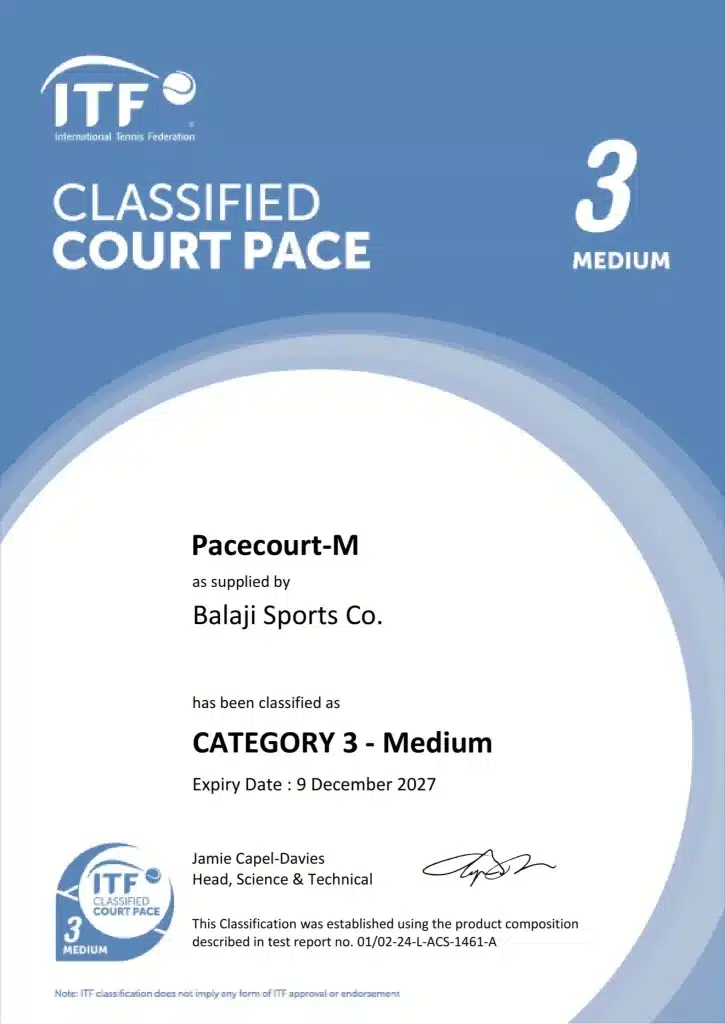
At Top Flooring, we don’t just build courts – we help you maintain them for the long run. Our ITF and ISO-certified acrylic systems are engineered for durability in Indian conditions, and our team is available for professional inspections, resurfacing, and maintenance guidance nationwide.
Need help assessing your court’s condition or planning a resurfacing project?
Get a free consultation with Top Flooring today.
Get a Free QuoteFrequently Asked Questions
Light sweeping should be done every 2–3 days, with a deeper wash at least once a month. Frequency should increase in dusty or high-traffic environments.
Low-pressure washing is fine, but avoid high-pressure jet washers, which can wear down the acrylic color coat over time.
With consistent care, a quality acrylic pickleball court typically lasts 6–8 years before requiring resurfacing.
Clear standing water promptly and use a mild detergent solution with a soft brush on affected areas. Avoid harsh chemical treatments that could damage the acrylic surface.
Not if properly designed and maintained. Top Flooring’s acrylic systems are built to be rain-safe and UV-resistant, but clearing standing water quickly after heavy rain is still recommended to prevent algae growth.