If you’re building or resurfacing a pickleball court, the paint you choose will decide how the court plays for years to come. Pickleball court paint isn’t like the paint sitting in your garage. It’s a purpose-built acrylic coating system designed to handle sun, rain, sliding feet, and thousands of bounces without cracking or fading.
This guide walks you through what pickleball court paint actually is, how it’s applied, what it costs in India, and the mistakes that trip up first-time court owners. Whether you’re a school, a housing society, a sports club, or a homeowner with a backyard slab, you’ll find practical answers here.
What Is Pickleball Court Paint, Exactly?
Pickleball court paint is a 100% acrylic resurfacing and colour coating system made specifically for outdoor sport surfaces. It’s not a single product but a layered system:
- A resurfacer or filler coat that smooths out the base and fills small voids
- Colour coats mixed with fine silica sand for texture and grip
- Line marking paint for the boundary and kitchen (non-volley zone) lines
- An optional sealer for extra UV and weather protection
Ordinary exterior wall paint or generic concrete epoxy simply isn’t built for this job. It doesn’t have the flexibility to handle constant lateral movement, and it lacks the textured finish that gives players safe traction. Within a season or two, hardware-store paint tends to peel, turn slippery, or develop hot, sticky patches in summer heat.
Why Acrylic Sports Flooring Is the Standard Choice
Acrylic sports flooring has become the default for pickleball, tennis, and badminton court construction across India, and there are solid reasons behind that.
- UV resistance so colours don’t fade quickly under harsh Indian summers
- Weather resistance for courts exposed to monsoon rain and heat
- Textured surface that balances consistent ball bounce with player grip
- Water-based formulation, which makes it easier to apply and more environmentally friendly than solvent-based coatings
- Flexibility over concrete or asphalt, reducing the chance of cracking as the base expands and contracts
This is the same coating technology used across acrylic tennis court flooring and badminton court construction, which is why many sports flooring manufacturers in India offer all three under one product line.
Types of Pickleball Court Surfaces
Before you get to paint, it helps to know your surface options.
| Surface Type | Durability | Comfort | Best For |
| Acrylic-coated concrete | High | Moderate | Long-term, permanent courts |
| Acrylic-coated asphalt | Moderate to high | Moderate | Budget-conscious permanent courts |
| Cushioned acrylic system | High | High (shock-absorbing) | Clubs, schools, frequent play |
| Modular interlocking tiles | Moderate | Low | Temporary or portable setups |
For most permanent installations, acrylic-coated concrete or a cushioned acrylic system offers the best long-term value. Modular tiles work well for recreational or temporary courts but aren’t usually chosen for competitive or high-traffic facilities.
How Pickleball Court Paint Is Applied
A professional application generally follows these steps.
1. Surface Preparation
The base, whether concrete or asphalt, needs to be clean, dry, and free of oil or dust. Cracks get patched, low spots get levelled, and the whole surface is pressure washed. This step matters more than any other. Paint applied over a poorly prepared surface will peel or blister no matter how good the product is.
2. Acrylic Resurfacer (Base Coat)
One or two coats of acrylic resurfacer go down first. This fills small pavement voids and gives the surface enough texture to hold the colour coats properly. Think of it as the primer stage.
3. Colour Coats
Two to three coats of pigmented acrylic, mixed with silica sand, are applied using squeegees or sprayers. This is where the court gets its final look and its playing texture. Each coat needs to dry fully before the next goes on, usually with a gap of several hours depending on humidity.
4. Line Marking
Once the colour coats have cured, boundary lines, service lines, and the non-volley zone (kitchen) are marked precisely using measuring tape, chalk lines, and painter’s tape for crisp edges. Accuracy here isn’t optional. Misaligned lines cause real disputes during matches.
5. Curing and Sealing
Acrylic coatings typically need 24 to 48 hours to cure before the court is playable. A sealer coat is optional in some climates but recommended for courts that face heavy sun and rain, as it can add years to the finish.
Popular Pickleball Court Colour Combinations
Colour choice affects more than looks. It affects glare, heat, and how easily players track the ball.
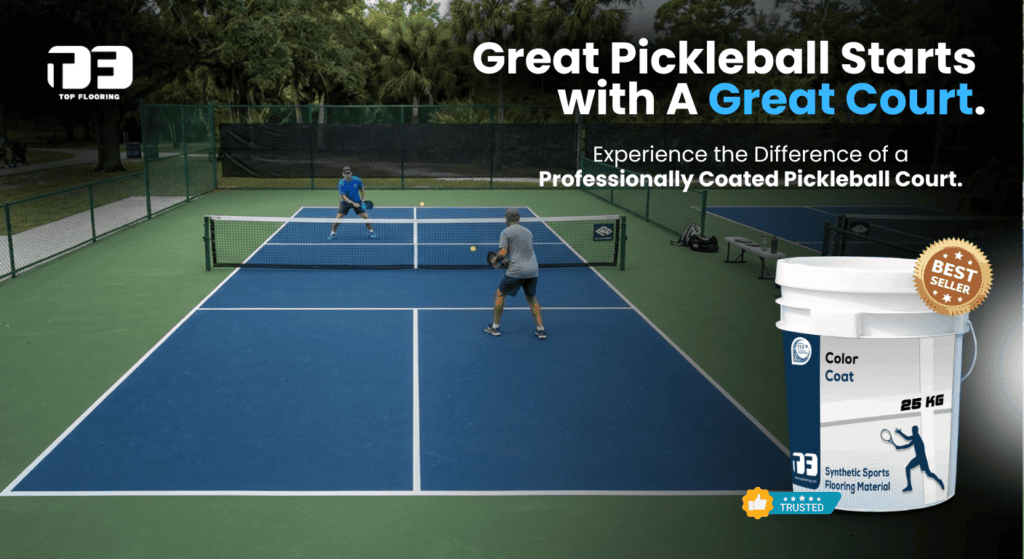
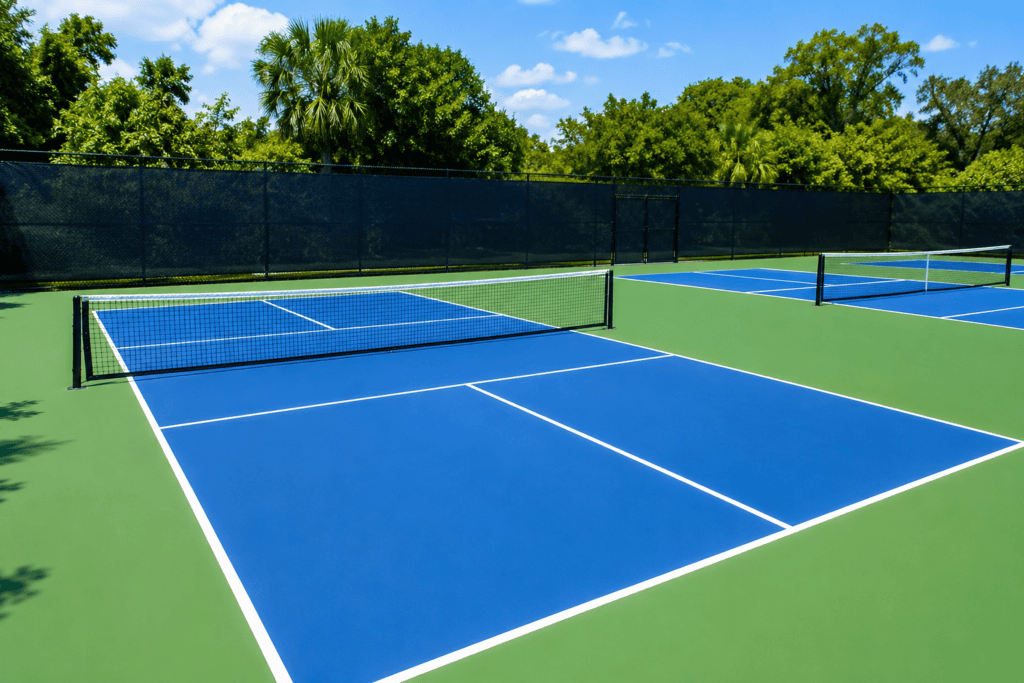
- Blue (playing area) with green (out-of-bounds) – the most widely used combination internationally for its contrast
- Green with green – a softer, uniform look often chosen for residential courts
- Muted neutrals – reduce eye strain and surface heat compared to very bright or very dark shades
Medium tones generally perform better than extremes. Very dark colours absorb more heat and can feel uncomfortably warm underfoot during peak summer hours, while overly bright shades can cause glare in strong sunlight.
Pickleball Court Paint Cost in India
Cost varies based on city, material quality, and surface condition, but here’s a general sense of where the numbers land.
- Acrylic flooring material and coating typically costs somewhere between ₹45 and ₹90 per square feet in India, depending on the number of layers and whether a cushioned system is used
- A standard court (roughly 1,800 sq. ft. including run-off area) usually falls in the range of a few lakh rupees for flooring alone
- Metro cities tend to run 10 to 20% higher than tier-2 and tier-3 towns due to labour and logistics
- Annual maintenance, including cleaning and minor crack repair, adds a modest ongoing cost
These are broad ranges. Actual pricing depends on your site’s condition, the coating system you choose, and whether you’re resurfacing an existing base or starting from scratch. It’s worth getting a site inspection before finalising a budget.
How Long Does Pickleball Court Paint Last?
A well-applied acrylic system generally holds up for 5 to 8 years before it needs recoating, sometimes longer with good maintenance. Regular sweeping, gentle washing with mild detergent, and prompt repair of small cracks all extend that lifespan. Recoating down the line usually costs a fraction of the original installation, since it doesn’t involve rebuilding the base.
Common Mistakes to Avoid
- Skipping surface preparation. Cracks and dust left untreated lead to peeling and uneven texture within months.
- Using the wrong paint. Regular exterior or wall paint doesn’t have the flexibility or texture acrylic sport coatings offer. It won’t survive a full playing season.
- Rushing between coats. Applying a new coat before the previous one has dried properly traps moisture underneath, which causes blistering later.
- Incorrect mixing ratios. Adding too much sand or water to the acrylic mix throws off both texture and coverage, leading to patchy results.
- Painting in poor weather. High humidity or rain shortly after application delays curing and weakens the bond.
- Ignoring line marking standards. Uneven or misaligned lines might not seem like a big deal until players start disputing calls during a match.
Actionable Tips Before You Start
- Always ask for a site inspection before committing to a coating system
- Choose a cushioned system if the court will see frequent daily play or if player comfort is a priority
- Pick colours based on your local climate, not just aesthetics
- Budget for annual maintenance rather than treating the court as a one-time expense
- Work with an installer who can show you completed courts, not just product samples
Final Thoughts
Pickleball court paint might look like a finishing touch, but it’s really the foundation of how your court performs, feels, and lasts. Getting the surface prep right, choosing a proper acrylic system over generic paint, and picking colours suited to your climate will save you money and headaches down the line. If you’re planning a new court or resurfacing an old one, take the time to compare coating systems and installers before you commit. It’s a decision that shows up every single time someone steps on the court to play.
Frequently Asked Questions
Pickleball courts use 100% acrylic resurfacer and colour coating systems, applied over prepared asphalt or concrete. This is the same category of coating used for tennis and basketball courts.
It’s not recommended. Regular exterior or concrete paint lacks the flexibility, UV resistance, and slip-resistant texture that acrylic sport coatings provide, and it tends to peel or become slippery within a season.
Most systems use one to two coats of acrylic resurfacer followed by two to three colour coats, though cushioned systems can involve additional layers for extra shock absorption.
Individual coats usually dry within a few hours depending on weather, but the full system generally needs 24 to 48 hours of curing before the court is ready for play.
Blue for the playing area with green for the out-of-bounds zone is the most common combination, chosen for good contrast. Medium tones generally reduce heat and glare better than very dark or very bright colours.
Acrylic coating costs typically range between ₹250 and ₹600 per square foot in India, depending on the number of coating layers, the system chosen, and the city.
With reasonable maintenance, acrylic pickleball court paint typically lasts 5 to 8 years before it needs recoating.
Yes. Acrylic coatings are commonly used outdoors for their UV and weather resistance, and indoors where budget-friendly, consistent-bounce flooring is needed.