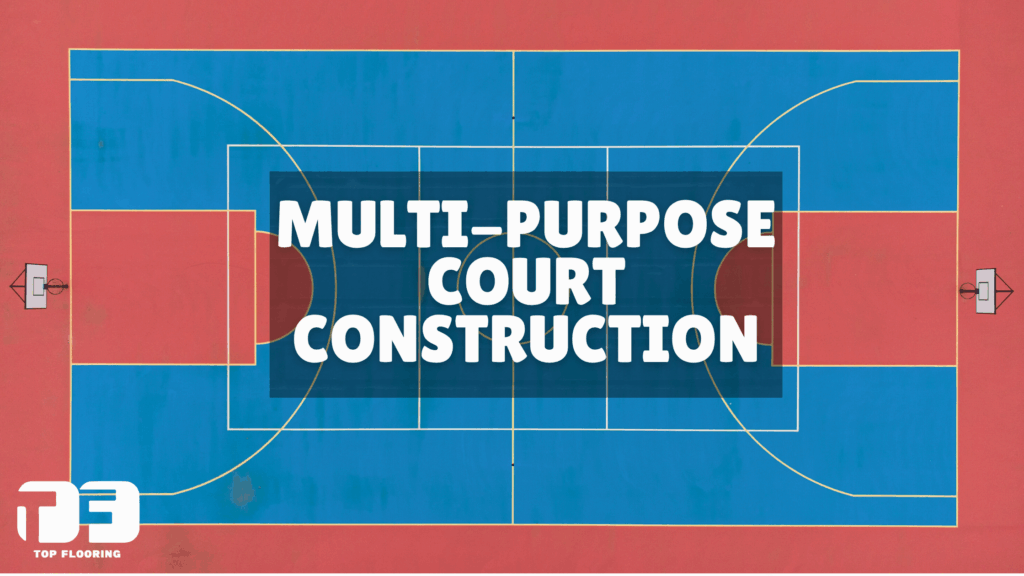
Multipurpose court construction is gaining popularity in India with schools, housing societies, sports academies and municipal projects opting for versatile court designs. These courts can accommodate multiple sports like basketball, tennis, volleyball and badminton in a single layout, saving space and increasing usability. They are a cost-effective solution for both public and private spaces. But building a durable, professional-quality, multipurpose outdoor court is more than just open ground. It requires careful site planning, selection of the right flooring system and compliance with international standards.
This guide will simplify the process by breaking down each step of the construction journey—helping project managers, architects and decision-makers to choose materials, plan layouts and build smart for maximum performance and durability.
What is a Multi-Purpose Sports Court?
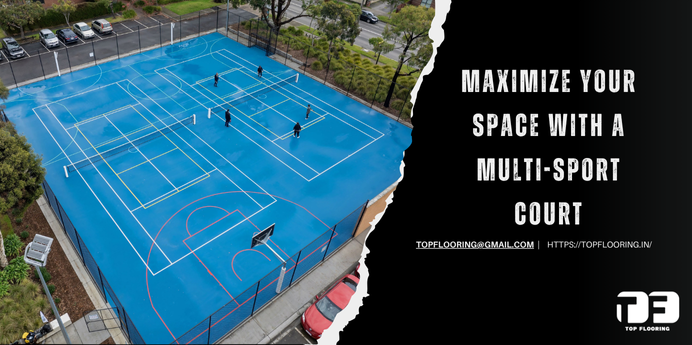
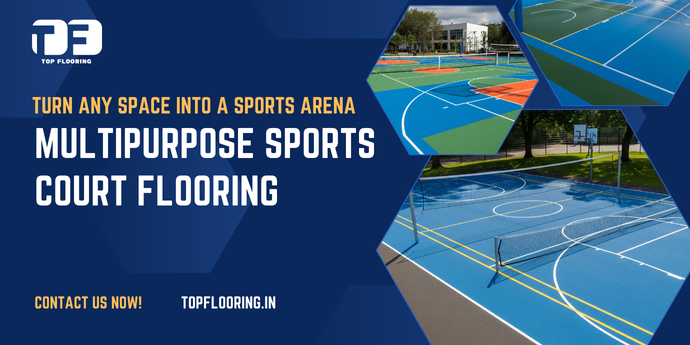
A multipurpose court is a playing surface designed to support more than one sport on the same layout. These courts are marked and equipped to play basketball, tennis, volleyball and badminton—making them super functional and space-saving. Whether installed indoors or outdoors, these courts cater to a wide range of users in schools, residential societies, sports clubs, training academies and community recreation centers.
Multipurpose courts have become popular due to their flexibility and ROI. Instead of building separate courts for each sport, institutions can offer multiple play options in one setup and make the most of their space and budget.
Benefits:
- Cost-effective multipurpose court construction and maintenance
- Maximum utility for different age groups and sports levels
- Tournaments, practice sessions and casual play
- Land- or space-efficient
A well-planned multipurpose court ensures performance without compromising on safety or gameplay.
Site Selection & Planning
- Location: Flat, accessible and obstruction-free area for construction and play.
- Space Requirements: Enough space for all sports (e.g. basketball, tennis, volleyball, badminton) and safety buffers.
- Orientation: Align the court to reduce sun glare and wind interference—especially for outdoor multipurpose courts.
- Environmental: Consider surrounding elements like trees, buildings or slopes that may affect play or maintenance.
- Drainage: Install proper drainage to prevent waterlogging and year-round use.
- Soil Testing: Geotechnical survey to test soil strength, load bearing capacity and compaction requirements.
Base Construction & Ground Preparation
A solid foundation is the backbone of any multipurpose court construction project. This stage sets the tone for the entire court and affects the court’s durability, playability and weather resistance.
- Soil Testing & Leveling: Start with a geotechnical evaluation to test the soil strength, moisture retention and compaction requirements. This ensures the surface stays stable under pressure and weather conditions.
- Foundation Type: Based on the site location, budget and usage, choose between a concrete or asphalt base. Concrete is preferred for long-term durability, while asphalt is chosen for faster installation and flexibility.
- Proper Slope & Compaction: A well-designed slope is necessary for good drainage. Compaction removes air pockets and prevents surface cracking and water damage over time.
We at Top Flooring provide 360 degree sports infrastructure solutions from Site survey, consultation, designing and Construction of sports courts. Our team ensures every foundation is built for performance.
Surface Selection: Choosing the Right Flooring Material
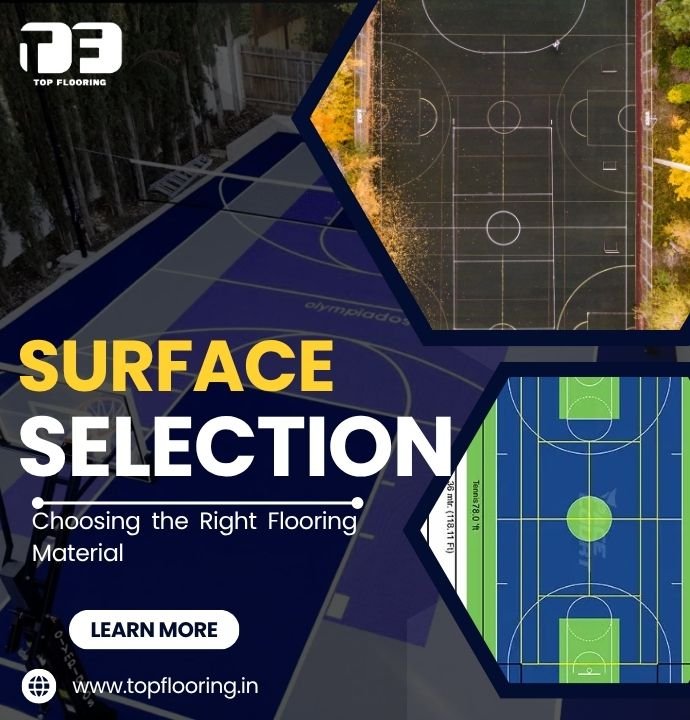
Choosing the right multipurpose court flooring is key to safety, durability and a great playing experience. The surface affects everything from grip and bounce to maintenance and longevity.
- Synthetic Acrylic Flooring: Recommended for outdoor multipurpose courts in India. UV resistant, weatherproof and playable all year round.
- PU (Polyurethane) Flooring: Ideal for indoor courts, PU flooring has excellent shock absorption, durability and comfort underfoot.
- Modular Tiles: Best for portable or semi-permanent setups, modular tiles are easy to install, clean and replace.
Multi purpose courts can have an acrylic 5 layer system which is commonly used and then 8 layer acrylic cushion court system, designed for added shock absorption and player comfort—suitable for both recreational and competitive use.
Top Flooring is a multipurpose court construction expert. We offer complete solutions from acrylic flooring to total construction, so every surface is engineered for performance and longevity.
Line Marking & Layout Customization
In multi-court construction, line marking is key to a smooth experience for all sports players. Since one surface is used for multiple sports—basketball, tennis, volleyball, badminton, etc.—clear, non-overlapping lines are essential for visibility, safety and gameplay.
- Standard Sport Dimensions: Each sport has its own official size guidelines—ITF for tennis or FIBA for basketball. Using the right measurements is important for training and competition.
- Color-Coded Markings: To avoid confusion, each sport should have its own color. This way you can recognize quickly during fast play and minimize player errors.
- Strategic Layout Planning: Smart planning during the design phase helps to optimize space and prevent cluttered or overlapping lines, especially on smaller courts.
When done right, a multisport layout turns one surface into a professional-quality multipurpose sports court.
Court Accessories & Add-Ons
More than just flooring and layout, accessories can boost usability, safety and looks.
- Fencing: For security and boundary control in public or school environments.
- LED Lighting: For night play and extended hours of use, perfect for clubs and residential complexes.
- Poles, Nets, Hoops: Choose sport-specific equipment—basketball hoops, tennis nets or volleyball posts—for all activities.
- Benches & Seating: For players and spectators to rest.
- Drainage Systems: To prevent water accumulation and maintain court condition all year round.
- Storage Sheds & Equipment Cabinets: To keep gear organized and weatherproof.
- Optional Branding & Scoreboards: Add custom logos or electronic scoreboards to your institution’s brand or professional play.
Safety, Compliance & Certification
When building a multi-purpose sports court, you can’t compromise on international safety and quality standards. Compliance means not only player safety but also professional-level training and tournaments.
- Global Standards: The court must comply with international sports bodies like ITF (International Tennis Federation), FIBA (International Basketball Federation) and BWF (Badminton World Federation) standards. These standards dictate dimensions, markings and equipment placement.
- Slip Resistance & Shock Absorption: The flooring surface must have consistent grip and adequate cushioning to reduce injury risk. Acrylic and cushioned systems are highly valued for their anti-slip and joint-friendly properties.
- Safety Zones: Each sport requires buffer zones beyond the play area to prevent collisions and accidents. Proper spacing means safety and comfort during gameplay.
By including these, you’ll have a safe, compliant and versatile multipurpose court.
Maintenance & Longevity Tips
Even the best multipurpose sports court needs regular maintenance to look good, be safe and perform. A regular maintenance schedule will extend the life of the court and reduce long-term repair costs.
- Regular Cleaning: Sweep the surface regularly to remove dust, leaves and other debris. Occasional pressure washing will help preserve the surface and grip.
- Acrylic Recoating: For acrylic courts, recoat every 3 to 5 years depending on usage and weather exposure. Recoating will revive the court’s look and maintain slip resistance and surface uniformity.
- Fix Cracks Early: Small surface cracks should be fixed as soon as they appear to prevent them from spreading. Fixing it early will avoid major surface damage and maintain consistent bounce and safety.
With proper care, your multipurpose court flooring will perform at its best for many years.
Cost Estimation & Budget Planning
The price of a multipurpose court construction depends on a number of factors. It is with this that budgeting and long term value are facilitated.
- Court Size & Sports Integration: More courts for more sports need more material and lines and therefore more expense.
- Flooring Material: Acrylic, PU or modular tiles come with varying pricing, performance and maintenance.
- Accessories & Lighting: Fencing, LED lighting, nets, poles and branding contribute to the overall expense.
- Location & Site Preparation: Distant locations or sites with a lot of leveling and drainage needed can add to the cost.
Investing in high-quality, multi-purpose court materials provides durability, less future repair and improved performance. To budget correctly, use web-based cost estimation tools or call a multi-purpose court building company near me for tailored pricing and schedules.
Conclusion
Building a multipurpose court is a smart investment in active lifestyles and space. Whether it’s for schools, clubs or residential complexes, planning at every stage—from site selection and base preparation to surface materials and finishing—affects the court’s durability, safety and performance.
Top Flooring are multipurpose court experts. We offer complete solutions from high-quality acrylic flooring to full court development. Our team brings expertise, precision and commitment to every project, building courts that perform and last.
Planning a new court or upgrading an existing one? Trust a partner who knows how to do it right. Contact Top Flooring today—your local multipurpose court builder!
Frequently Asked Questions
A multi purpose court refers to a single surface that can accommodate various sports such as basketball, tennis, volleyball and badminton. It facilitates maximizing space and finance by unifying various game arrangements into a single court.
Synthetic acrylic flooring is the favorite choice for outdoor applications in India because it is weatherproof, durable and requires less maintenance.
Construction time depends on court size, location and material but usually takes 2 to 6 weeks for a typical outdoor court.
Material cost varies with material, accessories, preparation site and court size. Use an estimator tool for court material or speak to a contractor to obtain correct prices.
Multi purpose courts provide space savings, reduced construction cost and increased usage. Multiple sports such as tennis, basketball, volleyball and badminton can be played in a single surface by schools, clubs and residential complexes.