Pickleball Courts is no longer a niche sport. Across schools, clubs, residential complexes, and sports academies, demand for pickleball court construction is growing rapidly. One of the most common questions facility owners and developers ask is:
How many pickleball courts can fit inside one tennis court?
Standard Court Dimensions: Tennis vs Pickleball
Understanding court sizes is the foundation of correct planning.
Tennis Court Size
- Playing area (doubles): 36 ft × 78 ft
- Total area with run-off: ~60 ft × 120 ft (recommended)
Pickleball Court Size
- Playing area: 20 ft × 44 ft
- Total area with safety clearance: ~30 ft × 60 ft
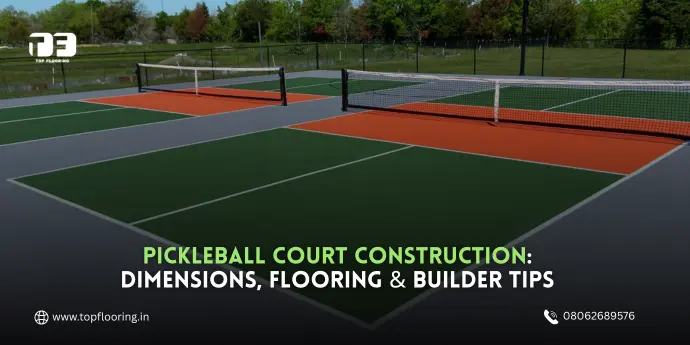
Because pickleball courts are much smaller, a single tennis court can be efficiently converted into multiple pickleball courts using proper pickleball court floor design and marking.
So, How Many Pickleball Courts Fit on One Tennis Court?
Short Answer:
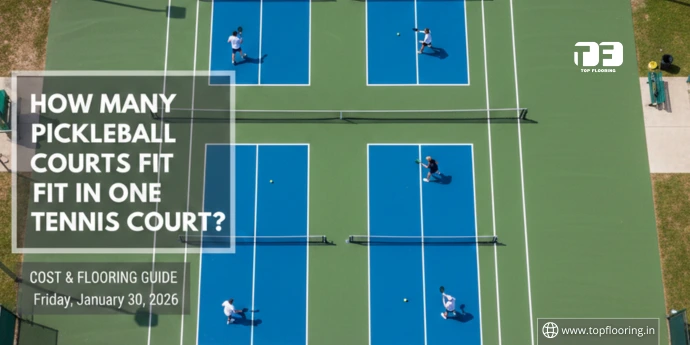
Up to 4 pickleball courts can fit on one standard tennis court.
Detailed Breakdown:
| Tennis Court Type | Pickleball Courts Possible |
| Singles tennis court | 2 pickleball courts |
| Doubles tennis court | 4 pickleball courts |
| Tennis court with limited run-off | 2–3 pickleball courts |
The most popular and practical conversion is 4 pickleball courts on one doubles tennis court, especially for clubs and community facilities aiming to maximize space usage and ROI.
Layout Options for Pickleball Courts on a Tennis Court
1: Four Pickleball Courts (Most Popular)
- Courts placed side-by-side
- Requires precise line marking
- Ideal for clubs, academies, parks, and housing societies
- Maximizes participation and revenue
2: Two Pickleball Courts
- Courts aligned lengthwise
- Less visual clutter
- Suitable for facilities that still want tennis compatibility
3: Temporary or Mixed-Use Setup
- Removable nets
- Dual-color line marking
- Shared pickleball court flooring with tennis
Pickleball Court Flooring: What Works Best?
Choosing the right pickleball court flooring is critical for performance, safety, and durability.
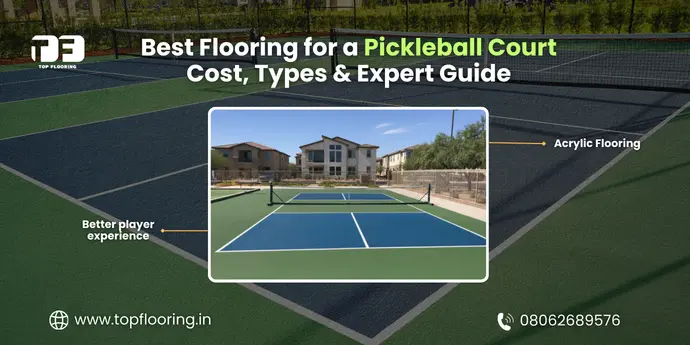
Best Flooring Option: Synthetic Acrylic Flooring
Synthetic acrylic systems are widely used for both tennis and pickleball because they offer:
- Consistent ball bounce
- Excellent grip and traction
- UV resistance for outdoor courts
- Seamless compatibility with tennis court bases
A properly layered pickleball court floor includes:
- Concrete or asphalt base
- Acrylic resurfacer
- Cushion (optional)
- Color coats
- Line marking paint
This system allows easy conversion from tennis to pickleball without structural changes.
Transform Your Sports Facility Today!
Contact us for high-quality synthetic sports flooring material and elevate your space!
Pickleball Court Material Required for Conversion
When converting a tennis court, the pickleball court material list is straightforward:
- Acrylic resurfacer
- Acrylic color coating (non-slip)
- Silica sand for texture
- Pickleball-specific line marking paint
- Portable or permanent pickleball nets
Using compatible materials ensures the tennis court surface remains undamaged and future resurfacing is easy.
Line Marking: One Court, Two Sports
One concern many facility owners have is visual confusion from multiple lines.
Best Practices:
- Use contrasting colors (e.g., white for tennis, yellow/blue for pickleball)
- Maintain proper line width (2 inches for pickleball)
- Follow official pickleball dimensions strictly
Professional pickleball court construction always accounts for player visibility and referee clarity.
Cost of Pickleball Court Construction on a Tennis Court
One major advantage of pickleball is affordability.
Approximate Cost (India-focused ranges):
| Type | Estimated Cost |
| New single pickleball court | ₹4–7 lakh |
| Conversion of tennis court (4 pickleball courts) | ₹6–10 lakh |
| Acrylic resurfacing + markings | Lower than full rebuild |
Because the base already exists, converting a tennis court significantly reduces the cost of pickleball court construction compared to building new courts from scratch.
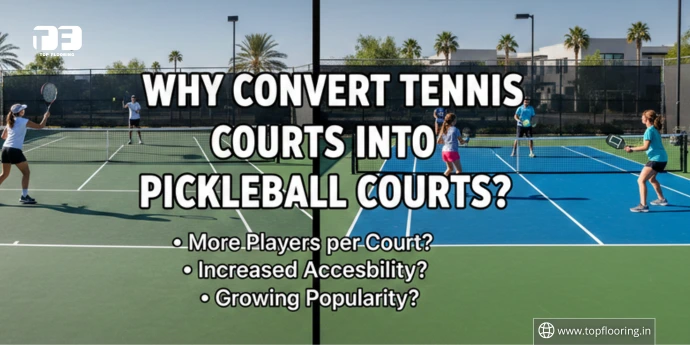
Why Convert Tennis Courts into Pickleball Courts?
1. Higher Utilization
Four pickleball courts allow 16 players at once, compared to 4 players on one tennis court.
2. Lower Maintenance
Acrylic pickleball court flooring requires minimal upkeep and performs well in Indian climate conditions.
3. Faster ROI
More players = more bookings, coaching sessions, and memberships.
4. Growing Demand
Pickleball is expanding rapidly among all age groups, from beginners to senior players.
Indoor vs Outdoor Pickleball on Tennis Courts
Outdoor Conversion
- UV-stable acrylic flooring
- Weather-resistant coatings
- Drainage slope correction if needed
Indoor Conversion
- Controlled lighting
- Shock-absorbing acrylic layers
- Enhanced grip for fast rallies
Both setups benefit from the same core pickleball court material system.
Common Mistakes to Avoid
- Ignoring safety run-off areas
- Using glossy or slippery floor coatings
- Incorrect net height (34 inches at center)
- Poor color contrast between lines and surface
- Skipping surface repairs before conversion
Avoiding these errors ensures long-term performance and player satisfaction.
Transform Your Sports Facility Today!
Contact us for high-quality synthetic sports flooring material and elevate your space!
Is Pickleball Court Conversion Worth It?
For most facilities, the answer is yes.
Converting one tennis court into multiple pickleball courts:
- Reduces per-player space cost
- Increases daily usage
- Lowers maintenance expenses
- Aligns with modern sports trends
With proper pickleball court construction, the surface remains multi-purpose and future-ready.
Final Answer: How Many Pickleball Courts in One Tennis Court?
One standard doubles tennis court can accommodate up to four pickleball courts with proper layout, acrylic pickleball court flooring, and professional line marking.
Whether the goal is community engagement, revenue generation, or space optimization, pickleball conversion is one of the smartest upgrades a sports facility can make today.