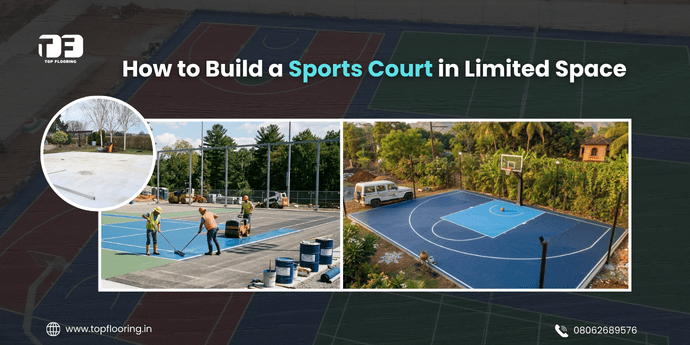
Building a sports court in limited space is achievable with efficient layout planning, compact court formats, multi-purpose designs, and modern sports flooring systems. While a full-size tennis court typically requires around 36 m × 18 m including run-off space, many sports can be adapted to smaller areas. For example, a badminton or pickleball court requires only about 13.4 m × 6.1 m, and a half basketball court can be designed within 14 m × 15 m. With strategic design, even small land parcels, rooftops, or community spaces can accommodate functional sports courts. By using synthetic acrylic flooring, modular surfaces, and multi-sport markings, schools, residential societies, clubs, and developers can create versatile sports facilities without requiring large land areas or heavy infrastructure.
This comprehensive guide explains how to design and build sports courts in small spaces, compares court sizes for different sports, explores flooring options including solutions without a concrete base, and outlines professional construction and maintenance practices.
Understanding Sports Courts for Small Land Areas
In many cities, especially urban environments, land availability is limited. Schools, residential complexes, and recreational centers often struggle to install traditional sports facilities due to space constraints.
A small land sports court refers to a compact sports facility designed to maximize available space while still supporting one or multiple sports activities.
These courts are commonly installed in:
- School playgrounds
- Residential societies
- Rooftop recreation areas
- Community parks
- Indoor sports halls
- Club facilities
Instead of building separate courts for each sport, many modern projects use multi-purpose courts, allowing several sports to share the same playing surface.
Court Size Comparisons for Popular Sports
Understanding court size requirements helps planners select the best sport for a limited space.
| Sport | Standard Court Size | Minimum Space with Clearance |
| Tennis | 23.77 m × 10.97 m | 36 m × 18 m |
| Basketball (Full) | 28 m × 15 m | 32 m × 19 m |
| Basketball (Half) | 14 m × 15 m | 18 m × 19 m |
| Volleyball | 18 m × 9 m | 24 m × 15 m |
| Badminton | 13.4 m × 6.1 m | 17 m × 9 m |
| Pickleball | 13.41 m × 6.1 m | 16 m × 9 m |
From this comparison, badminton and pickleball are ideal sports for small land sports courts, while basketball practice courts can also fit in moderate spaces.
Multi-Purpose Courts: The Best Solution for Limited Space
One of the most effective ways to maximize a small sports facility is by constructing a multi-purpose sports court.
A multi-sport court allows different games to be played on the same surface by using multiple line markings.
Common sports combined on one court include:
- Basketball practice
- Badminton
- Volleyball
- Picklebal
- Mini tennis
Example Multi-Sport Court Layout
| Sport | Typical Line Color |
| Basketball | White |
| Badminton | Yellow |
| Pickleball | Blue |
| Volleyball | Green |
This approach enables schools and clubs to support multiple sports activities without requiring additional land.
Sports Courts Without a Concrete Base
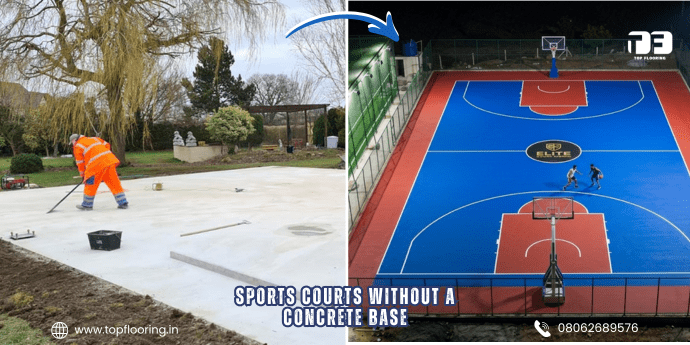
Many clients ask whether it is possible to build a sports court without constructing a full concrete base. The answer depends on the type of surface and intended usage.
Option 1: Modular Sports Flooring
Modular polypropylene tiles can be installed on:
- Compacted soil
- Existing tiles
- Asphalt surfaces
- Concrete slabs
These systems are commonly used for temporary or semi-permanent sports courts.
Option 2: Asphalt Base with Acrylic Coating
Instead of concrete, asphalt can serve as a stable base for outdoor courts. This is often used for:
- Basketball courts
- Tennis courts
- Multi-purpose courts
Option 3: Synthetic Turf Courts
Artificial turf surfaces can be installed over prepared ground layers and are commonly used for recreational sports courts.
| Base Type | Suitable For | Durability |
| Concrete | Permanent courts | Very high |
| Asphalt | Outdoor courts | High |
| Compacted soil + modular flooring | Temporary courts | Moderate |
Although courts can sometimes be installed without concrete, a properly engineered base ensures long-term durability.
Layout Planning for Small Sports Courts
When designing sports courts in limited space, efficient layout planning is essential.
1. Compact Court Dimensions
Sports courts can be scaled slightly while maintaining proportional play areas.
Example compact layouts include:
| Sport | Compact Court Size |
| Mini Tennis | 18 m × 9 m |
| Half Basketball | 14 m × 15 m |
| Pickleball | 13.41 m × 6.1 m |
These layouts allow recreational play without requiring full stadium dimensions.
2. Reduced Run-Off Areas
Professional stadiums require large safety zones around courts. In smaller facilities, these zones can be reduced while still maintaining safety.
3. Multi-Sport Marking Systems
Using multiple line colors allows several sports to share the same playing area.
This reduces construction costs and improves land efficiency.
Materials Used in Modern Sports Court Construction
Modern sports courts use specialized flooring systems designed for performance, durability, and player safety.
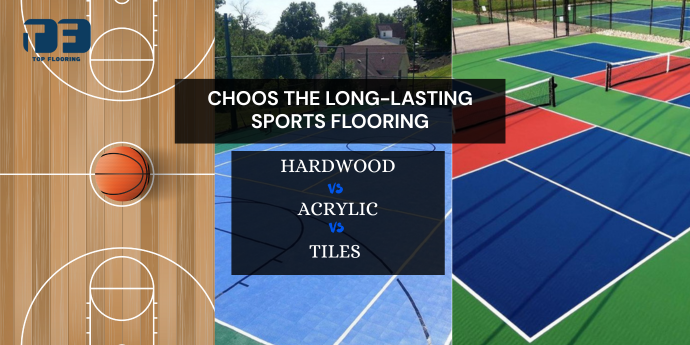
| Material | Application |
| Synthetic Acrylic Flooring | Outdoor sports courts |
| Polyurethane Flooring | Indoor sports halls |
| Hardwood Flooring | Professional indoor basketball |
| Modular PP Tiles | Temporary sports courts |
| Rubber Sports Flooring | Training facilities |
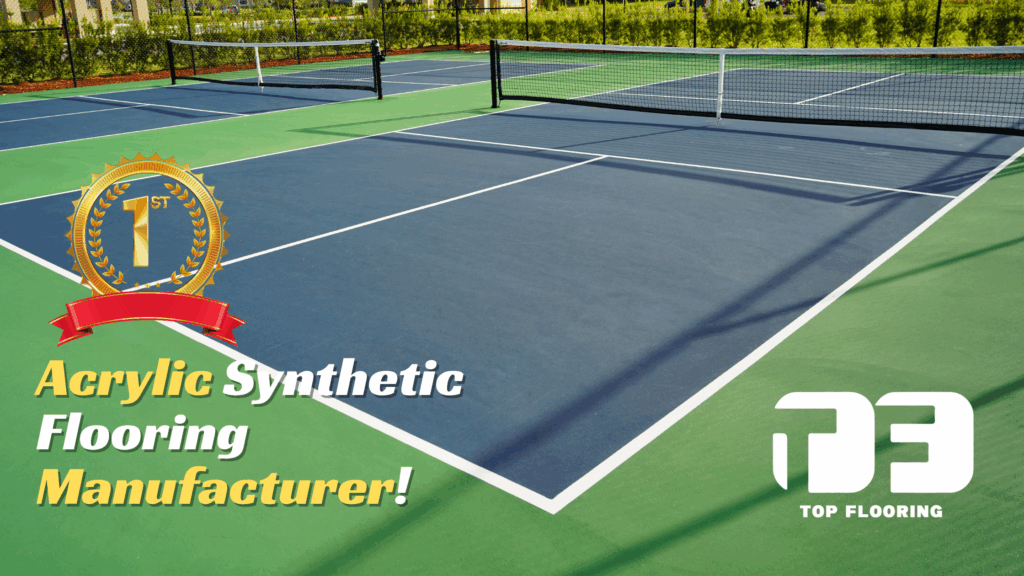
Among these materials, synthetic acrylic sports flooring is the most widely used solution for outdoor sports courts.
Why Synthetic Acrylic Flooring Is Ideal for Compact Courts
Synthetic acrylic sports flooring offers several advantages for small sports facilities.
1. High Durability
Acrylic coatings withstand frequent use and environmental exposure.
2. Slip Resistance
Textured surfaces provide safe traction for athletes.
3. Weather Resistance
Acrylic coatings are resistant to UV radiation, rain, and temperature changes.
4. Low Maintenance
Regular cleaning and occasional recoating are sufficient to maintain performance.
5. Multi-Sport Compatibility
Acrylic surfaces support a wide range of sports including:
- Tennis
- Basketball
- Pickleball
- Volleyball
- Skating
- Walking tracks
This versatility makes acrylic flooring ideal for multi-purpose sports courts in limited space.
Step-by-Step Installation Process for Small Sports Courts
Constructing a compact sports court requires proper engineering and installation methods.
Step 1: Site Assessment
Engineers analyze:
- Available land area
- Soil condition
- Drainage slope
- Accessibility
This step determines whether the court requires a concrete base, asphalt base, or modular flooring system.
Step 2: Ground Preparation
The ground is leveled and compacted to create a stable foundation.
Typical base layers include:
- Compacted soil
- Crushed stone layer
- Concrete or asphalt slab
Step 3: Surface Preparation
The base surface is cleaned and repaired before applying sports flooring coatings.
Step 4: Acrylic Sports Coating System
A multi-layer coating system is applied to create a durable playing surface.
| Layer | Purpose |
| Primer | Bonding with base surface |
| Acrylic resurfacer | Smooth surface preparation |
| Cushion layer | Shock absorption |
| Color coating | Playing surface |
| Line marking paint | Court boundaries |
Step 5: Court Marking and Finishing
Precise line markings are applied according to official sport dimensions.
High-contrast acrylic line paint ensures clear visibility during gameplay.
Indoor vs Outdoor Sports Courts
Limited space often influences whether a sports court is built indoors or outdoors.
Outdoor Courts
Outdoor sports courts are common in schools and residential complexes.
Advantages include:
- Lower construction cost
- Natural ventilation
- Larger available areas
However, outdoor courts require weather-resistant surfaces.
Indoor Courts
Indoor courts are useful when outdoor land is limited.
Advantages include:
- Controlled playing environment
- Reduced weather damage
- Year-round use
Indoor courts often use PU or wooden flooring systems.
Cost Considerations for Small Sports Courts
The cost of constructing a sports court depends on several factors.
| Factor | Impact on Cost |
| Court size | Larger courts require more materials |
| Flooring type | Acrylic, PU, or modular systems |
| Base construction | Concrete or asphalt |
| Cushion layers | Optional performance layers |
| Labor expertise | Skilled installers improve durability |
Compact courts are generally more affordable than full-size sports facilities.
Maintenance and Durability
Proper maintenance helps sports courts maintain performance and appearance.
Routine Maintenance
- Remove dust and debris regularly
- Clean the surface with water or mild detergent
- Inspect the surface for cracks or wear
Recoating
Acrylic sports courts typically require recoating every 4–6 years.
Drainage Management
Proper drainage prevents water accumulation and extends court lifespan.
Common Mistakes When Building Small Sports Courts
Several mistakes can reduce the performance and durability of sports courts.
Poor Space Planning
Improper layout design can make courts uncomfortable for play.
Incorrect Court Markings
Measurements must follow official sports standards.
Using Low-Quality Flooring Materials
Cheap materials wear out quickly and reduce safety.
Ignoring Drainage Systems
Water accumulation can damage flooring systems.
Safety Considerations for Compact Sports Courts
Safety is critical in sports infrastructure design.
Key safety features include:
- Slip-resistant flooring
- Shock-absorbing surface layers
- Adequate lighting
- Protective fencing
- Clear court markings
These features reduce injuries and improve the playing experience.
Future Trends in Compact Sports Infrastructure
Sports infrastructure is evolving to meet the needs of urban environments.
Rooftop Sports Courts
Buildings increasingly incorporate rooftop courts.
Smart Sports Surfaces
Technology is enabling courts that track player movement and performance.
Sustainable Sports Flooring
Eco-friendly materials are gaining popularity in sports construction.
Multi-Sport Community Facilities
Urban planners are increasingly building multi-purpose sports complexes that support several sports in limited space.
Conclusion
Building a sports court in limited space is entirely possible with the right design strategy, flooring system, and construction approach. By comparing court sizes, using multi-purpose layouts, and selecting durable surfaces such as synthetic acrylic sports flooring, small land areas can be transformed into high-quality sports facilities.
Whether installed in schools, residential societies, community parks, or rooftop spaces, compact sports courts provide valuable opportunities for recreation and training without requiring large stadium infrastructure.
With proper planning, professional installation, and regular maintenance, even small spaces can support safe, durable, and versatile sports environments that encourage physical activity and community engagement.
Frequently Asked Questions (FAQs)
The space required depends on the sport. For example, badminton and pickleball courts require around 13.4 m × 6.1 m, while a half basketball court requires about 14 m × 15 m.
Yes. Multi-purpose courts can include markings for basketball, badminton, volleyball, and pickleball on the same surface.
Synthetic acrylic flooring is widely used due to its durability, slip resistance, and weather resistance.
Yes. Modular sports flooring systems can be installed on compacted ground or existing surfaces, though concrete or asphalt bases provide better durability.
High-quality acrylic sports flooring can last 5–10 years with proper maintenance.
Costs vary depending on size, materials, and location, but compact sports courts are generally more affordable than full-size stadium courts.