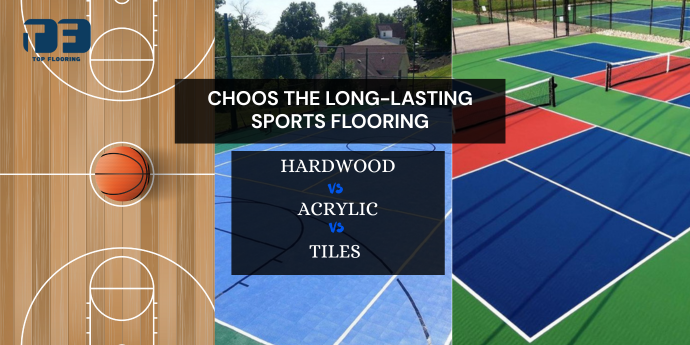
Selecting the right sports flooring is a long-term investment decision that affects performance quality, player safety, maintenance budgets, and overall project success. In India, two commonly discussed options are EPDM rubber flooring and acrylic sports flooring but they are often misunderstood or incorrectly compared.
This detailed guide goes beyond surface-level differences and covers material science, construction layers, performance metrics, lifecycle cost, real-world case studies, and expert recommendations so a clear, data-backed decision can be made.
Table of contents
- What is EPDM Flooring?
- What is Acrylic Sports Flooring?
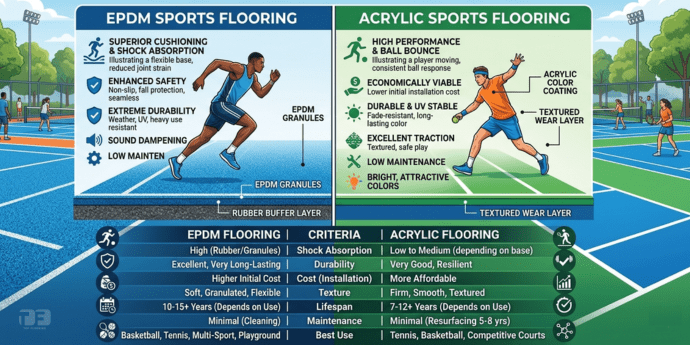
- Deep Comparison: EPDM vs Acrylic Flooring
- Performance Comparison Table
- Real-World Case Studies (India)
- Expert Insights (20+ Years Industry Experience)
- When to Choose EPDM Flooring
- When to Choose Acrylic Flooring
- Common Mistakes to Avoid
- Final Verdict
- Conclusion
- Frequently Asked Question
What is EPDM Flooring?
EPDM (Ethylene Propylene Diene Monomer) is a synthetic rubber material processed into granules and installed as a cushioned surface using binders.
Key Characteristics:
- Soft and impact-absorbing
- Slip-resistant
- Installed in thick layers (10mm–25mm typical)
- Available in vibrant colors
Common Applications:
- Kids’ play areas
- Jogging and walking tracks
- Recreational parks
EPDM is primarily a safety flooring system, not a performance sports surface.
What is Acrylic Sports Flooring?
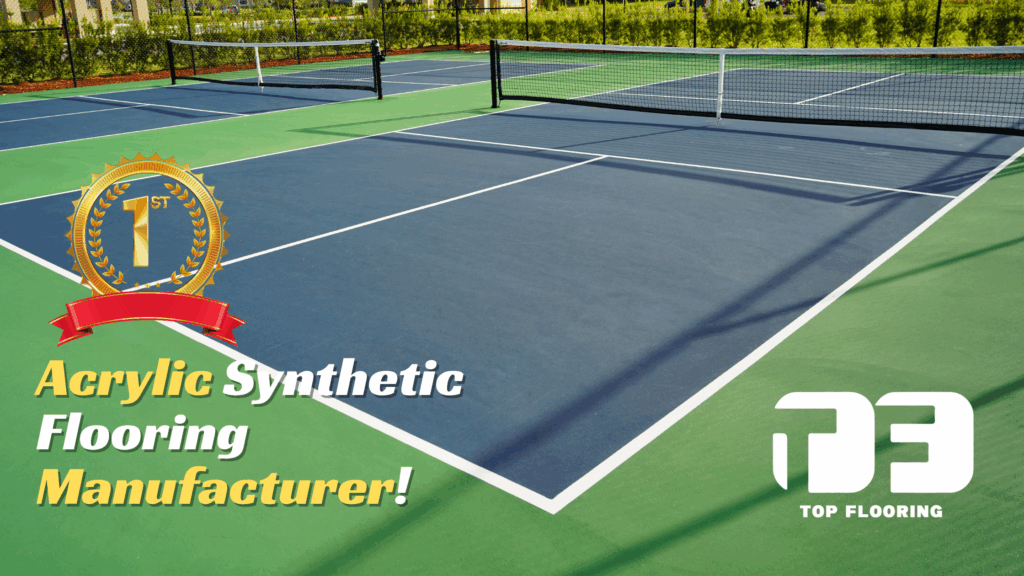
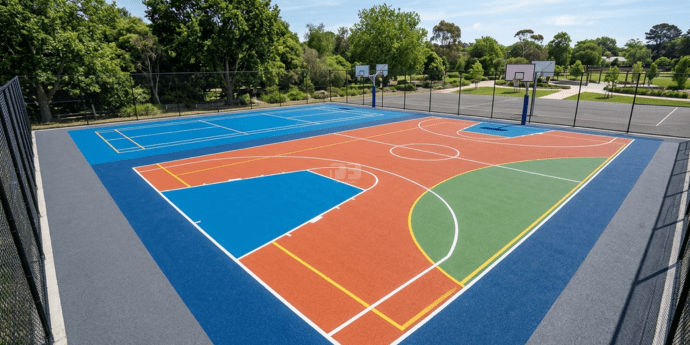
Acrylic flooring is a multi-layer coating system applied over a prepared base (concrete or asphalt). It is engineered specifically for sports performance.
System Layers (Typical):
- Primer coat
- Acrylic resurfacer
- Cushion layers (optional)
- Color coatings
- Line marking
Key Characteristics:
- Hard yet slightly flexible surface
- Anti-skid texture
- UV-resistant pigments
- Customizable speed and cushioning
Common Applications:
- Tennis courts
- Basketball courts
- Pickleball courts
- Multi-purpose sports arenas
Acrylic flooring is a performance-driven sports surface.
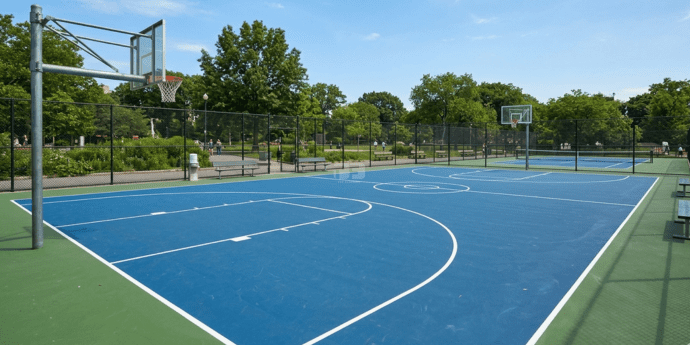
Deep Comparison: EPDM vs Acrylic Flooring
1. Surface Physics & Gameplay Performance
EPDM Flooring:
- Energy absorption is high
- Ball bounce is inconsistent or dead
- Not suitable for competitive gameplay
Acrylic Flooring:
- Controlled energy return
- Consistent ball bounce
- Meets professional sports standards
Insight: Sports like tennis and basketball require predictable rebound mechanics, which EPDM cannot provide.
2. Shock Absorption vs Energy Return
- EPDM: Prioritizes shock absorption (reduces impact stress)
- Acrylic: Balances grip, friction, and energy return
For athletes, too much cushioning (EPDM) actually reduces agility and speed. Acrylic offers the optimal balance.
3. Climate Compatibility (Indian Conditions)
India’s climate includes:
- Extreme heat (45°C+)
- Heavy monsoons
- Dust and pollution
EPDM Challenges:
- Binder degradation over time
- Granule loosening due to heat cycles
- Water seepage issues if installation is poor
Acrylic Advantages:
- UV-stable coatings
- Seamless surface prevents water damage
- Performs well across temperature variations
Acrylic is engineered for outdoor durability in harsh climates.
4. Installation Complexity
EPDM Installation:
- Requires mixing granules with binders
- Skilled labor needed for even finish
- Thickness consistency is critical
Acrylic Installation:
- Layered coating system
- Faster execution on prepared base
- Easier quality control
Acrylic offers better consistency and scalability for large projects.
5. Maintenance & Lifecycle
EPDM Flooring:
- Dirt accumulation between granules
- Difficult cleaning
- Repairs require patchwork (visible joints)
Acrylic Flooring:
- Smooth, sealed surface
- Easy cleaning (water + mild detergent)
- Recoating restores surface
Acrylic significantly reduces operational headaches.
6.Cost Comparison (Long-Term ROI)
| Factor | EPDM Flooring | Acrylic Flooring |
| Initial Cost | Medium–High | Cost-effective |
| Maintenance | High | Low |
| Lifespan | Moderate | 5–8 Years |
| ROI | Medium | High |
Winner: Acrylic Flooring
Initial Cost:
- EPDM: Moderate to high
- Acrylic: Cost-effective
Maintenance Cost (5 Years):
- EPDM: High (repairs + wear issues)
- Acrylic: Low (minimal upkeep)
Lifecycle Value:
- EPDM: Moderate
- Acrylic: High
Acrylic delivers better ROI over 5–8 years.
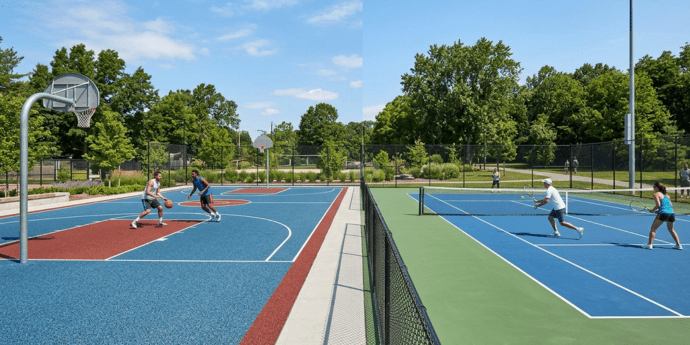
Performance Comparison Table
| Feature | EPDM Flooring | Acrylic Flooring |
| Surface Type | Soft rubber | Hard textured |
| Ball Bounce | Poor | Excellent |
| Player Grip | Moderate | High |
| Durability | Moderate | High |
| Maintenance | High | Low |
| Weather Resistance | Moderate | Excellent |
| Best Use | Playgrounds | Sports courts |
Real-World Case Studies (India)
Case Study 1: School Multi-Sports Court Failure
Location: Delhi NCR
Initial Choice: EPDM
Issues:
- Basketball bounce inconsistent
- Surface started wearing in 18–24 months
- Maintenance costs rising
Upgrade:
- Converted to acrylic flooring
Results:
- 50% improvement in gameplay quality
- Maintenance reduced significantly
- Increased sports participation
Case Study 2: Private Sports Academy
Requirement: Tennis + Basketball courts
Decision Factors:
- Professional play standards
- Budget efficiency
- Long-term durability
Chosen Solution:
- Acrylic flooring system
Outcome (After 4 Years):
- Surface intact
- Minimal maintenance cost
- Consistent performance
Case Study 3: Public Jogging Track
Location: Urban park
Choice:
- EPDM flooring
Outcome:
- Comfortable for walkers
- Reduced joint stress
- Highly appreciated by elderly users
Shows EPDM is excellent for comfort-focused environments.
Expert Insights (20+ Years Industry Experience)
From real project execution across India:
- Acrylic flooring is used in 90%+ professional sports courts
- EPDM is often misapplied in sports projects due to lack of awareness
- Acrylic coatings provide customization in speed, cushioning, and grip
- Maintenance teams prefer acrylic due to ease of upkeep
Critical Advice:
If the project involves any ball-based sport, acrylic flooring should always be prioritized.
When to Choose EPDM Flooring
Choose EPDM only when:
- Safety is the top priority
- No competitive sports are involved
- Target users include children or elderly
When to Choose Acrylic Flooring
Choose acrylic when:
- Building tennis, basketball, or pickleball courts
- Long-term ROI is important
- Low maintenance is required
- Professional gameplay is expected
Common Mistakes to Avoid
- Using EPDM for basketball or tennis courts
- Ignoring base quality before acrylic installation
- Choosing low-quality binders or coatings
- Not considering climate impact
Final Verdict
The comparison is not about which material is “better”it’s about choosing the right material for the right purpose.
For sports courts – Acrylic Flooring is the clear winner
For recreational comfort areas – EPDM Flooring works well
Conclusion
EPDM and acrylic flooring serve entirely different roles. While EPDM focuses on comfort and safety, acrylic is designed for performance, durability, and professional sports usage.
In India’s demanding climate and high-usage environments, acrylic flooring consistently proves to be the most reliable and cost-effective solution for sports courts.
Frequently Asked Question
Acrylic flooring is better for sports courts, while EPDM is better for playgrounds and tracks.
No, EPDM does not provide proper ball bounce, making it unsuitable for basketball.
Acrylic sports flooring typically lasts 5–8 years with minimal maintenance.
Acrylic flooring offers better long-term ROI due to low maintenance and durability.