A synthetic badminton court has become the preferred choice for schools, sports academies, clubs, and residential complexes across India. With better durability, consistent play performance, and lower maintenance compared to traditional surfaces, synthetic flooring is transforming how badminton courts are built today.
This in-depth guide covers everything needed to understand synthetic badminton court flooring, including materials, construction process, cost in India, and expert tips to ensure long-term performance.
Table of contents
- What is a Synthetic Badminton Court?
- Types of Synthetic Badminton Court Flooring
- Standard Badminton Court Dimensions
- Synthetic Badminton Court Construction Process
- Synthetic Badminton Court Cost in India
- Benefits of Synthetic Badminton Court Flooring
- Indoor vs Outdoor Synthetic Badminton Courts
- Maintenance Tips for Long-Lasting Performance
- Common Mistakes to Avoid
- Why Synthetic Badminton Courts are the Future
- Conclusion
- Frequently Asked Questions
What is a Synthetic Badminton Court?
A synthetic badminton court is a playing surface constructed using advanced flooring systems such as acrylic coatings, PVC vinyl mats, or polyurethane layers. These materials are applied over a concrete or asphalt base to create a smooth, anti-slip, and shock-absorbing surface.
Unlike traditional wooden courts, synthetic courts are:
- Weather-resistant
- Cost-effective
- Suitable for both indoor and outdoor use
- Easier to maintain
Types of Synthetic Badminton Court Flooring
Choosing the right flooring is critical for performance and durability. Below are the most commonly used options:
1. Acrylic Synthetic Flooring
Acrylic flooring is widely used for outdoor badminton courts.
Key Features:
- UV-resistant and weatherproof
- Non-slip textured surface
- Long lifespan with minimal maintenance
- Ideal for multi-purpose courts
Best for: Schools, parks, outdoor sports complexes
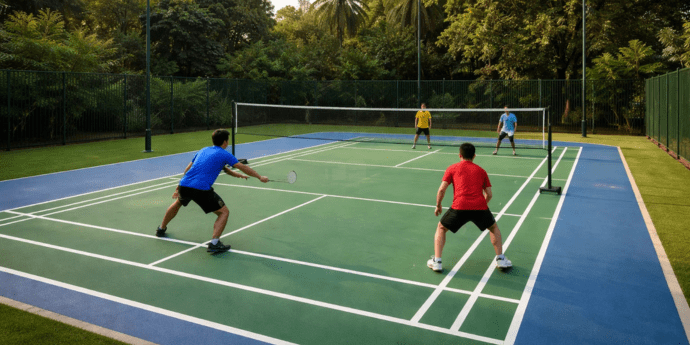
2. PVC Vinyl Flooring (Mat-Based System)
PVC vinyl flooring is commonly used for indoor badminton courts.
Key Features:
- Cushioned surface for player comfort
- Excellent shock absorption
- Professional-grade playing experience
- Easy installation with roll-out mats
Best for: Indoor stadiums, academies, professional courts
3. Polyurethane (PU) Flooring
PU flooring offers a seamless and slightly cushioned surface.
Key Features:
- High durability
- Smooth finish
- Good impact resistance
- Suitable for indoor multi-sport courts
Best for: Indoor sports facilities
Standard Badminton Court Dimensions
To ensure professional gameplay, proper Badminton Court Dimensions must be followed:
- Court Length: 13.4 meters
- Court Width (Doubles): 6.1 meters
- Court Width (Singles): 5.18 meters
- Net Height: 1.55 meters at posts
Accurate line markings using high-quality synthetic court paint are essential for clarity and compliance with standards.
Synthetic Badminton Court Construction Process
Building a high-quality synthetic badminton court requires proper planning and execution. Here’s a step-by-step overview:
1. Base Preparation
The foundation is usually made of:
- Concrete (most common)
- Asphalt
The surface must be:
- Level and smooth
- Crack-free
- Properly cured
2. Surface Cleaning & Priming
The base is cleaned to remove dust and debris. A primer is applied to ensure proper bonding of the synthetic layers.
3. Application of Synthetic Layers
Depending on the chosen system:
- Acrylic layers are applied in multiple coats
- Cushion layers may be added for shock absorption
- Texture coats improve grip and playing performance
4. Line Marking
Court markings are done using high-precision tools and durable paint to ensure visibility and accuracy.
5. Final Finishing
A top coat is applied to enhance:
- Durability
- Color finish
- Surface protection
Synthetic Badminton Court Cost in India
The cost of constructing a synthetic badminton court varies depending on materials, location, and project size.
Average Cost Breakdown:
- Acrylic Badminton Court: ₹250 – ₹450 per sq. ft.
- PVC Vinyl Flooring: ₹300 – ₹600 per sq. ft.
- PU Flooring: ₹400 – ₹700 per sq. ft.
Total Estimated Cost:
- A full badminton court may cost between ₹5 lakh to ₹12 lakh+
Factors Affecting Cost:
- Type of flooring material
- Base construction quality
- Indoor vs outdoor setup
- Location and labor charges
- Additional features (lighting, fencing, roofing)
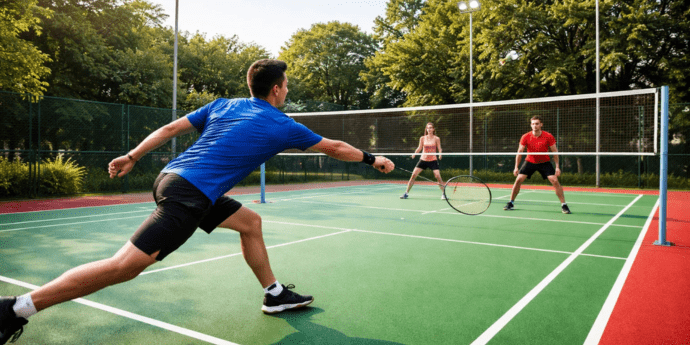
Benefits of Synthetic Badminton Court Flooring
1. Superior Playing Performance
Synthetic surfaces provide consistent shuttle bounce and player movement.
2. Low Maintenance
Unlike wooden courts, synthetic flooring does not require frequent polishing or repairs.
3. Weather Resistance
Outdoor synthetic courts withstand heat, rain, and UV exposure.
4. Enhanced Player Safety
Anti-slip and cushioned surfaces reduce the risk of injuries.
5. Long Lifespan
With proper installation, synthetic courts can last 5–10 years or more.
Indoor vs Outdoor Synthetic Badminton Courts
Indoor Courts:
- Prefer PVC or PU flooring
- Controlled environment
- Better for professional training
Outdoor Courts:
- Acrylic flooring recommended
- Weather-resistant surface
- Cost-effective solution
Maintenance Tips for Long-Lasting Performance
To ensure durability and performance:
- Clean the surface regularly to remove dust
- Avoid dragging heavy objects
- Repair cracks or damage immediately
- Recoat acrylic surfaces every few years if required
Proper maintenance significantly extends the life of a synthetic badminton court.
Common Mistakes to Avoid
- Poor base construction leading to cracks
- Choosing the wrong flooring type for the environment
- Ignoring drainage in outdoor courts
- Using low-quality materials
- Improper line markings
Avoiding these mistakes ensures better performance and long-term savings.
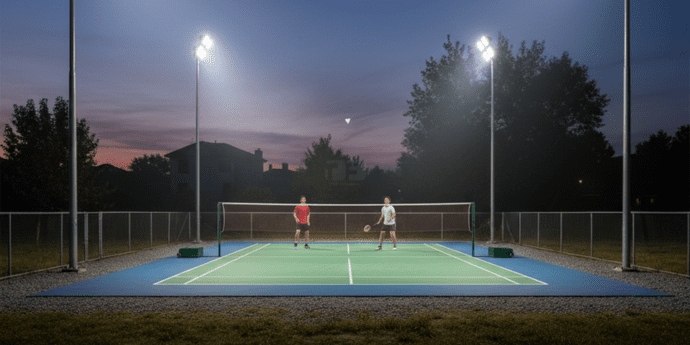
Why Synthetic Badminton Courts are the Future
With increasing demand for durable, cost-efficient, and professional-grade sports infrastructure, synthetic flooring is rapidly replacing traditional court surfaces in India.
From schools to international-level facilities, synthetic badminton courts offer the perfect balance of performance, safety, and affordability.
Conclusion
A well-designed synthetic badminton court is a long-term investment that enhances gameplay, reduces maintenance costs, and ensures player safety. Choosing the right materials, following proper construction methods, and working with experienced professionals are key to achieving a high-quality court.
Whether planning a new sports facility or upgrading an existing one, synthetic badminton court flooring provides a reliable and modern solution that meets today’s performance standards.
Frequently Asked Questions
Acrylic flooring is best for outdoor courts, while PVC vinyl flooring is ideal for indoor badminton courts due to better cushioning and comfort.
The cost of a synthetic badminton court in India usually ranges from ₹5 lakh to ₹12 lakh, depending on flooring material and construction quality.
Yes, acrylic synthetic badminton courts are designed for outdoor use and are resistant to UV rays and weather conditions.
Synthetic badminton courts are more durable, cost-effective, and require less maintenance compared to wooden courts.
A synthetic badminton court typically lasts 5–10 years with proper maintenance and timely resurfacing.