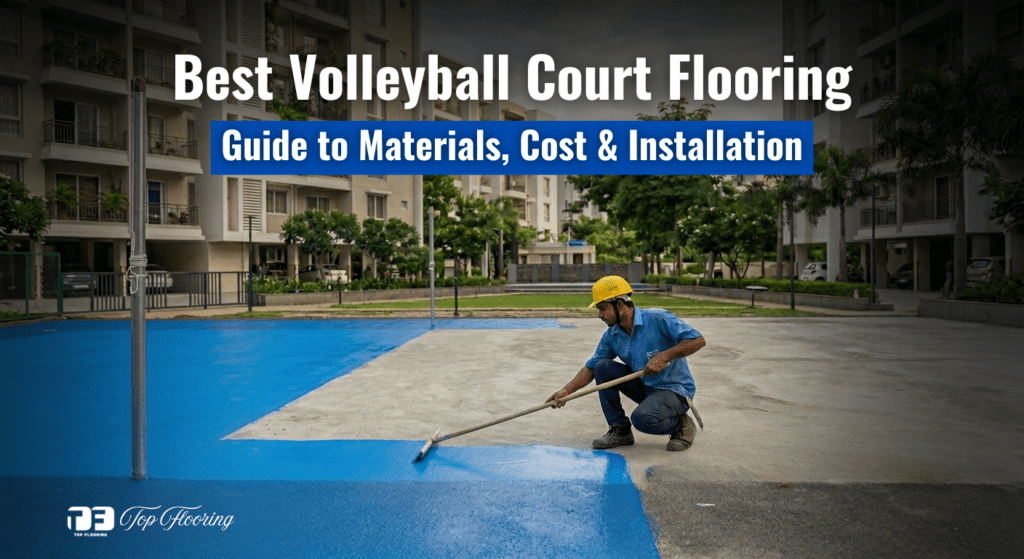
The quality of a volleyball court depends heavily on its flooring. Whether the court is being built for a school, sports academy, club, university, residential community, or professional training facility, selecting the right volleyball court flooring directly impacts player safety, ball performance, durability, maintenance costs, and overall playing experience.
Modern sports infrastructure increasingly relies on synthetic sports flooring systems because they offer excellent shock absorption, slip resistance, weather durability, and consistent playing conditions. However, with multiple flooring options available including acrylic, PU, PVC, hardwood, and PP tiles, choosing the best volleyball court flooring can be challenging.
This complete guide explains volleyball court flooring materials, construction methods, installation processes, costs, maintenance requirements, and expert recommendations to help facility owners make an informed decision.
Table of contents
- Why Volleyball Court Flooring Matters
- Standard Volleyball Court Dimensions
- Types of Volleyball Court Flooring Materials
- Comparison of Volleyball Court Flooring Materials
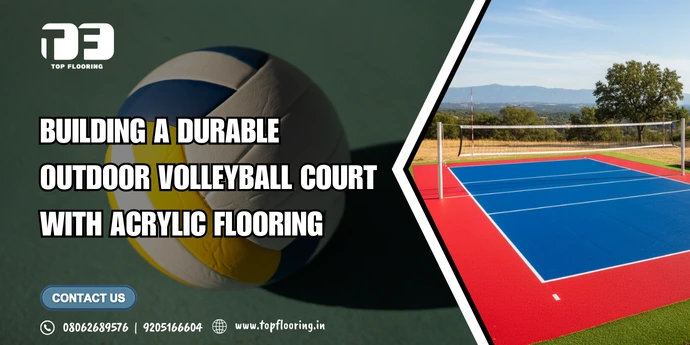
- Why Acrylic Flooring Is Preferred for Outdoor Volleyball Courts
- Volleyball Court Construction Process
- Volleyball Court Flooring Cost in India
- Real Project Case Study
- Expert Advice: Choosing the Right Volleyball Court Flooring
- Volleyball Court Maintenance Tips
- Common Mistakes to Avoid
- Future Trends in Volleyball Court Flooring
- Conclusion
- Frequently Asked Questions
Why Volleyball Court Flooring Matters
Volleyball involves continuous jumping, diving, lateral movement, and quick directional changes. Poor-quality flooring can lead to:
- Knee injuries
- Ankle sprains
- Muscle fatigue
- Uneven ball bounce
- Surface cracks
- Higher maintenance expenses
A professionally designed volleyball court surface provides:
- Better grip and traction
- Enhanced player comfort
- Reduced injury risks
- Consistent ball response
- Long-term durability
- Improved aesthetics
The flooring system often determines the lifespan and usability of the entire court.
Standard Volleyball Court Dimensions
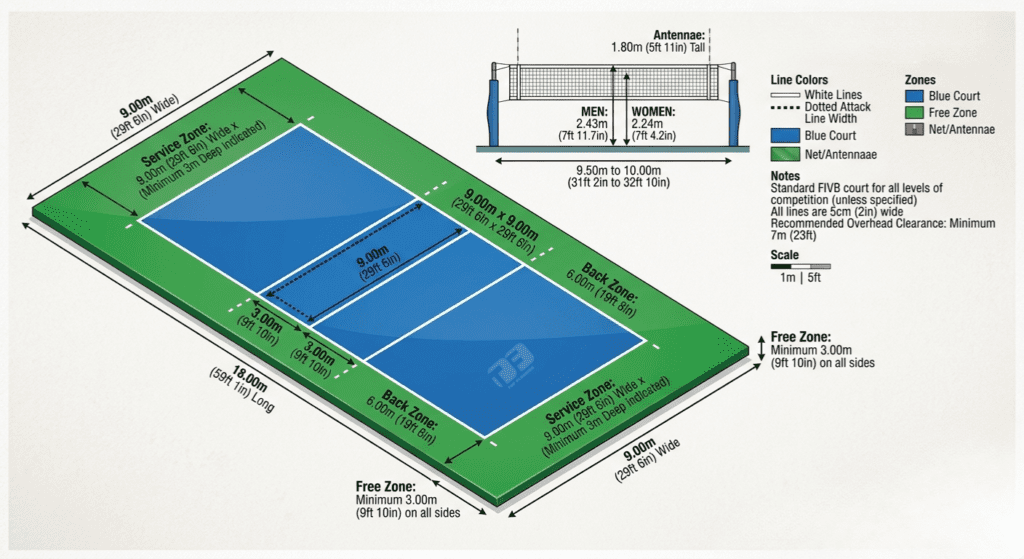
Before discussing flooring materials, understanding official volleyball court dimensions is important.
Playing Area
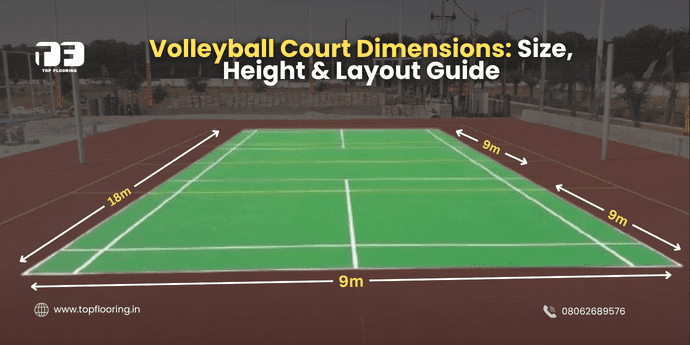
- Court Length: 18 meters
- Court Width: 9 meters
Attack Line
- 3 meters from the center line on both sides
Free Zone
- Minimum 3 meters surrounding the court
Recommended Total Area
For competitive facilities:
- Approximately 24m × 15m
The flooring system should extend beyond the playing area to ensure player safety during dives and movements.
Types of Volleyball Court Flooring Materials
Several flooring materials are used worldwide for volleyball courts. Each serves different requirements and budgets.
1. Acrylic Volleyball Court Flooring
Acrylic flooring is one of the most popular choices for outdoor volleyball courts.
Construction Layers
- Concrete or asphalt base
- Acrylic resurfacer
- Cushion layers (optional)
- Color coating
- Line markings
Advantages
- UV resistant
- Weatherproof
- Slip-resistant surface
- Low maintenance
- Cost-effective
- Long service life
Best For
- Outdoor volleyball courts
- Schools
- Colleges
- Sports clubs
- Community courts
Average Lifespan
8–12 years with periodic resurfacing.
2. Polyurethane (PU) Volleyball Flooring
PU flooring is commonly used in professional indoor facilities.
Benefits
- Excellent shock absorption
- Seamless surface
- Comfortable underfoot
- Superior player protection
Drawbacks
- Higher installation cost
- Complex application process
Best For
- Professional indoor courts
- Tournament venues
- High-performance training centers
3. PVC Sports Flooring
PVC sports flooring consists of synthetic vinyl layers.
Advantages
- Easy installation
- Comfortable surface
- Available in various thicknesses
- Good impact resistance
Limitations
- Less durable than acrylic outdoors
- Vulnerable to extreme temperatures
Best For
- Indoor volleyball courts
- Multi-purpose halls
4. Hardwood Volleyball Flooring
Hardwood remains the traditional flooring choice for indoor professional volleyball.
Benefits
- Premium appearance
- Excellent ball response
- International tournament standard
Challenges
- Expensive installation
- High maintenance
- Sensitive to moisture
Best For
- Professional indoor arenas
- International competition venues
5. PP Interlocking Tiles
Polypropylene modular tiles are increasingly used for recreational facilities.
Benefits
- Quick installation
- Portable system
- Drainage capabilities
- Easy replacement
Drawbacks
- Different playing feel
- Lower comfort than cushioned systems
Best For
- Recreational courts
- Temporary sports facilities
Comparison of Volleyball Court Flooring Materials
| Flooring Type | Indoor | Outdoor | Durability | Maintenance | Cost |
|---|---|---|---|---|---|
| Acrylic | Yes | Excellent | High | Low | Moderate |
| PU | Excellent | Limited | High | Moderate | High |
| PVC | Excellent | No | Medium | Low | Moderate |
| Hardwood | Excellent | No | High | High | Very High |
| PP Tiles | Good | Good | Medium | Low | Moderate |
Why Acrylic Flooring Is Preferred for Outdoor Volleyball Courts
Many sports infrastructure consultants recommend acrylic sports flooring for outdoor volleyball facilities because it balances performance, durability, and affordability.
Key reasons include:
Weather Resistance
Acrylic coatings withstand:
- UV exposure
- Rainfall
- Temperature fluctuations
Player Safety
Textured surfaces improve grip and reduce slipping.
Consistent Performance
The surface provides predictable ball behavior and player movement.
Low Maintenance
Routine cleaning and periodic resurfacing are generally sufficient.
Cost Efficiency
Compared to PU and hardwood systems, acrylic flooring offers excellent value.
Volleyball Court Construction Process
Proper volleyball court construction is as important as selecting the flooring material.
Step 1: Site Preparation
The site is cleared and leveled.
Activities include:
- Soil testing
- Excavation
- Compaction
Step 2: Sub-Base Construction
A strong sub-base prevents settlement issues.
Typical layers include:
- Compacted soil
- Granular sub-base
- Stone aggregate
Step 3: Concrete Base Installation
Most volleyball courts use reinforced concrete.
Requirements:
- Proper slope
- Crack control joints
- Adequate curing
A high-quality base significantly increases flooring lifespan.
Step 4: Surface Preparation
The concrete surface is:
- Ground smooth
- Repaired
- Cleaned
This ensures proper bonding of acrylic systems.
Step 5: Acrylic Flooring Installation
Installation typically includes:
Resurfacer Layer
Provides surface uniformity.
Cushion Layers
Optional layers improve comfort and shock absorption.
Color Coatings
Multiple coats provide durability and appearance.
Court Markings
Official volleyball lines are applied according to standards.
Volleyball Court Flooring Cost in India
Costs vary depending on material selection, location, project size, and site conditions.
Acrylic Volleyball Court Flooring
Approximate range:
₹180–₹450 per sq. ft.
PU Flooring
Approximate range:
₹350–₹700 per sq. ft.
PVC Flooring
Approximate range:
₹250–₹600 per sq. ft.
Hardwood Flooring
Approximate range:
₹700–₹1,500+ per sq. ft.
Additional Cost Factors
- Base construction
- Drainage system
- Lighting
- Fencing
- Seating arrangements
- Transportation
Every project should be evaluated individually for accurate budgeting.
Real Project Case Study
School Volleyball Court Upgrade in Northern India
Project Background
A private school had an aging concrete volleyball court that developed cracks, slippery areas, and drainage issues.
Challenges
- Surface cracking
- Water accumulation
- Frequent maintenance
- Increased injury complaints
Solution
The existing surface was repaired and upgraded using a cushioned acrylic sports flooring system.
Work included:
- Crack repair
- Surface leveling
- Acrylic resurfacing
- Multi-layer color coating
- Official court markings
Results After One Year
- Reduced maintenance requirements
- Improved player confidence
- Better traction during rainy seasons
- Enhanced visual appeal
- Increased participation in school sports activities
The school management reported fewer surface-related complaints and greater satisfaction among students and coaches.
Expert Advice: Choosing the Right Volleyball Court Flooring
Sports flooring specialists typically recommend evaluating the following factors before making a decision.
Consider Climate Conditions
For outdoor facilities in India, UV-resistant and weatherproof surfaces are essential.
Acrylic systems perform particularly well under varying climatic conditions.
Assess Usage Frequency
Heavy-use courts require highly durable flooring systems.
Schools and clubs should prioritize longevity and maintenance efficiency.
Focus on Safety
Player protection should always take priority over initial cost savings.
Look for:
- Slip resistance
- Shock absorption
- Surface consistency
Invest in Quality Base Construction
Even the best flooring system can fail if installed over a poor foundation.
A strong concrete base is crucial for long-term performance.
Choose Experienced Installers
Installation quality directly impacts:
- Surface lifespan
- Drainage performance
- Playing characteristics
Professional installation reduces future repair expenses.
Volleyball Court Maintenance Tips
Proper maintenance extends flooring life significantly.
Daily
- Remove debris
- Clean dust accumulation
Weekly
- Wash surface using recommended cleaning methods
Monthly
- Inspect court markings
- Check drainage areas
Annually
- Conduct professional inspection
- Repair minor surface damage promptly
Preventive maintenance is far less expensive than major resurfacing.
Common Mistakes to Avoid
Many facility owners make costly mistakes during construction.
Avoid:
- Choosing flooring based solely on price
- Ignoring drainage requirements
- Using inexperienced contractors
- Skipping surface preparation
- Neglecting maintenance planning
Proper planning delivers better long-term results.
Future Trends in Volleyball Court Flooring
The sports flooring industry continues to evolve.
Emerging trends include:
- Cushioned acrylic systems
- Eco-friendly flooring materials
- Advanced UV-resistant coatings
- Smart sports facilities
- Multi-sport court surfaces
These innovations improve performance, sustainability, and lifecycle value.
Conclusion
Selecting the best volleyball court flooring requires balancing performance, durability, safety, and budget. While several materials are available, acrylic sports flooring remains one of the most practical and cost-effective solutions for outdoor volleyball courts due to its weather resistance, low maintenance requirements, and long service life.
A successful volleyball court project depends on more than just surface material. Proper site preparation, quality base construction, professional installation, and regular maintenance all contribute to long-term performance. By understanding flooring options, construction methods, and cost considerations, facility owners can build volleyball courts that provide safe and enjoyable playing conditions for many years.
Frequently Asked Questions
Acrylic sports flooring is one of the best choices for outdoor volleyball courts due to its durability, slip resistance, and low maintenance.
Acrylic volleyball court flooring typically costs between ₹180 and ₹450 per sq. ft., depending on the project requirements.
Synthetic acrylic flooring is ideal for outdoor courts because it offers excellent weather and UV resistance.
A well-maintained acrylic volleyball court can last 8–12 years or more with periodic resurfacing.
A standard volleyball court measures 18 meters long and 9 meters wide.
Yes, a multi-purpose acrylic court can accommodate volleyball, basketball, badminton, pickleball, and other sports with proper markings.