Imagine you’re lucky enough to be working with a blank base, perhaps it’s a school, residential community, or sports facility that’s just waiting for a top-notch volleyball court to be installed. A place where players can sharpen their skills, go head-to-head in a tournament, or just have fun all year round. At first glance, install outdoor volleyball court may look simple—mark a few lines, pour concrete, and assume it’s ready for play. However, in reality, building a court that not only looks good but also stands up to weather conditions is far more complex in practice.
When you’re putting a volleyball court outside where the weather is harsh, synthetic acrylic flooring material is the obvious choice – it’s the clear winner for a reason. It’s been engineered to withstand wind, rain, heat & cold and has a super safe grip so even the fastest of players won’t end up on their backside, and most importantly, won’t need to be replaced anytime soon. This guide will walk you through how to get a synthetic acrylic outdoor volleyball court installation sorted, covering everything from planning and getting that base right through to flooring systems, the actual installation process, costs involved and how to keep the whole thing running smoothly for years to come, so you can get a volleyball court that’s safe, long-lasting and ready for action.
Planning an Outdoor Volleyball Court – What to Consider
Planning is the backbone of a successful outdoor volleyball court project. The decisions you make upfront can make or break a surface; it’s as simple as that. How well your court holds up, how safe it is, and how much it costs over time are all going to depend on the planning you do at this early stage.
Some of the major considerations when install outdoor volleyball court include:
- Where are you going to put the thing? And more to the point, how is the sun going to affect your court?
- What kind of soil have you got to work with? Is the ground suitable for what you’re planning to build?
- Rainfall, heat, and humidity all these things can have a huge impact on your outdoor volleyball court, and so need to be considered when planning.
- Who is the court for? Are you building it for a school, an academy, a club, or a public court?
- And of course, the official dimensions of a volleyball court need to be taken into consideration.
Planning is key to having a volleyball playfield that will last, be safe, and that won’t cost the earth to maintain over the long term.
Why Choose Top Flooring for Your Outdoor Volleyball Court Project
Top Flooring is a firm that specialises in building volleyball courts – specifically, synthetic acrylic outdoor volleyball courts in India. They focus on high-performance materials for the outdoors.
What Do They Do?
Top Flooring will help guide you through the entire process – from the planning stage right through to the final installation. Every synthetic outdoor volleyball court system they build is designed to give you:
- A reliable surface that won’t let you down
- Surfaces that can withstand all the crap the weather throws at them
- A surface that will stay strong for years to come
Collaboration with Court Builders & Installers
They work closely with experienced volleyball court builders, volleyball court contractors, and volleyball court installers to ensure that every court they build meets the right standards, slope requirements, and performance benchmarks. They even help avoid issues like cracking and water pooling.
Install Outdoor Volleyball Court – The Construction Process
Building an outdoor volleyball court is not an easy task. Outdoor courts have to withstand years of:
- Non-stop sun rays down on them
- Rain and humidity can make the surface slippery
- Wild temperature can cause the surface to expand and crack
- Players jumping, diving, and running all over the place, day in and day out
Why You Need Synthetic Acrylic Flooring in Outdoor Courts
Most of us think of bare concrete when it comes to volleyball court construction, but the truth is that synthetic acrylic volleyball court flooring is the way to go. It’s a multi-layered system that creates a smooth, non-slip surface that stays stable over time, meaning your court will stay playable and require less maintenance than the old concrete.
Volleyball Court Dimensions in India – The Essential Details
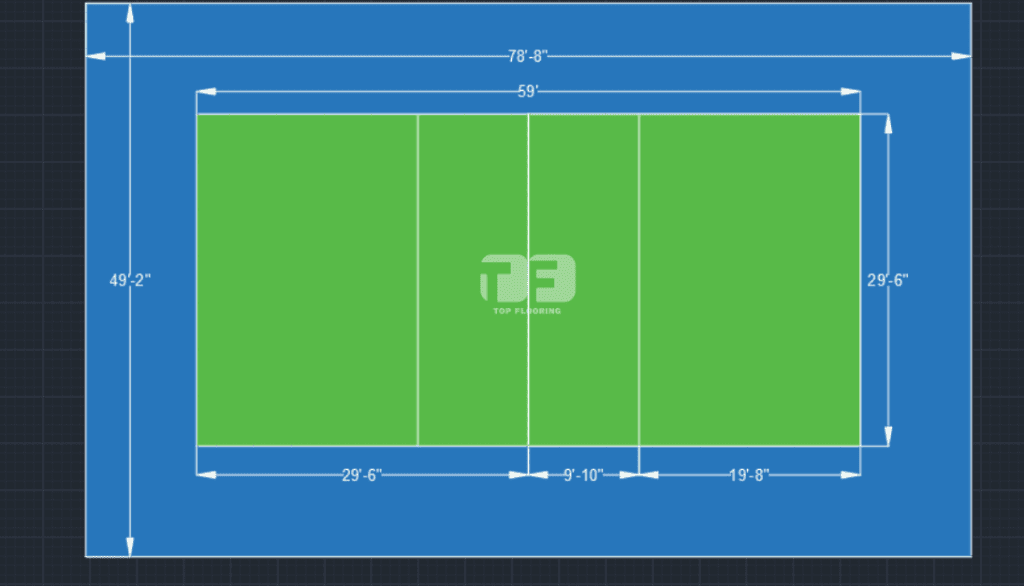
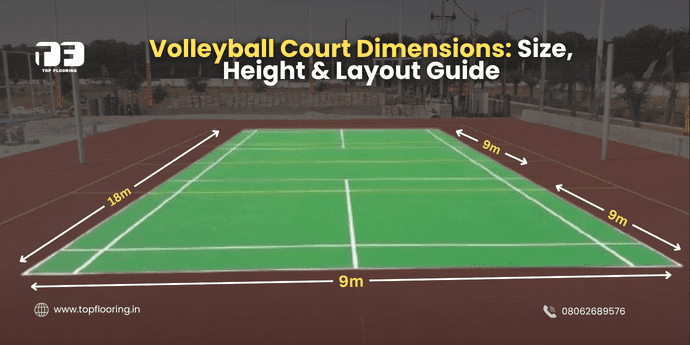
When it comes to install outdoor volleyball court in India, the key measurements are straightforward: you’re looking at a playing area of 18 metres by 9 metres, with at least 3 metres of free space all the way around the court. It’s important to get the dimensions right – you need space to move around safely, to put the right line markings, and to lay down the right flooring. Check out our volleyball court dimensions guide for a deep dive on sizing and layout, and expert advice on how to get it right for your outdoor volleyball court construction project.
What Dimension Should Your Outdoor Court Be?
- The playing area should be a nice square, 18 by 9 metres
- The free zone needs to be 3 metres all the way around
- And if you’re thinking of building an outdoor court, you probably want to leave a bit of extra space around the edges, so a total area of around 31 by 22 metres is a good idea
Net Height for Men and Women
- For men, the net should come up to 2.43 metres off the ground
- For women, it’s a bit lower, at 2.24 metres off the ground
If you keep the dimensions right, your court should be a breeze to move around on, easy to line-mark, and cost-effective to build and maintain. And if you’re looking for the official word on court dimensions, you can always check out the guidelines from the FIVB.
Step-by-Step Guide to Install Outdoor Volleyball Court
Picking the Right Place to install Outdoor Volleyball Court, first, you’ve got to find a spot that is solid & wont collect water. Before you start building, you need to check the soil & make sure it’s got enough strength to hold up the volleyball court. You need to know the height of the land, whether it’s got good drainage, and if water pools up in some areas.
Laying Down a Good Base for Your Outdoor Volleyball Court
The base is what gives the court its structural backbone. What You Need to Know About Your Base:
- Use either PCC or RCC concrete for the base.
- It should be between 100 & 125 mm thick
- Get a good grade of concrete M20 or higher
- Make sure the surface is level to within 3mm
- Add expansion joints to help stop cracks from forming
- Getting a solid base right is key to a long-lasting floor system.
Getting the Drainage and Slope Just Right
Outdoor volleyball courts need good drainage so water doesn’t collect & cause problems. Putting in the Right Slope:
- You need a cross slope of about 1:100 to 1:120
- There should be no puddles allowed
- If you live in an area that gets a lot of rain, then you may need perimeter drains, too.
- Getting this right will help prevent damage to the floor from water.
Choosing the Right Flooring Material for Your Outdoor Volleyball Court
The flooring you choose is basically the difference between a great volleyball experience and a not-so-great one – it’s a big deal when it comes to safety, longevity & keeping your court looking its best.
Why We Say Go For Synthetic Acrylic for Outdoor Courts
When it comes to outdoor synthetic acrylic volleyball court materials, you really can’t go wrong with acrylic flooring – it’s got a consistent grip, it’s built to withstand the elements, and its stability is rock solid whether it’s summer or freezing winter.
The Benefits of Synthetic Acrylic Volleyball Court Flooring
Why It’s a Safe for Players- The textured surface on acrylic makes it a breeze to move around without taking a tumble – so you can play with confidence, knowing your players are safe.
Durable and Can Stand Up to the Elements- Acrylic is built to withstand the elements – it can take on all the sunshine, rain & UV damage you throw at it without cracking or breaking down.
Low Maintenance and Can Last for Years- You wont need to spend a lot of time or money keeping your court looking good. Which means it is a cost-effective option all around.
Putting Together a Synthetic Acrylic Volleyball Court Flooring System
A basic flooring system is a lot more than just one layer of flooring – it’s a whole system.
What You Need to Know About Getting Your Layers Just Right
- Concrete Primer– This is the first layer applied to the concrete base. It helps all other layers stick properly and improves overall bonding.
- Acrylic Resurfacer– Resurfacer smoothens the surface, fills small cracks, and removes uneven patches so the court looks even and professional.
- Cushion Layer (Optional)– Cushion layers are added for extra comfort. They reduce impact on knees and joints, making the court easier on players during long games.
- Acrylic Colour Coats– These give the court its final colour and also add strength and durability to the surface.
- Anti-Skid Texture– Fine texture is mixed into the surface to improve grip and prevent slipping, especially during fast movements.
- Court Line Marking Paint– The final step is marking the volleyball court lines accurately so the court meets playing standards.
Outdoor Volleyball Court Flooring Performance
High-quality outdoor volleyball court flooring needs to hold its grip, texture and colour no matter what the weather throws at it. Installed properly, an acrylic system really makes a difference – it keeps dust under control, stops cracks and wear from becoming uneven.
Volleyball Court Colours and Surface Design
The Most Popular Colour Combinations for Your Outdoor Court:
- Blue and green – a great combo that really stands out
- Red and green – a striking pair that makes for great visibility
- Grey with high-contrast markings – a timeless choice that cuts glare to a minimum
Choosing the right colours really does make a difference – it makes your court more visible during play and reduces glare in the great outdoors.
Volleyball Court Installation and Line Marking
A well-put-together volleyball court is crucial – it needs to be fair and safe for players.
What to Keep in Mind When Installing a Court
- Measure up – precision is key here
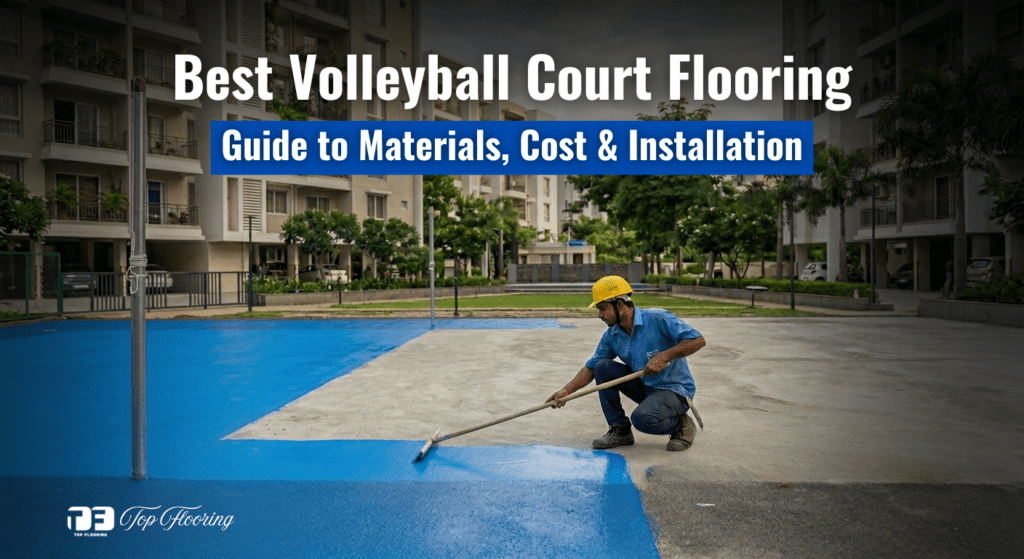
- Apply your acrylic layer with a steady hand
- Line marking that’s non-slip – no matter the weather
Experience is key when it comes to installing a volleyball court – only experienced installers can ensure your court is the right size and will last.
Volleyball Court Construction Costs for Outdoor Acrylic Courts
Factors Affecting Construction Cost
- How big is the court and run-off area
- What’s the state of your base
- How many layers of acrylic are you looking for
- Do you need a cushion layer
- What’s the location and the transport cost
The initial outlay might vary, but an acrylic system will save you money in the long run.
Maintenance of Outdoor Synthetic Volleyball Courts
Regular cleaning, occasional washing, and checking the court lines are usually enough to keep the surface in good shape. With basic care, an outdoor acrylic court can last 5–7 years or even longer.
Common Mistakes in Outdoor Volleyball Court Construction
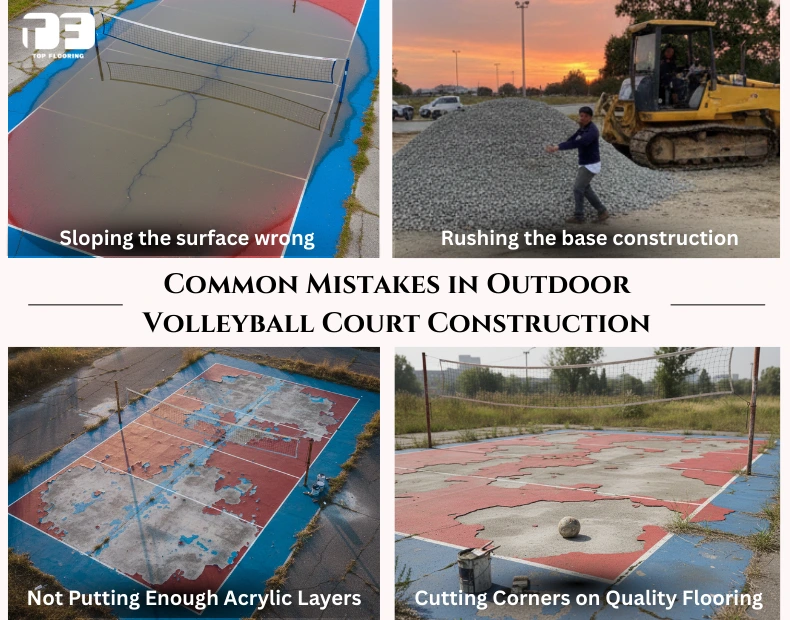
- Sloping the court wrong is a big mistake
- Rushing the base construction
- Not putting on enough acrylic layers
- Trying to cut corners on the quality of the volleyball court flooring
The mistake of just hiring the street labourers to do the job. By clearing these errors, you can guarantee your court will last.
Conclusion
Install outdoor volleyball court is an investment for the long haul. You need to do your homework, get the construction right, and choose a good-quality flooring system. From measuring up to standard volleyball court sizes in India to laying a solid base, getting the drainage sorted, and slapping on a surface that’s up to the job, every stage of volleyball court construction makes a difference in the end.
For outdoor installs, synthetic acrylic court flooring is usually the best way to go. It’s weatherproof, has a good grip, low maintenance, and long-lasting. And on top of all that, it’s actually pretty practical for schools, clubs, residential complexes, private sports clubs and public sports facilities. When done right, a synthetic acrylic court gives you safe play, a pro look, and long-term value.
Frequently Asked Questions
Synthetic acrylic flooring offers excellent grip, weather resistance, UV protection, and low maintenance for outdoor volleyball courts.
A standard outdoor volleyball court in India is 18m × 9m, with 3m clearance and a total area of 31m × 22m.
Synthetic acrylic flooring withstands Indian weather conditions, including heat, rain, humidity, and extreme temperature variations.
Regular cleaning, occasional pressure washing, and checking line markings are usually enough to maintain the court.
Yes, a well-prepared concrete base can be converted into a durable synthetic acrylic volleyball court flooring system.